Shades of green: A review of mayoral candidates’ climate-related campaign promises
Read this article for free:
or
Already have an account? Log in here »
To continue reading, please subscribe:
Digital Subscription
One year of digital access for only $1.44 a week*
- Enjoy unlimited reading on winnipegfreepress.com
- Read the E-Edition, our digital replica newspaper
- Access News Break, our award-winning app
- Play interactive puzzles
*Billed as $5.77 plus GST every four weeks. After 52 weeks, price increases to the regular rate of $19.95 plus GST every four weeks. Offer available to new and qualified returning subscribers only. Cancel any time.
To continue reading, please subscribe:
Add Free Press access to your Brandon Sun subscription for only an additional
$1 for the first 4 weeks*
- Enjoy unlimited reading on winnipegfreepress.com
- Read the E-Edition, our digital replica newspaper
- Access News Break, our award-winning app
- Play interactive puzzles
*Your next Brandon Sun subscription payment will increase by $1.00 and you will be charged $17.95 plus GST for four weeks. After four weeks, your payment will increase to $24.95 plus GST every four weeks.
Read unlimited articles for free today:
or
Already have an account? Log in here »
Hey there, time traveller!
This article was published 25/10/2022 (1470 days ago), so information in it may no longer be current.
Cities are on the front lines of climate adaptation. They manage the day-in, day-out impacts of warmer, wetter and more extreme weather.
That’s a big responsibility — it isn’t cheap — and municipalities aren’t exactly known for raking in revenue. While much of the conversation around climate adaptation focuses on what federal and provincial governments are doing, cities also have a role to play. Even on a tight budget, there are plenty of ways they can plan for a more resilient, less-polluting future.
As Winnipeggers, who live in a city dubbed one of the coldest on the planet, head to the polls Wednesday to choose a new mayor and council, we’re taking a look at candidates’ climate-related campaign promises.
Though climate change has not exactly been the campaign’s top talking point — one candidate even said, “I am not a climate cultist” when asked how she would help the city achieve a net-zero future — the people on the ballot have each made promises that could help Winnipeg move towards a more sustainable future.
From transit to trees, compost to potholes, here are six ways cities can play a part in developing climate resilience — and what Winnipeg’s mayoral candidates have to say about them.
Improve public transit
MIKAELA MACKENZIE / FREE PRESS FILES There’s no shortage of promises aimed at making Winnipeg Transit safer, cleaner, more efficient and more electric.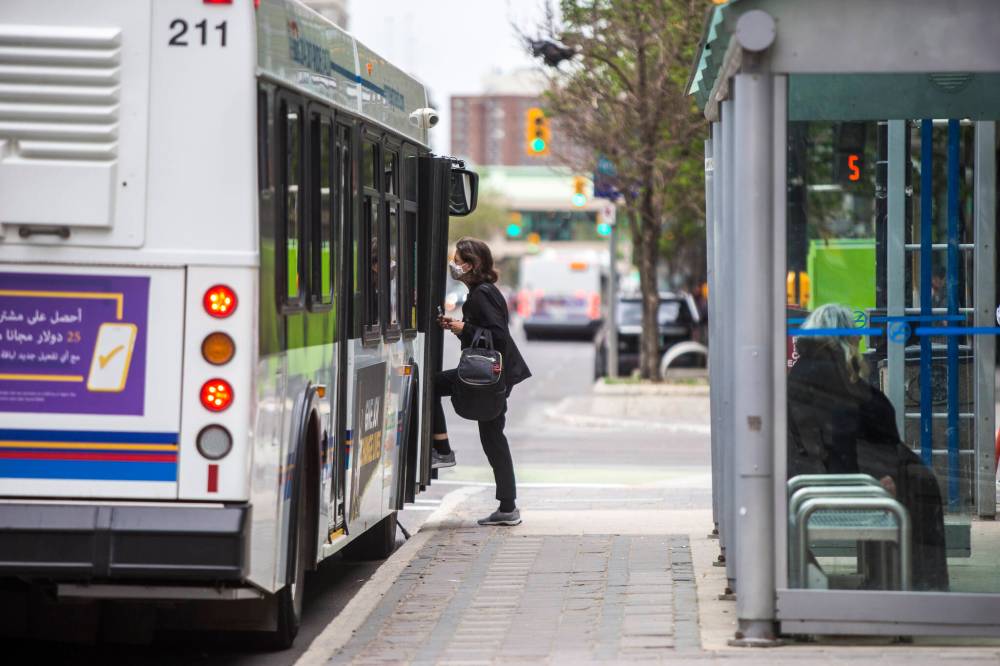
For many cities, transportation represents the largest source of carbon pollution. No election issue in Winnipeg has garnered as much attention as the battle for better transportation options.
Winnipeg has entrenched car culture: 81 per cent of weekday trips are made by personal vehicle, and greenhouse-gas emissions from transportation make up just over half of the overall emissions profile. The city’s climate action plan aims to cut vehicle use down to 50 per cent of trips, but addressing a vehicle-dominant culture means making busing, biking and walking more accessible and more enticing.
“Transit is one of the most significant tools the next mayor and council can use to reduce greenhouse-gas emissions and mitigate the effects of climate change,” Canadian Centre for Policy Alternatives researcher Niall Harney said at the release of the group’s alternative municipal budget in June.
Winnipeg’s transit ridership has been declining for decades and fell perilously off the cliff during the COVID-19 pandemic. According to a Winnipeg Free Press-CTV News poll conducted by Probe Research, more than half of respondents think more should be spent on transit infrastructure.
There’s no shortage of promises aimed at making Winnipeg Transit safer, cleaner, more efficient and more electric. Several candidates have pledged to fast-track the city’s 2021 transit master plan, with an eye for adding rapid routes and improving bus frequency. Others have promised to add more buses and replace diesel vehicles with electric models. Rana Bokhari has pledged to begin working on light-rail transit. Idris Adelakun has pitched the idea of solar-powered, overhead rail cars.
Several candidates have also pledged indirect ways to improve ridership. Some have suggested increasing police presence and security on buses, and Bokhari and Robert-Falcon Ouellette have promised lower fares.
Encourage biking, walking and electric cars
MIKE SUDOMA / FREE PRESS FILES Many Winnipeggers have long advocated for more protected and well-maintained lanes.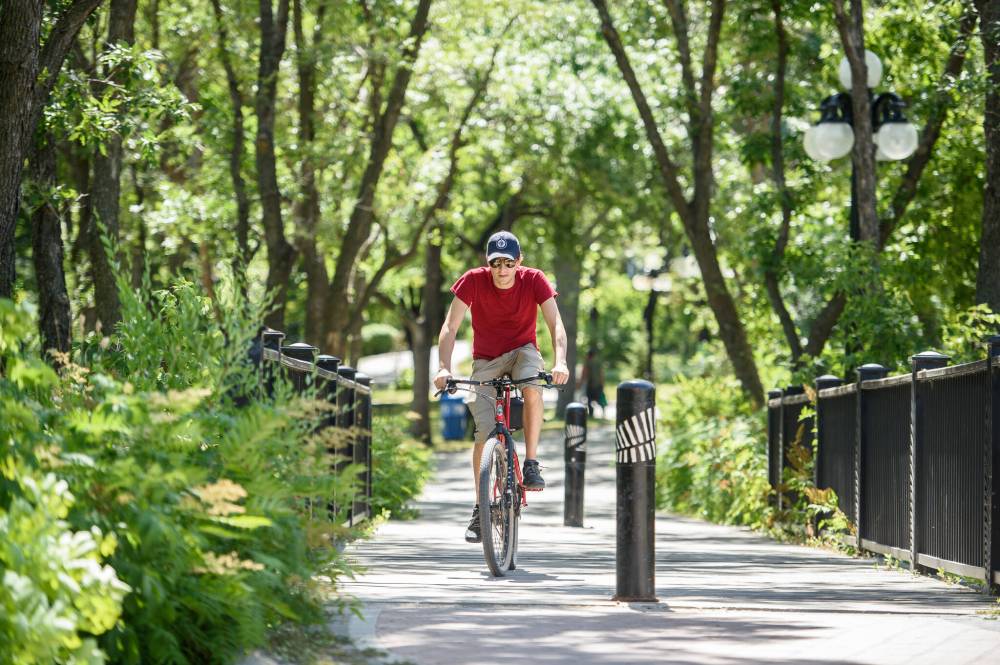
Transit isn’t the only way to get commuters out of their cars — cities are looking to make room for more active transportation and electric-vehicle infrastructure to help cut carbon pollution.
Many residents have long advocated for more protected and well-maintained lanes — crucial to increasing the number of cyclists. The city is aiming for an 800-kilometre active transportation network by 2030, though it does not currently track the size of its existing network.
Some mayoral candidates have suggested Winnipeg will never lose its vehicle-dominant culture, and are also looking for ways to make the shift to electric power more appealing, as the city works to help make the federal government’s “mandatory” zero-emission vehicle target a reality by 2035.
Scott Gillingham has promised to close gaps in the active-transportation network using frontage levy fees — a kind of property tax — to fund an extra $13 million in such projects over the next three years, and has pledged, by the end of 2023, to set a target date for the electrification of the municipal car fleet. Bokhari has pledged to focus on active and public transportation routes. Rick Shone has committed to electrifying the city’s car fleet and eliminating the city’s use of gas-powered lawn tools. Shaun Loney promises 500 electric-vehicle charging stations by the end of the first term and a program to help Winnipeggers secure at-home vehicle chargers. Shone, Adelakun, Kevin Klein and Don Woodstock have also made promises to help speed up the transition to electric cars while increasing funding for active transportation.
Invest in trees
JOHN WOODS / FREE PRESS FILES All of the mayoral candidates have signed onto a pledge from the Trees Please coalition, which asks for a commitment to replanting two public trees for every tree lost.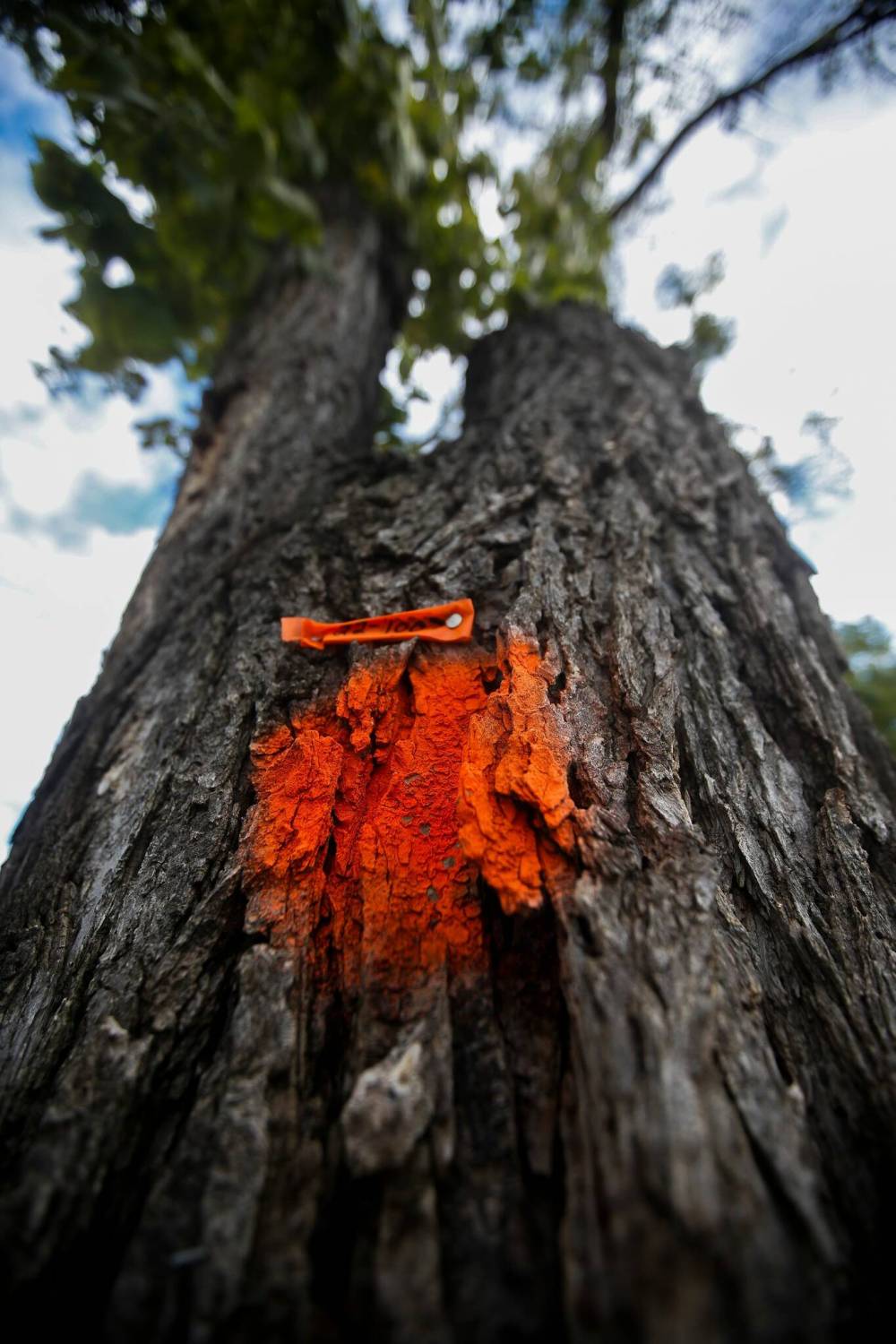
Trees, parks and green space — what some call “natural infrastructure” — are among the strongest (and most cost-effective) tools in a city’s climate-adaptation arsenal. Not only do they provide resilience just by existing — but the benefits grow over time, too. The shade, oxygen, carbon reduction, water absorption and riverbank stabilization that trees offer all increase as they get older, as do the heating and cooling savings for homeowners.
The decline of Winnipeg’s urban forest is palpable. The budget for the urban forest has been repeatedly slashed, trees are being cut down — be it for disease mitigation or construction and development — far faster than they’re replanted.
“We have a crisis in our urban forests,” Trees Winnipeg president Gerry Engel said last month.
Winnipeg’s next council will be tasked with voting on a new urban forest strategy, but so far there aren’t clear estimates for how much the plan could cost.
All of the mayoral candidates have signed onto a pledge from the Trees Please coalition, which asks for a commitment to replanting two public trees for every tree lost, bringing the pruning cycle back to the seven-year industry standard and incorporating better tree-protection rules for construction projects. Klein has also promised to add 1,000 acres of new city green space, while Shone has promised to encourage more community gardens. Glen Murray has proposed a “natural capital budget,” which would scrape money from road projects to be spent on urban-forest protection and enhancement. Loney’s platform includes a pitch for a “tree trust,” an independent organization that will “work closely with the city” to generate new revenue streams for the urban forest while hiring people who face employment barriers to work on the trust’s goals.
Reduce wasted energy
After transportation, the natural-gas power used for heating and cooling buildings is Winnipeg’s next-largest greenhouse-gas emitter, totalling almost a third of the city’s emissions profile — but the city has shied away from setting a target to curb that pollution. Winnipeg’s climate action plan projects that emissions from buildings will increase to eight per cent over benchmark levels by 2030.
Building codes are set by the provincial government — and Manitoba’s are woefully outdated. According to advocates from Sustainable Building Manitoba, the city’s responsibility is to greenlight the necessary funding for energy audits and commit to transforming energy consumption in the buildings it owns. (The city has a green building policy, but it hasn’t been amended in over a decade.)
Winnipeg’s climate action plan projects that emissions from buildings will increase to eight per cent over benchmark levels by 2030.
The city has already begun exploring the possibility of using geothermal heat pumps to provide heating and cooling control in city-owned ice rinks, but there’s more work to be done.
It isn’t a sexy topic for city hall hopefuls, but some candidates have noted the need for greener building policies at the municipal level.
Bokhari wants all of the city’s buildings to reach net-zero emissions. Murray wants to encourage more electric power in Winnipeg homes. Loney has pledged to introduce geothermal heating loops as a power source for more than 40,000 homes by 2030 and incentivize energy retrofits. Shone wants to see the city adopt Leadership in Energy and Environmental Design energy standards in all municipal buildings; Gillingham has proposed transforming the agency that manages the city’s properties into a “green properties and green power” agency that would both produce local, renewable energy and retrofit existing buildings.
Respond to buckling roads
MIKAELA MACKENZIE / FREE PRESS FILES Nearly all candidates have identified infrastructure — particularly road construction and pothole filling — as a priority, but few have addressed the need for climate-focused solutions.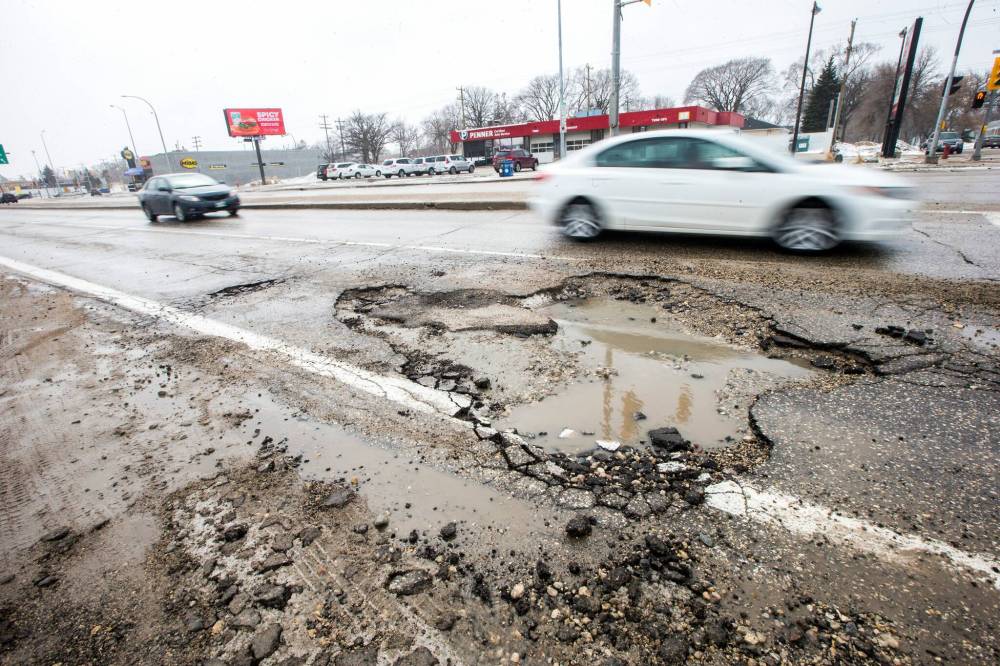
Infrastructure across the country is at risk as hotter, wetter weather threatens to cause ongoing damage to pavement from coast-to-coast. While roads have been a hot topic in Winnipeg seemingly forever, the next council will need robust plans to prepare critical infrastructure for the more-intense climate of the future.
Road design is evolving; City of Winnipeg engineers are testing new materials and pavement compositions they hope will be able to withstand more freeze-thaw cycles and more extreme heat, but it’s an expensive undertaking for a cash-strapped municipal government.
And while nearly all candidates have identified infrastructure — particularly road construction and pothole filling — as a priority, few have addressed the need for climate-focused solutions.
There are lots of promises geared towards inflating the city’s road budget and speeding up work to restore Winnipeg’s damaged roads. Some candidates have promised to move forward with road-widening efforts, such as Gillingham’s pledge to widen Kenaston Boulevard). Others, including Jenny Motkaluk and Loney, have promised to fix existing roads before spending money on new ones. Motkaluk has also promised to look to jurisdictions with similar climates to Winnipeg to develop better road design. Loney has committed to working with the provincial government to improve funding for road work in order to better protect the pavement in the long term.
Curb carbon pollution from trash
FREE PRESS FILES The city began a composting pilot program in fall 2020, which wrapped up this fall, but the incoming council will ultimately decide the future of garbage collection.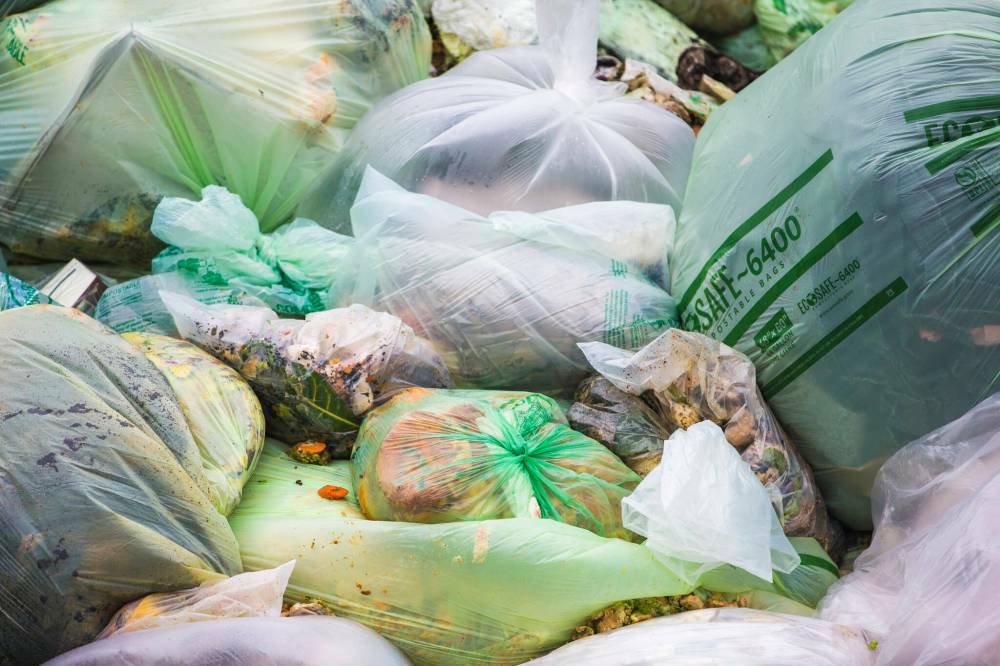
Organic matter, including food scraps and yard waste, make up between 40 and 60 per cent of Winnipeg’s landfill.
Tied off in plastic bags without oxygen, those materials break down and release methane — a greenhouse gas with 25 times the polluting power of carbon dioxide. How garbage is sorted, collected and left to decompose is a system entirely in the city’s control, but for years Winnipeg has merely toyed with the idea of compost collection, often arguing a green-bin program would be too costly for residents.
Experts agree a compost service can help improve waste-diversion rates, which could, in turn, help rein in the Brady Road landfill’s status as Winnipeg’s second-largest single source of pollution.
“It’s not waste,” Susan Antler, executive director of the Toronto-based Compost Council of Canada, said in June. “It is a valuable resource that has to be put to good use.”
The city began a composting pilot program in fall 2020, which wrapped up this fall, but the incoming council will ultimately decide the future of garbage collection.
The trial compost service has been a smashing success; 99 per cent of residents were satisfied with the proposed system, a city survey suggested. All that’s standing in the way is budget allocation.
Adelakun, Klein, Loney, Chris Clacio and Shone have all promised they’d get compost infrastructure up and running. Gillingham has said he’d like to see analysis from the existing trial program before committing. Murray wants to see a zero-waste future for Winnipeg, but hasn’t talked about compost. Bokhari, Motkaluk, Ouellette and Woodstock have not made any campaign promises on a compost program.
julia-simone.rutgers@freepress.mb.ca

Julia-Simone Rutgers is a climate reporter with a focus on environmental issues in Manitoba. Her position is part of a three-year partnership between the Winnipeg Free Press and The Narwhal, funded by the Winnipeg Foundation.
Our newsroom depends on a growing audience of readers to power our journalism. If you are not a paid reader, please consider becoming a subscriber.
Our newsroom depends on its audience of readers to power our journalism. Thank you for your support.


History
Updated on Wednesday, October 26, 2022 10:31 AM CDT: Clarifies Gillingham's pledge regarding electrification of the municipal car fleet