WEATHER ALERT

Faith

Faith

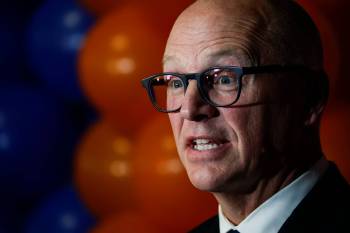
Interfaith bridge-builder Khalid Mahmood honoured

Sharon Chisvin 5 minute read Saturday, Apr. 4, 2026

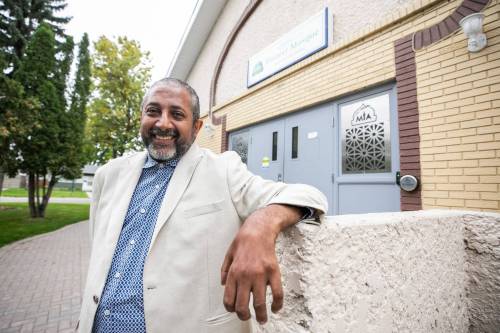
Khalid Mahmood is in good company.

In proudly accepting the Lieutenant Governor’s Award for the Advancement of Interreligious Understanding on March 26 from Lt.-Gov. Anita Neville, he joined an elite group of Manitobans who received the award in the past.

Like all those past recipients — among them Free Press faith writer John Longhurst, radio host and newspaper columnist Rev. Karen Toole, synagogue lay leader Bill Weissmann, former Winnipeg Police Service chief Devon Clunis and Ojibway Métis elder Mae Louise Campbell — Mahmood was recognized for his commitment to encouraging and promoting harmony, bridge building and interfaith dialogue between diverse religious communities in the province.

When Mahmood immigrated to Canada in 1974, he became one of the first Pakistanis and one of the first Ahmadiyya Muslims to choose Winnipeg as home. His activism on the part of Ahmadiyya Muslims, who, he explains, are discriminated against in Pakistan, and his interest in interfaith initiatives began soon after he was settled. Building relationships between different groups and service to humanity are, he explains, essential elements of the Ahmadiyya Muslim faith.

Advertisement

Advertise With Us

Weather

WEATHER ALERT May. 31, 12 PM: 25°c Cloudy with wind May. 31, 6 PM: 27°c Cloudy with wind

Winnipeg MB

19°C, Partly cloudy

Full Forecast

Faith

CMU choir brings community together to raise voices for peace

Sharon Chisvin 4 minute read Yesterday at 2:01 AM CDT

Decades have passed since We Shall Overcome was deemed the unofficial anthem of the American civil rights and anti-war movements, but the folk song — originally a gospel spiritual — remains as relevant today, and as frequently sung, as it was back in the 1960s. In the last few months alone, the song’s lyrics have loudly echoed through the crowds at non-violent rallies, protests and sit-ins around the world, and been performed onstage by renowned artists, social activists and community choirs.

One of those community choirs is the Canadian Mennonite University’s (CMU) Voices for Peace. Voices for Peace was launched in March 2026 as an extension of the Anabaptist university’s Singing Resistance program. That program had brought like-minded voices together earlier in the winter to sing in solidarity with those being affected by the ICE raids in Minneapolis.

“We started getting questions about how this work might extend to community protests,” says Anneli Loepp Thiessen, an assistant professor of music at the university and one of the choir co-ordinators. “So we began Voices for Peace as a mobile, rapid-response group that can share music for peace at protests or other community events.”

The mobile, rapid-response nature of the group means that it is not a traditional or typical choir.

Faith

Religion on census needs a rework, group says

John Longhurst 5 minute read Preview

Religion on census needs a rework, group says

John Longhurst 5 minute read Yesterday at 2:01 AM CDT

Did you get the long form of the census? If you did, then you are among the 25 per cent of Canadians who had a chance to tell the government about your religious identity.

The federal government has been collecting information about religion in Canada since 1871; it’s one of the oldest efforts to track religion in the world.

Since that time, the religious landscape in Canada has changed a lot. Up until the 1960s, the country was mainly Christian, with small numbers of Jewish, Muslim, Hindu, Sikh and Buddhist Canadians.

The 2026 census lists over 200 religious groups, just over half of them Protestant and Catholic. The rest are from a wide variety of other religious traditions, including six streams of Buddhism, 10 different Jewish groups, seven kinds of Islam and five different forms of Indigenous spirituality. People can also choose from Wiccan, Satanist, Rastafarian and New Age groups, among others.

Read
Yesterday at 2:01 AM CDT

Faith

Palestinian Christians’ faith under fire

Josiah Neufeld 6 minute read Preview

Palestinian Christians’ faith under fire

Josiah Neufeld 6 minute read Yesterday at 2:00 AM CDT

Christians in Palestine are crying out to their spiritual siblings worldwide for solidarity and support as they face death, displacement and genocide.

“We’ve witnessed our church members being bombed in Gaza, we have witnessed our brothers and sisters being arrested. My family has received death threats,” John Munayer, a Palestinian Christian, told a room full of Mennonites, Anglicans, Lutherans, United Church members, Muslims and Jews who gathered at Canadian Mennonite University for a two-day conference on the plight of Palestinian Christians earlier this month.

John and his brother Samuel Munayer had planned to travel to Winnipeg for the conference, but the war in Iran made travel unsafe, so the brothers addressed the room via Zoom from their home in Jerusalem.

“We are the sons and daughters of the first church,” said John Munayer.

Read
Yesterday at 2:00 AM CDT

Faith

Religious groups must keep careful eye on artificial intelligence

John Longhurst 5 minute read Saturday, May. 23, 2026

Programmers, computer scientists and software, mechanical, data and prompt engineers — these are some of the professions behind the creation of artificial intelligence. Should theologians and faith leaders also be involved?

Meghan Sullivan, a Roman Catholic who teaches philosophy at the University of Notre Dame, says yes. That’s why she was glad to attend a meeting in March at the invitation of Anthropic, the creator of Claude AI, about the role religion can play in the creation of this life-changing technology.

Sullivan, who also directs the university’s Institute for Ethics and the Common Good, was there with 15 other Christian philosophers, theologians and leaders to discuss the implications of AI for society today — and how it can be taught to behave ethically and morally using religion as a guide.

I spoke with Sullivan this week about that meeting. “I’m very grateful for Anthropic’s leadership in this area with faith communities,” she said, noting that most AI companies are not doing that. “It should have happened sooner, but better late than never.”

Faith

Solidarity Dialogues workshops counter polarization

Sharon Chisvin 5 minute read Saturday, May. 16, 2026

Amal Elsana Alhjooj is not a person to sit idly by when she encounters a challenge, conflict or situation that needs correcting. Over the years, that attitude and activism have led her to establish several innovative social justice and civil society initiatives that, among other achievements, have enhanced the livelihood and independence of Bedouin women in Israel, where Alhjooj was raised, and the relationship between Jews and Arabs both in Israel, Palestine and in Canada, where Alhjooj now lives.

Alhjooj’s most recent venture is a series of workshops called Solidarity Dialogues.

Solidarity Dialogues is an offshoot of PLEDJ, a social change non-profit that Alhjooj, who is Muslim, co-established in 2021 with Brian Bronfman, the Jewish president of the Peace Network for Social Harmony, to empower and organize marginalized communities to address systematic injustices that impede their lives.

Solidarity Dialogues is more narrow in scope, as it is designed specifically to address the deep seated polarization currently permeating Canadian workplaces, schools and society in general. Solidarity Dialogues’ series of workshops provide participants with the tools to navigate that polarization and the heated, intolerant and uncomfortable exchanges that tend to characterize that polarization. By differentiating between dialogue and debate, and hurt and harm, the workshops provide participants with safe spaces in which to step out of their comfort zones, listen empathetically and openly to others’ lived experiences, and develop mutual understanding and an ability to respond to conflict.

Faith

Files offer insight into people who joined Nazi party

John Longhurst 5 minute read Saturday, May. 16, 2026

North Americans still can’t find out who was in the Epstein files. But those of German descent who live in Canada and the U.S. can now easily learn if their ancestors were Nazis.

In March, the U.S. National Archives released a searchable database containing the records of millions of Germans who joined the National Socialist German Workers’ Party, or Nazi Party, from 1929-43.

Through the records, which were seized by the Americans following the second World War, those who want to know can find out if grandpa or grandma was a Nazi.

Prior to the online release of the records, getting that information was a laborious process that involved making a written request to the Berlin Document Centre in Germany or the German federal archives. It could take months to get a response.

Faith

High cost of compassion threatens to shutter Christian home for people with HIV

Josiah Neufeld 6 minute read Preview

High cost of compassion threatens to shutter Christian home for people with HIV

Josiah Neufeld 6 minute read Friday, May. 15, 2026

Days after Manitoba declared a public health emergency over rising HIV rates, a Christian home for people living with the immunodeficiency virus is afraid it may have to close its doors, potentially leaving residents on the street.

“Payroll is next week. We don’t have money to pay our staff,” said Moe Feakes, director of House of Hesed, a rambling two-storey red brick house on Edmonton Street currently home to nine people living with HIV.

On a warm afternoon earlier this week two residents were sitting on the front porch enjoying a smoke in the sunshine. But inside, in a hallway lined with inspirational Christian posters, Feakes, a wiry 69-year-old woman with a pixie cut dyed a fiery red, was pressing her palms into her cheeks, trying to keep from weeping.

Donations have dropped off and costs have spiked. House of Hesed operates on a monthly budget of about $25,000. Employment and Income Assistance provides $589 for each resident every month, the same amount provided to emergency and transitional shelters.

Read
Friday, May. 15, 2026

Faith

Exhibit helps tell story of Sikh immigrant who put life on line

Josiah Neufeld 4 minute read Preview

Exhibit helps tell story of Sikh immigrant who put life on line

Josiah Neufeld 4 minute read Thursday, May. 14, 2026

On an unseasonably warm winter day in January 1916, a 27-year-old man walked into the enlistment office in Winnipeg and volunteered to fight in the First World War that was ravaging Europe.

The only name he provided was Baboo. The official paperwork required a “Christian name,” but the Sikh man didn’t have one.

Born in Punjab, India in 1888, he served for four years in a cavalry unit in Madras before immigrating to Canada. He was married and had a seven-year-old daughter named Margaret.

Someone added the name “John” in handwritten pen next to his typed name, and he became John Baboo.

Read
Thursday, May. 14, 2026

Faith

Retired local spiritual care practitioner given award

John Longhurst 3 minute read Preview

Retired local spiritual care practitioner given award

John Longhurst 3 minute read Monday, May. 11, 2026

A retired Winnipeg spiritual care practitioner has received a national award for her decades of work on behalf of patients and for those who work in the field.

Lynn Granke, 69, was recognized for her work as manager of spiritual care at Victoria Hospital and for her service to the Canadian Association for Spiritual Care. The award was given at the organization’s annual convention in Ottawa during the last week of April.

Granke was honoured with the Verda Rochon Award, with the association noting Granke’s “outstanding and distinguished contributions to the field of psychospiritual health.”

Granke retired in 2017 after 20 years at Victoria Hospital.

Read
Monday, May. 11, 2026

Faith

Spring is sprung and it’s time for a Crowdfunder

John Longhurst 5 minute read Saturday, May. 9, 2026

In 2018, the Winnipeg Free Press announced it wanted to do a better job of engaging the various communities in Winnipeg. Did that include the faith community? I decided to find out.

I went to see editor Paul Samyn and then-publisher Bob Cox. As the faith page columnist at the Free Press since 2003, I knew that people in the faith community were disappointed by religion coverage in the newspaper. If there was news about religion, it was usually something bad — a priest involved in scandal or someone blowing things up in the name of God in a far-away country.

The daily life of people of faith, including the many positive contributions they made in Winnipeg and around the world, was mostly absent from the newspaper.

I told Paul and Bob if they wanted to do a better job of serving all the communities in the city, one place to start would be by creating a faith beat. They agreed. But, they said, the newspaper had no money for that. “What if I go out and raise it?” I asked. If I could do that, the Free Press would create the beat, they said.

Faith

New space cleared for prayer at city’s airport

Josiah Neufeld 3 minute read Preview

New space cleared for prayer at city’s airport

Josiah Neufeld 3 minute read Thursday, May. 7, 2026

If you like to get grounded before you’re airborne, the Winnipeg Richardson International Airport has a place for you.

The airport now has a designated space where people of any faith can take a few minutes of quiet solitude to pray while they’re waiting for their flight.

It’s a small, carpeted area enclosed by movable panels against one of the glass walls of the arrivals and departures wing between Gates 9 and 10.

The prayer space is behind security, accessible only to passengers who are travelling.

Read
Thursday, May. 7, 2026

Faith

Classroom antisemitism in full swing, U.S. academic tells city synagogue

John Longhurst 4 minute read Preview

Classroom antisemitism in full swing, U.S. academic tells city synagogue

John Longhurst 4 minute read Monday, May. 4, 2026

Universities and colleges are fertile ground for promoting antisemitism, an American academic told an audience at Congregation Shaarey Zedek recently.

“I have deep concerns about what is happening in the classroom,” Rachel Fish told about 400 people gathered Thursday for the annual Sol and Florence Kanee Distinguished Lecture sponsored by the Jewish Heritage Centre of Western Canada.

Fish, the director of the Brandeis University President’s Initiative on Antisemitism, said students who support Israel feel unsafe at many U.S. universities. She cited research showing that 37 per cent of Jewish students believe there is a hostile environment towards Jews on campuses — compared to only 14 per cent of non-Jewish students who believe that is the case.

“Jewish students see hostility their peers don’t,” she said, adding this is partly the result of protests and rallies on campuses that encourage extreme language such as calling Jewish students “genocidal baby killers.”

Read
Monday, May. 4, 2026

Faith

Project brings seniors, students together over love of gardening

John Longhurst 4 minute read Preview

Project brings seniors, students together over love of gardening

John Longhurst 4 minute read Monday, May. 4, 2026

Seniors and high school students in North Kildonan are growing vegetables and community through a unique indoor gardening project.

Three years ago, Donwood Manor, which is owned by eight Mennonite Brethren churches in Winnipeg, purchased six three-tier indoor hydroponic gardens.

Through hydroponic gardening, plants can be grown indoors using a water-based nutrient solution that produces food like lettuce, tomatoes, peppers and herbs year-round.

The goal for Donwood was to use the garden vegetables to supplement meals for the 181 residents in the facility’s long-term care section, and for tenants in the 118 attached independent-living apartments.

Read
Monday, May. 4, 2026

Faith

Federal bill creates concern among religious groups

John Longhurst 5 minute read Saturday, May. 2, 2026

Bill C-9, the government’s anti-hate legislation, also known as the Combatting Hate Act, has prompted criticism from some religious groups due to its removal of what is called the “good faith religious belief defence.”

That defence, which currently exists in the Criminal Code, states that something is not hate “if, in good faith, the person expressed or attempted to establish by an argument an opinion on a religious subject or an opinion based on a belief in a religious text.”

It has never been put to the test in a court of law.

The defence was removed from Bill C-9 by the government at the request of the Bloc Quebecois, who offered to support it in what was then a minority Parliament — but only if the defence was taken out of the legislation.

Faith

Winnipeg, midwest U.S. congregations proclaim love for one another amid Trump tensions

John Longhurst 4 minute read Preview

Winnipeg, midwest U.S. congregations proclaim love for one another amid Trump tensions

John Longhurst 4 minute read Thursday, Apr. 30, 2026

Two Winnipeg churches are reaching across the border to build relations with American congregations through a new program created by Mennonite Church Manitoba.

Called Companion Congregations, the program was created in 2025 when U.S. President Donald Trump imposed tariffs against Canada — along with making threats about annexing the country.

“People in our congregations started talking about not going to the U.S. anymore,” said Mennonite Church Manitoba conference minister Michael Pahl of church events outside the country.

Concerned that political tensions might disrupt relations between Canadian and American Mennonites, Pahl reached out to Doug Luginbill, one of his counterparts in the U.S.

Read
Thursday, Apr. 30, 2026

LOAD MORE FAITH ARTICLES