Fermenting the day away
Kombucha culture, with a DIY attitude, is hitting the city hard
Advertisement
Read this article for free:
or
Already have an account? Log in here »
To continue reading, please subscribe:

Digital Subscription
One year of digital access for only $205*
- Enjoy unlimited reading on winnipegfreepress.com
- Read the E-Edition, our digital replica newspaper
- Access News Break, our award-winning app
- Play interactive puzzles
*First annual payment billed as $205.00 + GST for one year. This annual subscription will automatically renew at $233.00 + GST every 52 weeks (10% off the regular annual price of $259.35). Offer available to new and qualified returning subscribers only. Cancel any time.
To continue reading, please subscribe:
Add Free Press access to your Brandon Sun subscription for only an additional
$1 for the first 4 weeks*
- Enjoy unlimited reading on winnipegfreepress.com
- Read the E-Edition, our digital replica newspaper
- Access News Break, our award-winning app
- Play interactive puzzles
*Your next Brandon Sun subscription payment will increase by $1.00 and you will be charged $17.95 plus GST for four weeks. After four weeks, your payment will increase to $24.95 plus GST every four weeks.
Read unlimited articles for free today:
or
Already have an account? Log in here »
Hey there, time traveller!
This article was published 28/04/2018 (3056 days ago), so information in it may no longer be current.
The culture of fermentation in Winnipeg is on the rise, thanks to the city’s craft-beer boom, sourdough starters and kimchi.
You can add kombucha to the list.
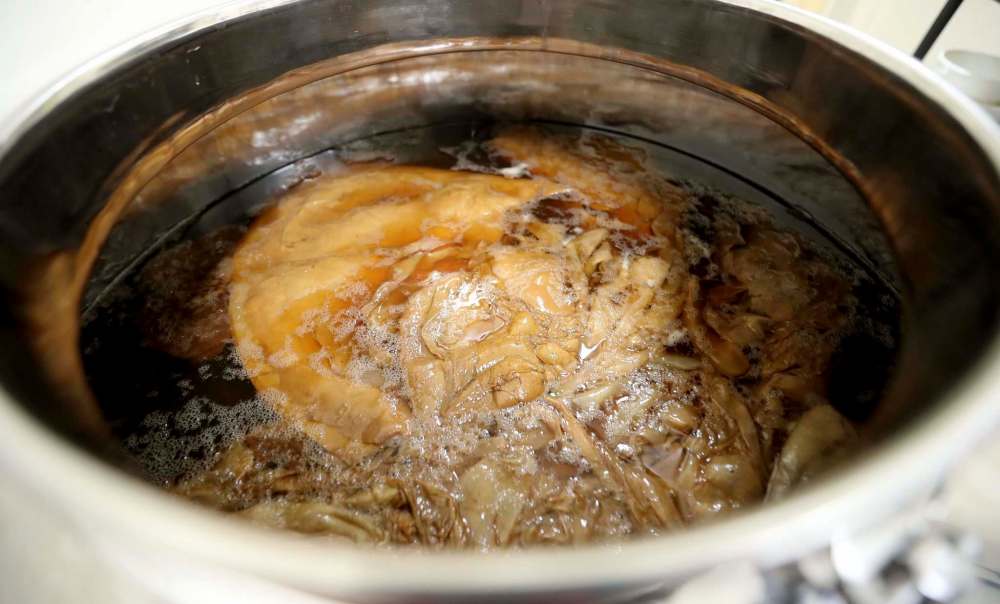
In short, kombucha is fermented tea. The process involves brewing tea with sugar, then adding a SCOBY (symbiotic culture of bacteria and yeast) to initiate the fermentation process. A SCOBY is a nasty-looking, multi-layered thing that floats around in the tea. Over the course of anywhere between a week to a month, the sealed mixture is left for the SCOBY to convert the sugar to alcohol and carbon dioxide. The bacteria in the SCOBY effectively eats the alcohol, turning the bulk of it into natural acids while developing additional layers that can be peeled off and used in subsequent kombucha batches.
Kombucha’s origins are nearly as murky as the drink itself. Most reports put kombucha’s origins somewhere in Asia many centuries ago, although the drink appears to have made its way into the western world via Russia.
Kombucha has been touted as having wide-ranging health benefits — everything from curing herpes to reversing grey hair to improving libido. And while most of these purported health benefits are either straight-up myths or haven’t been proven scientifically, at its most basic level, kombucha’s probiotic nature seems to help with digestion/upset stomachs, and the tea used in the batch typically contains antioxidants.
Perhaps that’s why kombucha was long sequestered in health-food store shelves in North America. But the increasing popularity of probiotics, and the move away from processed food and drink (including high-sugar beverages such as soda) has seen kombucha’s stock rise, making it one of the fastest-growing beverage categories in North America.
A quick scan of big-box grocery store shelves today reveals numerous commercially produced kombuchas in a wide range of flavours and from all corners of the continent.
And in Winnipeg, there are a handful of small-scale commercial kombucha producers helping carve out a corner for the drink in smaller establishments across the city.
Prism Kombucha was one of the first local commercial kombucha producers to appear on retail shelves. The company was started less than a year ago by 26-year-old Daniel Pastuck, who brews his kombucha at FortWhyte Farms. “They’ve been amazing to work with,” Pastuck says. “There’s a whole bunch of people here doing interesting food-based business, and it’s awesome to have a commercial kitchen that’s so accommodating.”
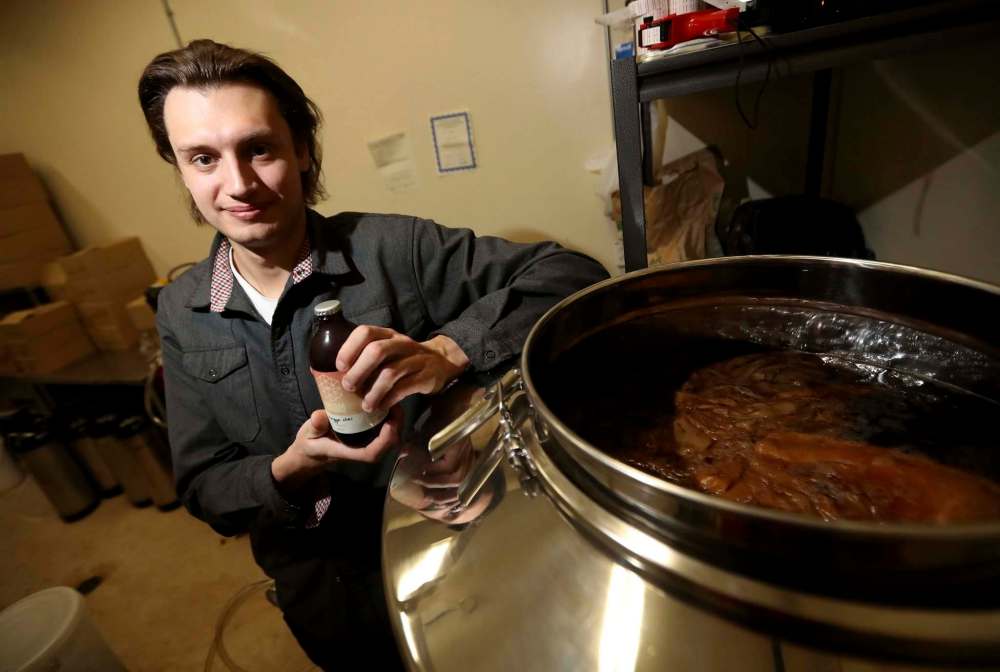
Pastuck began brewing kombucha at home in 2010; after eventually graduating from business school and with years of working at local eateries under his belt, he decided to have a go at the kombucha business. Prism is predominantly a one-man operation, with Pastuck taking care of marketing, accounts and deliveries himself, an undertaking he sees becoming more difficult heading into the summer months. “I’ve been able to grow the business five times in the six months I’ve been up and running,” he notes.
“It’s right on the brink right now in Winnipeg,” he says of kombucha’s popularity. “I feel like we’re a couple years out from it becoming pretty mainstream.”
Prism is available at a number of local eateries, which can then offer it as a soda alternative to non-drinkers. (It was the official non-alcoholic beverage at the Raw: Almond dinners on the river this year.) “I like to promote (Prism) as an alternative to soda or alcohol,” Pastuck says. “It has half the amount of sugar as juice, doesn’t get you intoxicated and it’s refreshing.”
Prism is also available at a handful of local coffee shops, some Food Fare locations and select Vita Health outlets via the chain’s kombucha growler bar system.
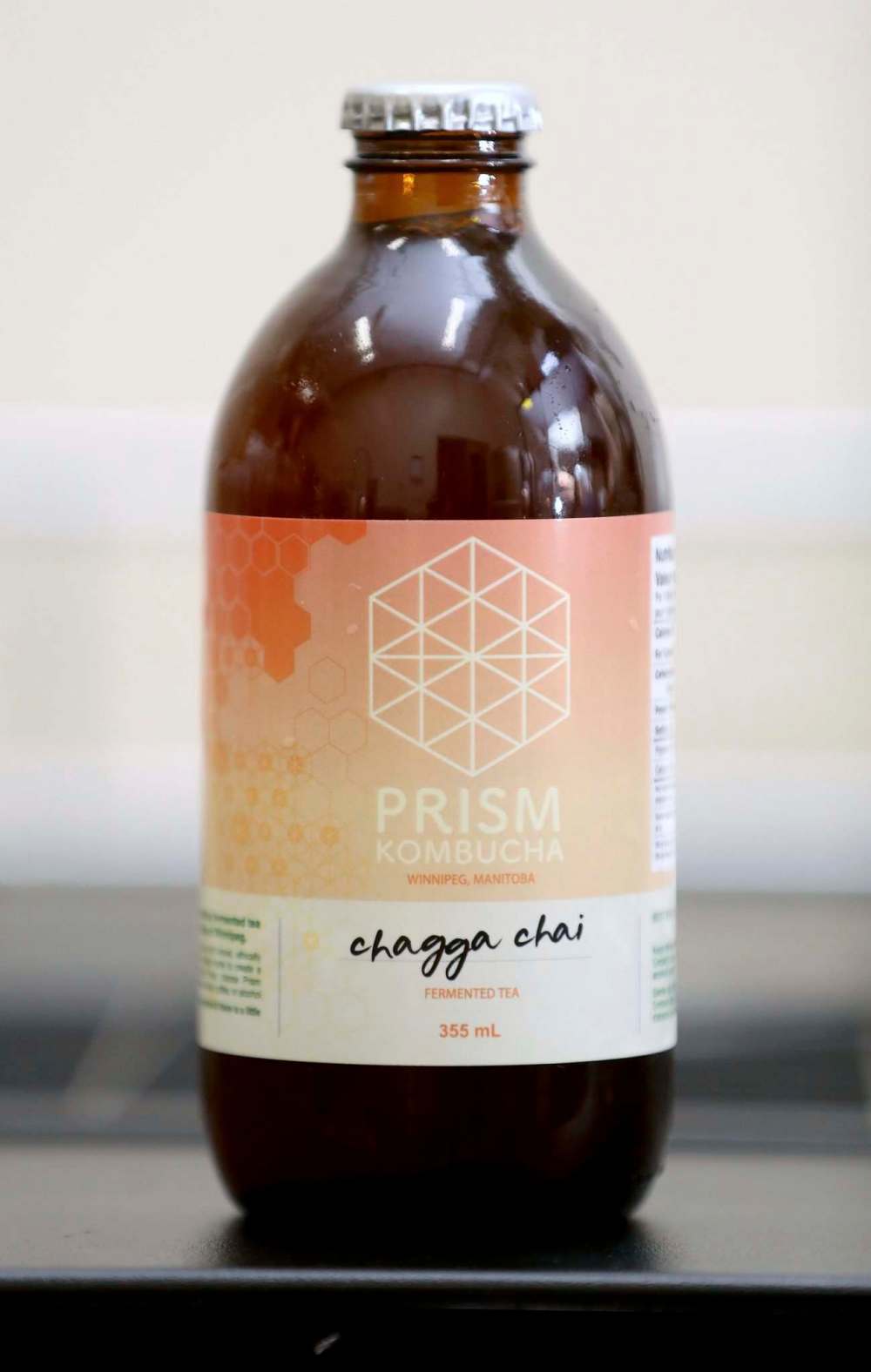
While the eventual goal is to have a lineup of four flavours on the go at once, Pastuck produces just one flavour of kombucha at a time using locally sourced ingredients. He’s at the end of a run of his first flavour, the spicy and rich Chagga Chai. It’s a blend of chai spices, Assam organic Indian black tea and locally harvested chaga mushrooms. Pastuck sources his teas locally from Boreal Wildcraft; the chaga mushrooms, which are often used for medicinal purposes and have high levels of antioxidants, come from the Lynn Lake area.
Next up for Prism will be the Prairie Wildflower kombucha, with flavours better suited to warmer weather. The blend of elderflower, elderberries, rose, chamomile, sweetgrass as well as green and white teas should be available in May.
● ● ●
Along with the rise of commercially available kombucha has come a do-it-yourself movement that has seen an increasing number of people making their own kombucha, experimenting with all manners of styles and flavours.
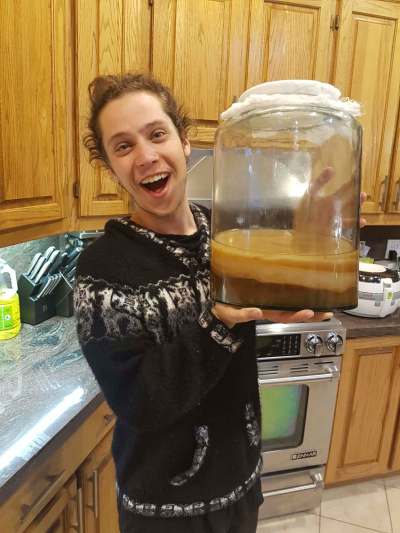
Ryan Maione’s interest in fermentation, yeasts and various cultures stems from an interest in all things kitchen-related, which led to him reading about fermentation, and specifically kombucha, online. In addition to making his own kombucha, the 20-year-old pastry chef at S Squared Patisserie has begun experimenting with making his own sauerkraut as well as batches of kimchi. He plans on taking a horticultural farming program in Victoria and then combining the two fields, working on small-scale and urban farms.
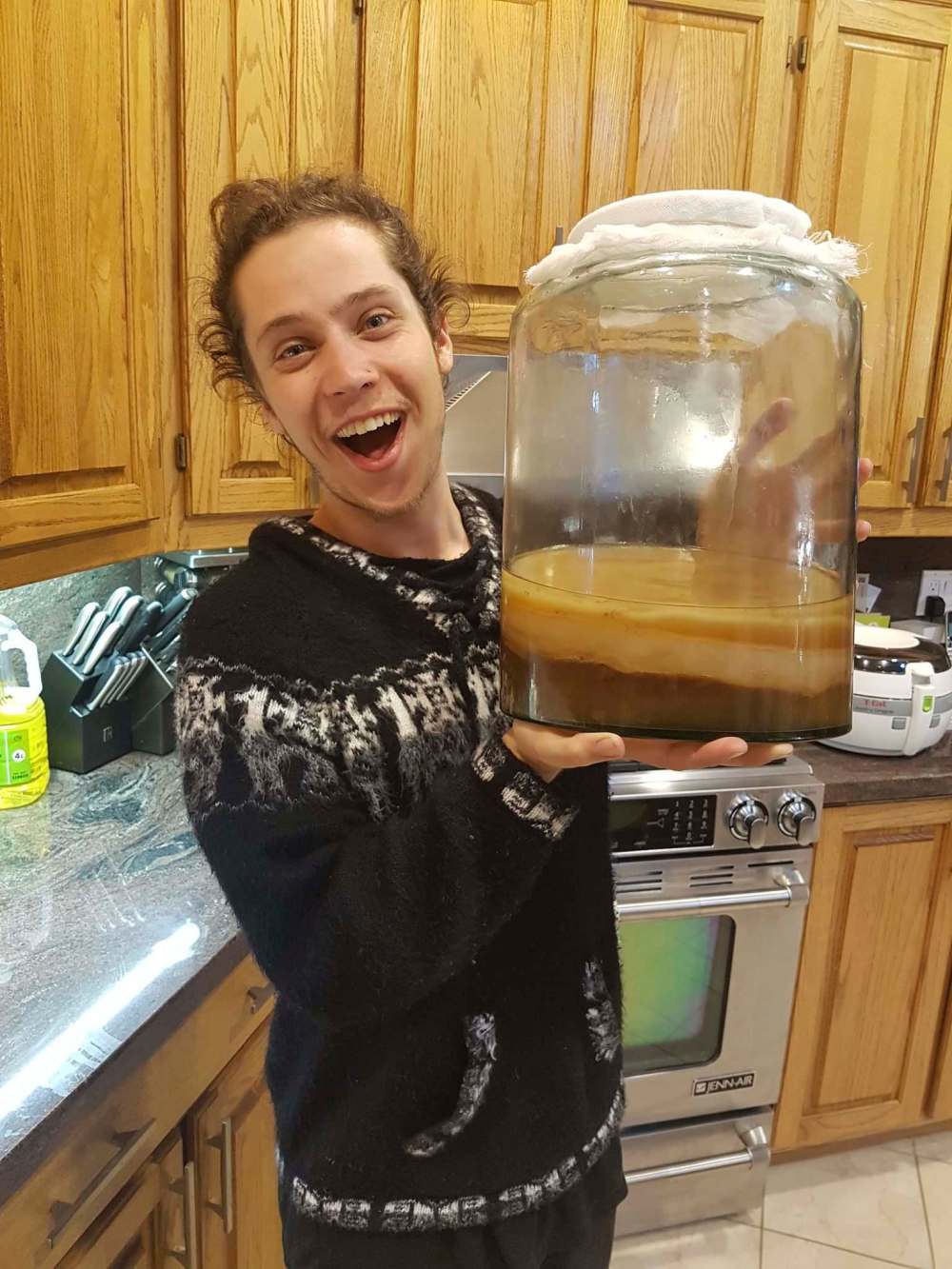
An avid traveller, Maione first tried kombucha while he was away. He first started making his own kombucha four years ago. “At first it wasn’t really as available here as it is now, so I started looking up how to make it.”
Maione has found there to be a learning curve and a fair bit of trial and error in perfecting his kombucha brewing process — some of which can be risky because carbon dioxide is involved. “It’s really important your bottles are fermentation-grade,” Maione notes.

“I bought some bottles from Ikea originally that are nice-looking, but they’re not fermentation-grade, and I’ve had a couple explode on me. It’s like a glass bomb.”
Making his own kombucha has allowed Maoine to experiment with a wide range of flavours. “I started out simple, with black tea, but it’s easy to get funky with the fruits. The last one I did was a vanilla rooibos tea, and I used orange to flavour it. It tasted a lot like a Creamsicle,” he says.
While Maione often trades bottles of his kombucha with friends who make it, he’s always open to sharing with those who are less familiar with the drink — a reflection of the community culture cultivated by kombucha homebrewers. “When my friends come over, I’ll offer them some kombucha to drink, and then a bottle to take home. I don’t think of the kombucha as mine — it’s more of a sharing thing. Getting the bottle back is all I care about.”
ben.macphee-sigurdson@freepress.mb.ca