

Thinking and feeling
Pollan’s search for self, musings on consciousness a dense, delightful trip
Advertisement
Read this article for free:
or
Already have an account? Log in here »
To continue reading, please subscribe:
Monthly Digital Subscription
$1 per week for 24 weeks*
- Enjoy unlimited reading on winnipegfreepress.com
- Read the E-Edition, our digital replica newspaper
- Access News Break, our award-winning app
- Play interactive puzzles
*Billed as $4.00 plus GST every four weeks. After 24 weeks, price increases to the regular rate of $19.95 plus GST every four weeks. Offer available to new and qualified returning subscribers only. Cancel any time.
Monthly Digital Subscription
$4.99/week*
- Enjoy unlimited reading on winnipegfreepress.com
- Read the E-Edition, our digital replica newspaper
- Access News Break, our award-winning app
- Play interactive puzzles
*Billed as $19.95 plus GST every four weeks. Cancel any time.
To continue reading, please subscribe:
Add Free Press access to your Brandon Sun subscription for only an additional
$1 for the first 4 weeks*
*Your next subscription payment will increase by $1.00 and you will be charged $16.99 plus GST for four weeks. After four weeks, your payment will increase to $23.99 plus GST every four weeks.
Read unlimited articles for free today:
or
Already have an account? Log in here »
Have you ever thought about what’s it like to be you? How is it that you can see, think, feel and experience everything from the taste of coffee to the pain of grief, or the redness of a rose?
If your head is already swimming then buckle up, as journalist and Harvard professor Michael Pollan takes us on a journey into consciousness in his new book, A World Appears.
Pollan has written about plants, food sustainability and, most recently, psychedelics. All of these prior subjects play a part in his newest and most complex book.
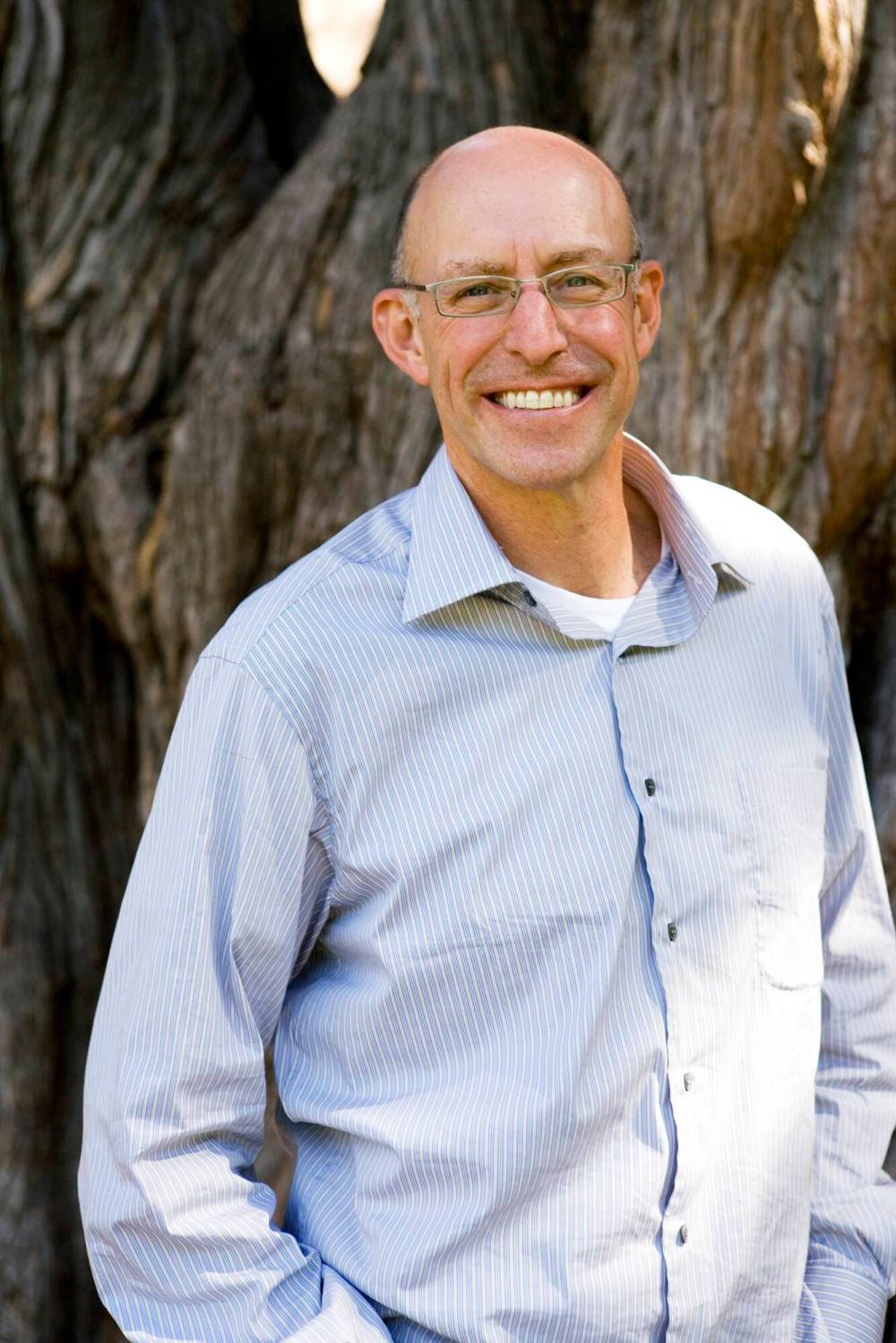
Alia Malley / Associated Press files
Michael Pollan
He begins by naming the “hard problem:” how is it that we have consciousness, and how the brain processes subjective experiences known as qualia (such as the list in the first paragraph.) In his journey into the relatively new field of consciousness study, Pollan interviews different scientists and philosophers as well as exploring literary and spiritual perspectives.
In each of the four long chapters — Sentience, Feeling, Thought and Self — there is consideration of what it means to be conscious.
The opening chapter delves into the question of whether plants have consciousness. This is perhaps the book’s strongest and clearest argument. Through close observation, plants exhibit markers of sentience. One experiment has a plant following the angles of a maze to find not cheese, but an ammonium nitrate gift at the end. The plant root is not as fast as a mouse, but through time-lapse photography the same intent and desire exhibited in the rodent is discovered in the plant.
Not surprisingly, Pollan’s journey goes toward artifical intelligence (AI) and scientists who are attempting to create a machine with true feelings, as well as ones with subjective experience. The AI section grows repetitive, and the reader gets a sense of how much Pollan is against machines gaining consciousness.
Singularity (the moment when AI surpasses human intelligence and begins improving itself) emerges as an ominous threat to humankind. A group working on creating a robot has promised that as soon as they achieve a conscious machine, they will pull the plug. Pollan doubts this, as does a Canadian psychologist who, observing this project, remarks “why don’t we just make a baby? We know how to do that.”
Pollan also shows how writers such as Virginia Woolf, James Joyce and Jane Austen have been showing us what it means to live inside another person. This is likened to Thomas Nagel’s seminal 1974 scientific paper What Is It Like to Be a Bat? Literature is dealing with a similar question posed to humans, and gives one of the best reasons we should all be reading more fiction.
This is a complex book, and you need to take your time with it — there are certainly parts that may not initially be understood, potentially requiring a re-read. In the coda to the book, The Cave, Pollan goes on a long, silent retreat, sent there by Roshi Joan Halifax, a Buddhist monk. In a literal cave, Pollan considers many of these questions, including the problem of how to get outside of his own consciousness so he can view it. He speaks freely of his use of psychedelics as a way of achieving this. In his psychedelic experiences, he becomes aware of the sentience of plants.
Other scientists share their experiences with psychedelics. One of the people currently trying to build a robot with feelings ingested a powerful venom from a desert toad. When the scientist came out of the trip, he said, “I now think there’s a spark of the divine or a spirit involved that is beyond what we are able to capture… I understood for the first time that everything is connected by the same substance, and that substance is love.”

A World Appears

Throughout all the interviews, Pollan describes each of the scientists by their physical appearance, notably their hairstyle, facial expressions and choice of clothing. Perhaps this is to make a dense book more welcoming, or to humanize those we think of in lab coats peering into microscopes.
But by the end the reader (and Pollan) is left with the same hard problem of consciousness. It doesn’t spoil anything to say that in concluding, Pollan knows even less than when he began five years earlier.
As Roshi Joan tells him, “that’s good! That’s progress.” She encourages Pollan to “always keep a don’t-know mind… sometimes not-knowing opens us up to more possibilities…”
When we consider the deepest of mysteries, consciousness, this makes sense. It is, after all, more about the journey than the clear destination.
Craig Terlson is a Winnipeg writer and science geek who is fairly certain he is conscious most of the time.