

Influencer’s vision loss leads to advocacy
Advertisement
Read this article for free:
or
Already have an account? Log in here »
To continue reading, please subscribe:
Monthly Digital Subscription
$0 for the first 4 weeks*
- Enjoy unlimited reading on winnipegfreepress.com
- Read the E-Edition, our digital replica newspaper
- Access News Break, our award-winning app
- Play interactive puzzles
*No charge for 4 weeks then price increases to the regular rate of $19.95 plus GST every four weeks. Offer available to new and qualified returning subscribers only. Cancel any time.
Monthly Digital Subscription
$4.99/week*
- Enjoy unlimited reading on winnipegfreepress.com
- Read the E-Edition, our digital replica newspaper
- Access News Break, our award-winning app
- Play interactive puzzles
*Billed as $19.95 plus GST every four weeks. Cancel any time.
To continue reading, please subscribe:
Add Free Press access to your Brandon Sun subscription for only an additional
$1 for the first 4 weeks*
*Your next subscription payment will increase by $1.00 and you will be charged $16.99 plus GST for four weeks. After four weeks, your payment will increase to $23.99 plus GST every four weeks.
Read unlimited articles for free today:
or
Already have an account? Log in here »
Imagine you cannot drive, go for a walk unaccompanied, read a book, cook, watch TV or see the flowers, trees and birds all around you. Even the faces of those you love elude you. Now imagine being repeatedly bullied and excluded by “friends” and strangers alike because of these very issues.
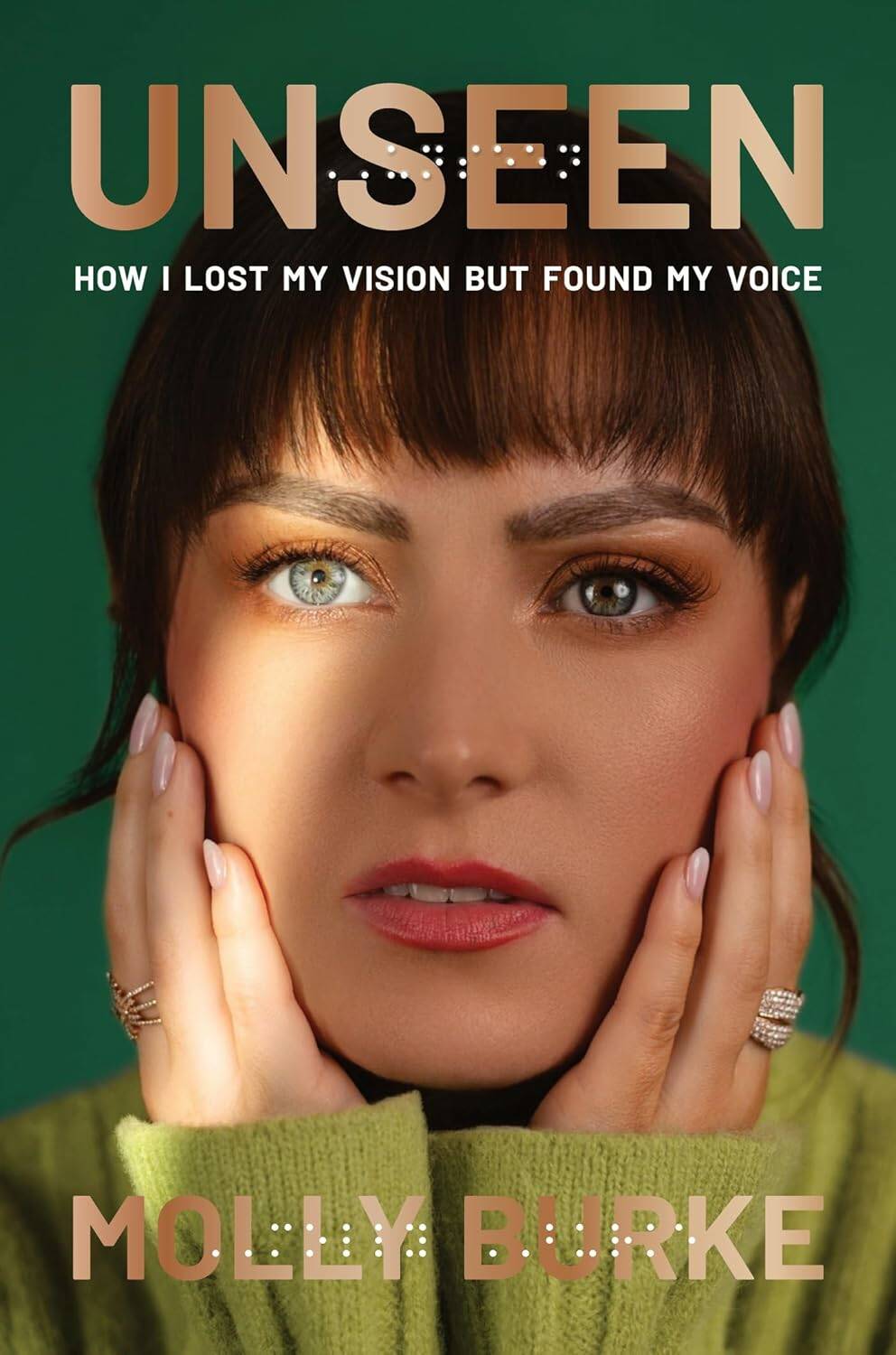
Molly Burke, a young public speaker, millennial advocate for the disabled and author of the memoir Unseen, has lived with this reality for much of her life. Raised in Canada, she is now based in the U.S.
Unseen tells the story of a young girl who from infancy has had to deal with the devastating effects of a rare genetic eye disease, retinitis pigmentosa, and tries to cope with the tragic lows (and occasional highs) of her disability.
Unseen
Unseen is sad and funny, bold and sassy and joyful — much like the writer herself. “I want you to walk away feeling better off having read this book. So in the pages that follow there will be equal parts loss and resilience, the duality that is life,” Burke writes.
Her story begins when she is an infant and is incorrectly diagnosed with a temporary type of vision disorder. It’s not until her eyesight worsens that she is finally diagnosed accurately, at age five, with retinitis pigmentosa.
Burke tells us the affliction is incurable, and that her vision would become slowly worse over the years. What the doctors, her parents and Burke herself didn’t know was that she would lose most of her vision much faster than others with the disease, by age 14.
When she was little and still had partial vision, Burke’s parents got her involved with an organization called Ending Blindness, where she was drawn to public speaking. She was five and loved every minute of it.
When Burke’s vision loss becomes almost complete as a young teenager, she lost her hope, her confidence and her trust in the organization’s beliefs, and became suicidal.
With the help of her devoted parents Burke recovered, realizing she “could choose to remain a victim, or… choose to be a survivor.”
She then takes the reader through her encounters with childhood bullies, the death of her beloved guide dogs, what she describes as toxic workplaces and her struggles to become an advocate for the disabled. Burke is critical of various disability organizations, but writes about the many joyous parts of her journey as well.
Through much of this, Burke was made to feel “unseen,” hence the memoir’s title.

She tells us that “80 per cent of blind people were unemployed in Canada” when she was growing up. “I didn’t just have to check the boxes, I had to add bigger and better ones. Other people can just be ‘good enough,’ but I would have to be GREAT.”
Needless to say, Burke beat the odds, becoming a determined, outspoken and lifelong advocate for those with similar obstacles. Despite the barriers in her life, she becomes an extremely popular social media influencer, an entrepreneur and a well-known public speaker for the blind community, spreading her message on stages throughout the world.
This quick and easy read is sometimes hampered by Burke’s tendency to jump around in a non-linear fashion, relating events from her childhood, leaping forward in time and then jumping back again. And she’s not opposed to using colourful language to get her point across.
Overall, Burke’s memoir is so informative, educational and inspiring that those who work with the blind community, belong to it or suffer from low vision will likely find it an important read. Readers could make a difference in their own lives and in the lives of people with various disabilities — of those who go “unseen.”
Cheryl Girard is an Interlake writer. Unseen is also available in audio version and is printed in a typeface considered more legible for those with low vision.