

Charming Cherokee teen shoots for the stars
Advertisement
Read this article for free:
or
Already have an account? Log in here »
To continue reading, please subscribe:
Monthly Digital Subscription
$0 for the first 4 weeks*
- Enjoy unlimited reading on winnipegfreepress.com
- Read the E-Edition, our digital replica newspaper
- Access News Break, our award-winning app
- Play interactive puzzles
*No charge for 4 weeks then price increases to the regular rate of $19.95 plus GST every four weeks. Offer available to new and qualified returning subscribers only. Cancel any time.
Monthly Digital Subscription
$4.99/week*
- Enjoy unlimited reading on winnipegfreepress.com
- Read the E-Edition, our digital replica newspaper
- Access News Break, our award-winning app
- Play interactive puzzles
*Billed as $19.95 plus GST every four weeks. Cancel any time.
To continue reading, please subscribe:
Add Free Press access to your Brandon Sun subscription for only an additional
$1 for the first 4 weeks*
*Your next subscription payment will increase by $1.00 and you will be charged $16.99 plus GST for four weeks. After four weeks, your payment will increase to $23.99 plus GST every four weeks.
Read unlimited articles for free today:
or
Already have an account? Log in here »
No person “is an island, Entire of itself,” according to John Donne. Human contentment involves convoluted satisfactions: love and friendship, self-esteem and accomplishment.
Stephanie Harper wants to be the first Cherokee in space. How much of that is ambition, and how much results from discomfort in living situations, is the subject of Nashville-based Cherokee author Eliana Ramage’s excellent, wrenching and satisfying first novel.
Ramage narrates from various characters’ points of view. Steph’s begins at age 13, anxious to find acceptance into Phillips Exeter Academy, which she considers essential to her path to space.
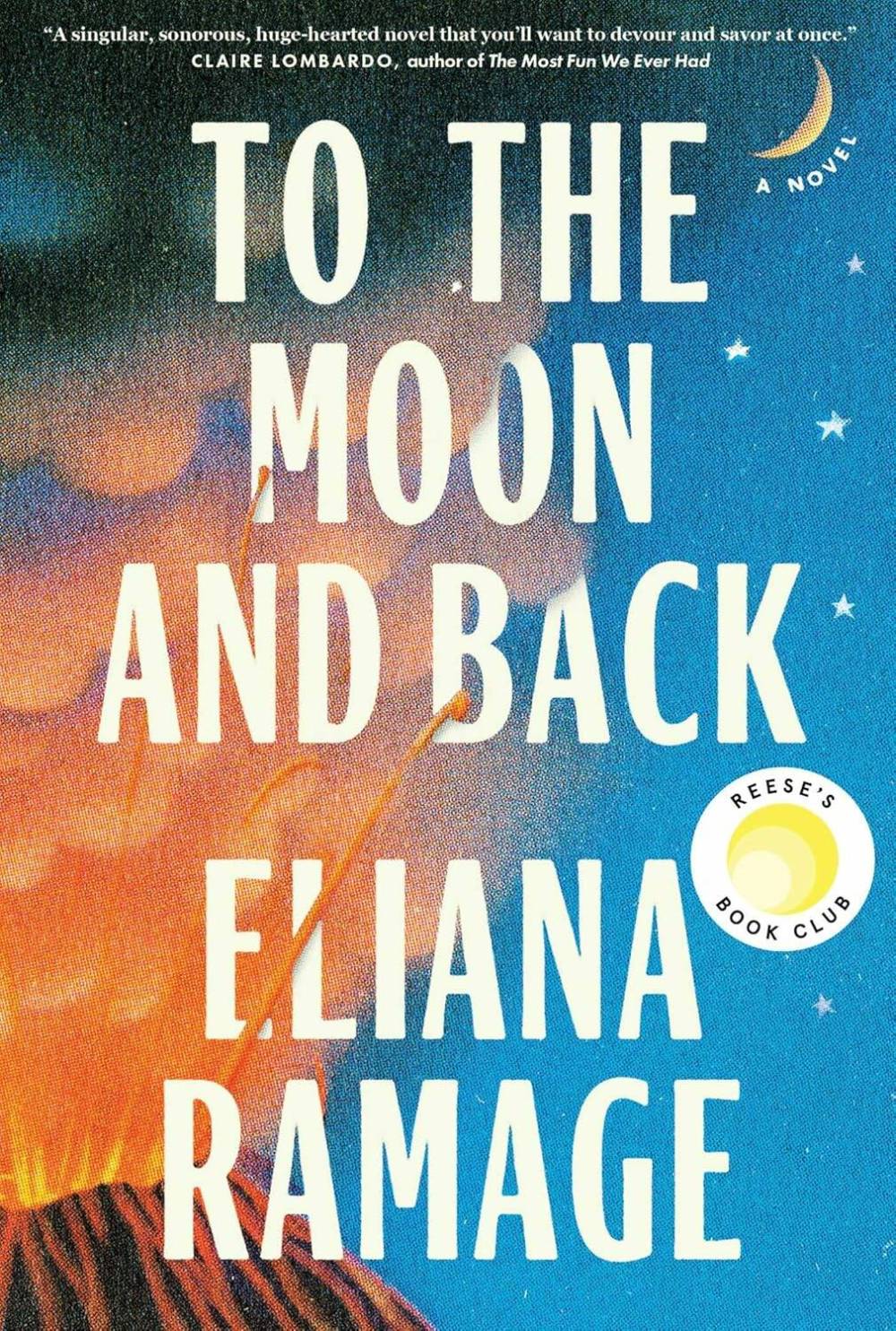
To the Moon and Back
Her mother, Hannah, unable even to afford Space Camp, designs a cultural substitute for her daughters and their friends.
Stephanie’s younger sister Kayla finds her sense of self in her identity in Indigenous culture and history. Dismissing what she has been calling “nerd-camp,” she says, “You’re gonna make Cherokee Culture Camp all spacey, aren’t you?”
Steph is both protective and resentful of Kayla, who “belonged, happily, like she’d sprouted out of the ground behind this house.”
Another main character, Della, is a famous Cherokee adopted by Mormons. Confused by cultural conflict in her past, she laments, “Every person who loved me, loved me in a certain way, as a certain person I couldn’t fully be.”
Della and Steph connect at university, their Indigenous backgrounds and lesbianism in common. Their relationship and expanding circles of family and friends in NASA (unexpectedly, the Native American Students Association) draw the reader into an entirely believable, if astoundingly complex, vortex of human relationship.
Limitations of scientific ideas about animal behaviour and cosmology to anchor human behaviour are a recurring motif.
Eventually, Steph’s astronaut training brings her to a dome on the slopes of Mauna Loa in Hawaii, practicing for a Mars mission. Kayla and her partly Indigenous daughter Felicia have joined the camp protesting the expense of space travel.
Steph says that Kayla rejected aspects of her past “because they didn’t fit into the kind of Indian she wanted to be. Or… the kind she needed to be seen as.”
Steph’s actions and decisions throughout the novel show her growth, even as they can disrupt lives. Attempts to connect with fellow trainee Nadia, and protect Kayla and Felicia, lead to unexpected and dismally realistic consequences.
Besides the various first-person chapters, Ramage occasionally advances the plot with blogs (such as Kayla’s thatindigenousmama.com), social media and emails. After Steph’s narration about her sister, and her own posts, Kayla’s first-person chapter illustrates differences between online shorthand and people’s complicated motivations.
Ramage sometimes moves ahead withholding crucial information: answers to questions, responses to characters’ actions or decisions. While mystifying, the subsequent revealing developments usually enlighten, and show how people live life without complete understanding.

Some of the revelations involve history (an Author’s Note lists which incidents are factual) or past situations which drastically alter characters’, and readers’, opinions. Kayla decides to consider forebears differently, “to understand them not as ancestors, but as people.”
Frequent momentous and emotionally effective revelations help centre Steph’s developing ability to accept herself. Her own confessions, and those of her mother and others, ring true, and are emotionally dizzying.
A late, sensational climax presents Steph with an impossible choice that leads to more soul searching and the subsequent denouement. Eventual reconciliation allows Steph, and many others, to fulfil Della’s hope: “I just think you should be allowed, like any person without your, um, your past, to do what you want?”
Readers may dread the end of To the Moon and Back, having spent time with such interesting characters Ramage has introduced so thoroughly.
Bill Rambo is a retired teacher living in Landmark.