Policing, MAID among issues on Writers’ Trust short list for $60K policy book prize

Advertisement

Advertise with us

TORONTO - Policing, medical assistance in dying and smart cities are among the contentious topics covered by the finalists for a $60,000 public policy book prize.

Read this article for free:


By clicking the button above, an account will be created and you will begin to receive some of our recommended newsletters. You may opt out of any newsletter by visiting your Email and Communication Preferences page or by clicking "unsubscribe" at the bottom of any email.

or

Already have an account? Log in here »

To continue reading, please subscribe:

Digital Subscription

One year of digital access for only $1.44 a week*

  • Enjoy unlimited reading on winnipegfreepress.com
  • Read the E-Edition, our digital replica newspaper
  • Access News Break, our award-winning app
  • Play interactive puzzles

*Billed as $5.77 plus GST every four weeks. After 52 weeks, price increases to the regular rate of $19.95 plus GST every four weeks. Offer available to new and qualified returning subscribers only. Cancel any time.

To continue reading, please subscribe:

Add Free Press access to your Brandon Sun subscription for only an additional

$1 for the first 4 weeks*

  • Enjoy unlimited reading on winnipegfreepress.com
  • Read the E-Edition, our digital replica newspaper
  • Access News Break, our award-winning app
  • Play interactive puzzles
Start now

*Your next Brandon Sun subscription payment will increase by $1.00 and you will be charged $17.95 plus GST for four weeks. After four weeks, your payment will increase to $24.95 plus GST every four weeks.

Hey there, time traveller!
This article was published 28/09/2022 (1495 days ago), so information in it may no longer be current.

TORONTO – Policing, medical assistance in dying and smart cities are among the contentious topics covered by the finalists for a $60,000 public policy book prize.

The Writers’ Trust of Canada announced the five titles Wednesday shortlisted for the Balsillie Prize for Public Policy, which recognizes the best non-fiction book shaping Canadian discourse about policy issues. The winner will be named on Nov. 29.

Contenders include “The Last Doctor: Lessons in Living from the Front Lines of Medical Assistance in Dying,” co-authored by Dr. Jean Marmoreo and Johanna Schneller, a first-hand account of end-of-life care, published by Viking Canada.

The cover of the book
The cover of the book ""The Last Doctor: Lessons in Living from the Front Lines of Medical Assistance in Dying," is shown in a handout. Medical assistance in dying and smart cities are among the contentious topics covered by the finalists for a $60,000 public policy book prize. THE CANADIAN PRESS/HO

Also in the running are legal scholar Kent Roach’s “Canadian Policing: Why and How It Must Change,” published by Delve Books, and journalist John Lorinc’s “Dream States: Smart Cities, Technology, and the Pursuit of Urban Utopias,” from Coach House Books.

Kim Stanton, a lawyer and commissioner to the Mass Casualty Commission investigating the 2020 killing spree in Nova Scotia, is nominated for “Reconciling Truths: Reimagining Public Inquiries in Canada,” published by UBC Press.

Rounding out the short list is scientist and policy analyst Vaclav Smil’s “How the World Really Works: The Science Behind How We Got Here and Where We’re Going,” published by Viking.

This report by The Canadian Press was first published Sept. 28, 2022.

Report Error Submit a Tip

More Stories

Court ruling concludes Canadian Wheat Board saga

Laura Rance-Unger 4 minute read Preview

Court ruling concludes Canadian Wheat Board saga

Laura Rance-Unger 4 minute read Yesterday at 2:01 AM CDT

It remains to be seen whether the recent court ruling in a lawsuit filed after Canadian Wheat Board’s dissolution in 2012 puts the whole debate to rest, as some no doubt hope.

But either way, the dust has settled on the post-CWB world. The sun still rises and a new generation of farmers on the land only knows by name an institution that for generations influenced every aspect of Prairie grain farming.

The first Rural Revival column I wrote for this newspaper more than 30 years ago was about a thousand farmers from Western Canada demonstrating in support of the Wheat Board. It was in the aftermath of the Western Grain Marketing Panel report, one of several efforts that eventually included a plebiscite to help the federal government decide what to do about a vocal minority of farmers who wanted marketing “freedom.”

The polls at the time suggested about two-thirds of farmers were comfortable enough with the single-desk system for food wheat and barley to keep it around. It served as a counterbalance to canola, which they sold on the open market. They essentially had a dual market.

Read
Yesterday at 2:01 AM CDT

Imperialist crusades: 21st-century style

John R. Wiens 5 minute read Preview

Imperialist crusades: 21st-century style

John R. Wiens 5 minute read Wednesday, Jul. 8, 2026

In the 11th century and lasting into the 13th, the papacy launched a series of at least eight military campaigns we now refer to as the Crusades, or Holy Wars. They were an imperialistic call to arms for Christians to retake Jerusalem, which was at the time under Muslim rule.

Spiritual rewards for participation were implied, and other incentives offered, to dull the extra taxation demanded to fund the campaigns. Over time, the “crusades” morphed to become massacres of not only Muslims but also Jews and Christian dissidents — in other words, any enemies of the papacy. If today’s news sounds like déjà vu all over again, it probably should.

The stories keep repeating themselves in many forms. We now know that two 20th century world wars, global in scope, were caused by imperialistic ambitions, changes in the balance of international powers and corresponding arms races. The first was attributed to the assassination of the heir to the Austro-Hungarian throne by a Bosnian Serb, a kind of “regime change” initiative. The second resulted from rising tensions between Allied and Axis powers, triggered by the rise of European fascism and Japanese militarism. The human toll of both was unimaginable.

In the First World War, 15 to 22 million people, including soldiers and civilians, were killed and another 23 million were wounded. These numbers do not account for those otherwise affected — victims of chemical warfare whose compromised health shortened their lives; of the subsequent Spanish flu epidemic amplified by the displacement of peoples; others who died from other diseases caused by war conditions; and those who were malnourished or starved. Nor do they account for the ongoing trauma and resentments passed on intergenerationally to this day.

Read
Wednesday, Jul. 8, 2026

Letters, Oct. 31

6 minute read Yesterday at 2:01 AM CDT

Civic election a missed opportunity

The outcome of the latest municipal election in Winnipeg is nothing short of baffling. The decline of what was once a proud, beautiful prairie hub is impossible to ignore.

Winnipeg is rapidly sliding into a state of structural and social dilapidation, yet voters have inexplicably chosen to hand incumbent Mayor Scott Gillingham a second term. The decision smells of complacency, and sadly, it represents a massive missed opportunity for real urban renewal.

Walking through downtown Winnipeg today is an exercise in heartbreak. A city centre that should be a bustling economic and cultural core has instead transformed into an absolute eyesore. Encampments and tents are permitted to dot the heart of the city. Streets that used to thrive are now dominated by the tragic, visible reality of severe addiction, with individuals wandering and staggering through public spaces without adequate intervention or care.

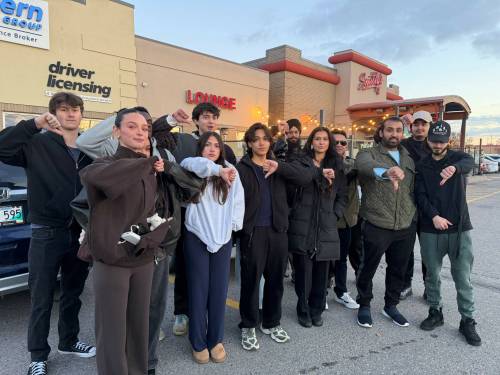
Walkout creates chaos at St. James Smitty’s

Morgan Modjeski 3 minute read Preview

Walkout creates chaos at St. James Smitty’s

Morgan Modjeski 3 minute read Yesterday at 2:01 AM CDT

Gordon Sharpe wanted to eat a meal at the St. James Smitty’s Wednesday, but he got a helping of bad news instead.

He saw several workers walk out of the restaurant, at 1017 St. James St.

“(The waiter) came back about 10 minutes later and stood over the table, looking a little distraught and said, ‘I’m quitting right now and so is everybody else,’” Sharpe said. “He said, ‘This is my last time serving you,’ and he was quite choked up.”

“I’ve never seen anything like it,” he said, adding that the managers scrambled to serve patrons.

Read
Yesterday at 2:01 AM CDT

Say What?! Sports guys travel to new destination

Steve Lyons and Paul Wiecek 16 minute read Preview

Say What?! Sports guys travel to new destination

Steve Lyons and Paul Wiecek 16 minute read Thursday, Jan. 30, 2020

Say What?! is an email conversation between sports editor Steve Lyons and sports columnist Paul Wiecek. Look for us regularly but intermittently on the Free Press website.


Steve Lyons: Heya. How you doing? How’s 2020 treating you so far?

Few things to get us started:

Read
Thursday, Jan. 30, 2020

A little toponder, a lot to celebrate

Erna Buffie 5 minute read Yesterday at 2:01 AM CDT

Well, another civic election season has come and gone, and I have to say it was a doozy. The most surprising event was the steady climb in support for young mayoral candidate Noah Redden, who started out with just four per cent public support in September but had reached a solid 14 per cent support in October.

On election day, Redden nearly came in second, less than one percentage point behind Kevin Klein, an experienced politician.

Indeed, the 27-year-old’s accomplishment was nothing short of astonishing. Particularly given that his shoestring campaign was given very little coverage — largely, according to one pundit, because he didn’t send out any press releases.

This when Redden’s unwritten press releases were there for everyone to see on Instagram, as he popped up in locations across the city, posting videos about what he hoped to achieve as mayor.