Labour of love Architectural gem stepped in city’s labour history continues as hub for Ukrainian community
Read this article for free:
or
Already have an account? Log in here »
To continue reading, please subscribe:

Digital Subscription
One year of digital access for only $205*
- Enjoy unlimited reading on winnipegfreepress.com
- Read the E-Edition, our digital replica newspaper
- Access News Break, our award-winning app
- Play interactive puzzles
*First annual payment billed as $205.00 + GST for one year. This annual subscription will automatically renew at $233.00 + GST every 52 weeks (10% off the regular annual price of $259.35). Offer available to new and qualified returning subscribers only. Cancel any time.
To continue reading, please subscribe:
Add Free Press access to your Brandon Sun subscription for only an additional
$1 for the first 4 weeks*
- Enjoy unlimited reading on winnipegfreepress.com
- Read the E-Edition, our digital replica newspaper
- Access News Break, our award-winning app
- Play interactive puzzles
*Your next Brandon Sun subscription payment will increase by $1.00 and you will be charged $17.95 plus GST for four weeks. After four weeks, your payment will increase to $24.95 plus GST every four weeks.
Read unlimited articles for free today:
or
Already have an account? Log in here »
Hey there, time traveller!
This article was published 27/05/2022 (1596 days ago), so information in it may no longer be current.
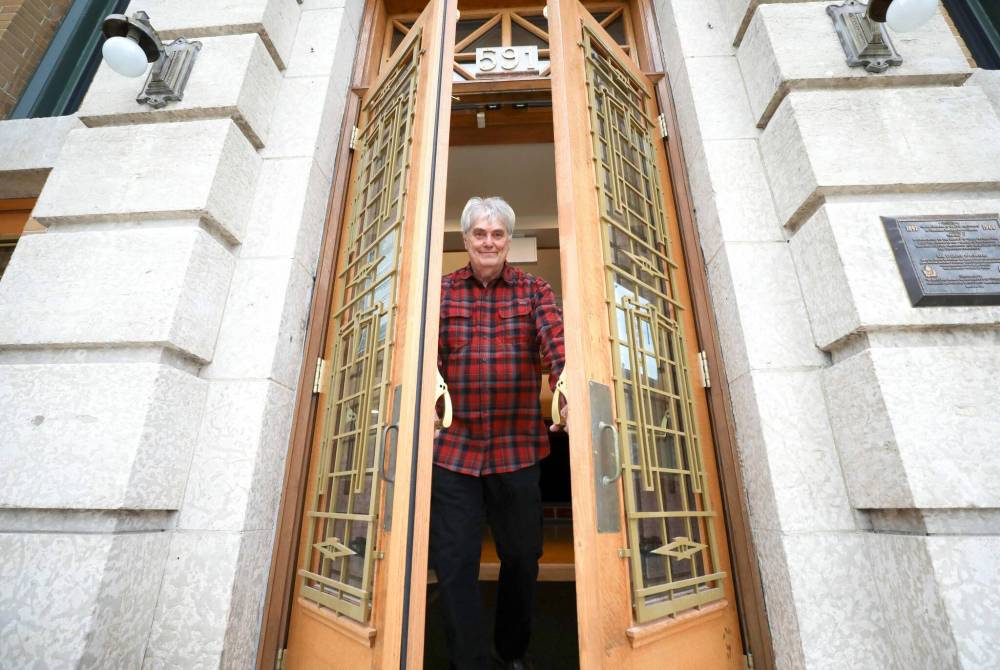
The Ukrainian Labour Temple, located at the corner of Pritchard and McGregor, is a beautiful structure. Designed by Robert Edgar Davies in the neoclassical style and built from buff-coloured brick and Manitoba Tyndall stone, it has a simple, elegant, four-square presence, its solid mass lightened by tall, slender windows and topped with a streamlined cornice.
In the high-ceilinged main hall, there are delicate geometric details in the moulding, now picked out in vibrant blue and deep red, colours that are often seen in traditional Ukrainian needlework and textiles.
In terms of class struggle, the neoclassical style of the 19th and early 20th centuries tended to be associated more with capital – stately banks and lavish department stores – than labour. The Ukrainian Labour Temple feels like a bricks-and-mortar statement that the working classes of Winnipeg’s North End deserved a building that was not just functional but also beautiful. “Bread for all, and roses, too” as the poetic political slogan goes.
Beyond its architectural value, the building has huge historic significance, which partly comes down to timing. According to Sabrina Janke, a Winnipeg-based historian and co-host of the podcast One Great History: “It’s one of the last remaining labour buildings involved in the Winnipeg General Strike of 1919.
“It opens in February 1919, so literally months before the strike. There’s a print shop in the basement, and when the strike launches, they start using the Labour Temple to print strike material, which leads to the building being one of the ones that’s raided on June 17.”
The RCMP ransacked the offices and print shop, seizing documents and correspondence. “That’s one of the things that kicks off Bloody Saturday,” says Janke.
The Ukrainian Labour Temple is one of the featured stops in Heritage Winnipeg’s Doors Open weekend event.
More than a century after it was linked to one of the most important events in Canadian labour history, the Ukrainian Labour Temple is still standing and still a busy hub for Ukrainian culture and progressive politics.
“The ULTA, the Ukrainian Labour Temple Association, which was the name of the original organization that was founded to build the building, was a combination of artistic and cultural groups and political groups,” explains Glenn Michalchuk, the president of the Association of United Ukrainian Canadians (the organization’s current name).
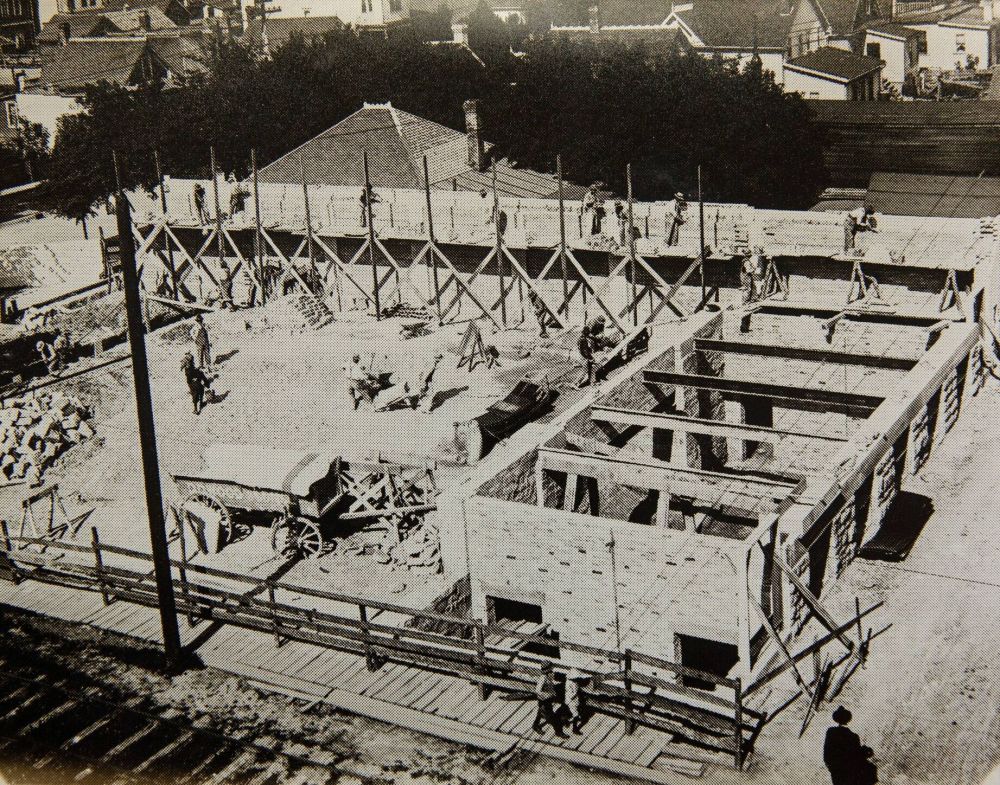
“This was a place for drama, arts and music and for the political work of the Ukrainian Social Democratic Party,” he goes on. “Constructed with all-volunteer labour and by money entirely raised among the immigrant community, it has continuously been in the possession of the Ukrainian community that built it.”
In the temple’s early years, its North End neighbourhood was home to immigrants, mostly Eastern European, many of whom worked in factories and the nearby railyards. The temple assisted newcomers with English-language classes and other community supports. In 1922, the association helped form the Workers’ Benevolent Association, which provided a rudimentary form of illness and death benefits.
Janke lists some of the temple’s many functions: “Funerals. Bingo. A school for Ukrainian children that had 400 children attending in the 1920s. They would have theatrical shows and bring in bands. They had a writer-in-residence for number of years.”
There were mandolin orchestras, choirs, dance groups, handicraft classes, sports activities, celebratory suppers, left-leaning poetry clubs, reading circles and lecture series. This being Manitoba, there were also socials.
Eventually, with all this use over the decades, “the building was suffering,” Michalchuk says. Some of the exterior bricks were damaged from erosion and over-enthusiastic pressure-washing, the transom window over the main door was boarded up with plywood, and the original windows had been replaced with glass blocks some time in the 1960s. The elegant entranceway opened, rather anticlimactically, into a cramped space with a dropped ceiling.
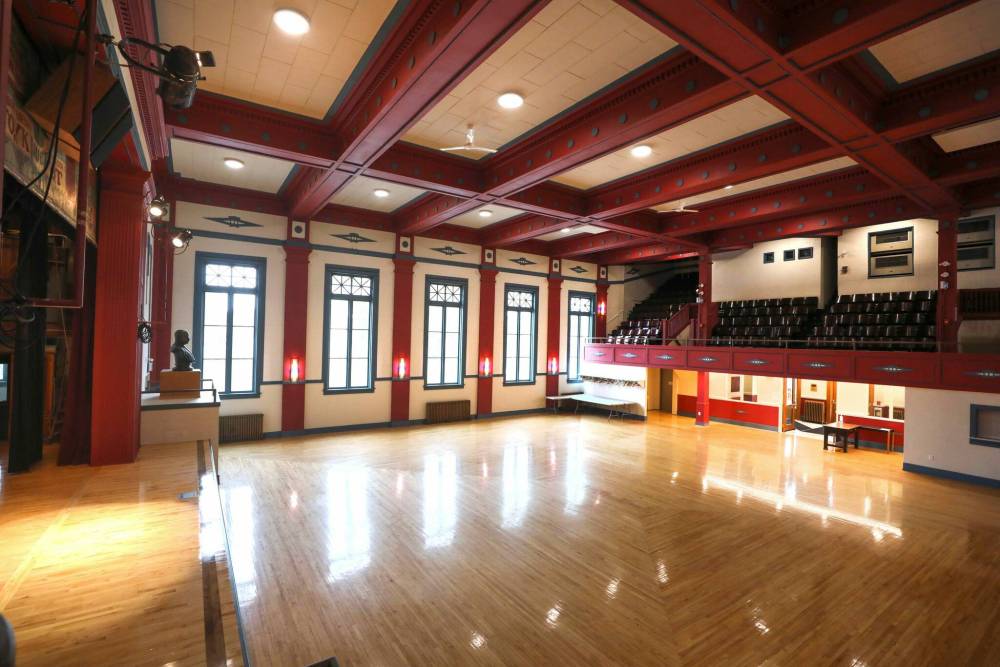
The Ukrainian Labour Temple is protected through heritage designation by all three levels of government — and next year will be under consideration as a world heritage site in the proposed UNESCO category of workers’ assembly halls — so renewing the structure has required a deft touch that preserves its architectural character and unique historical legacy while bringing it up to contemporary code.
An extensive renovation and conservation project, undertaken by GW Architecture and finished in 2021, carefully replaced damaged exterior bricks with bricks taken from behind the interior stage, replicated the look of the original windows, restored the front doors, and once again opened up the foyer. Staircases that were twisty and dark were brightened and made safer, and washrooms were modernized. The work won a Heritage Winnipeg Preservation Award this year.
Most importantly, for Michalchuk, the building now has universal accessibility, with a street-level front entrance that opens onto a lift. “We needed to make it accessible to make it a viable community space,” he says.
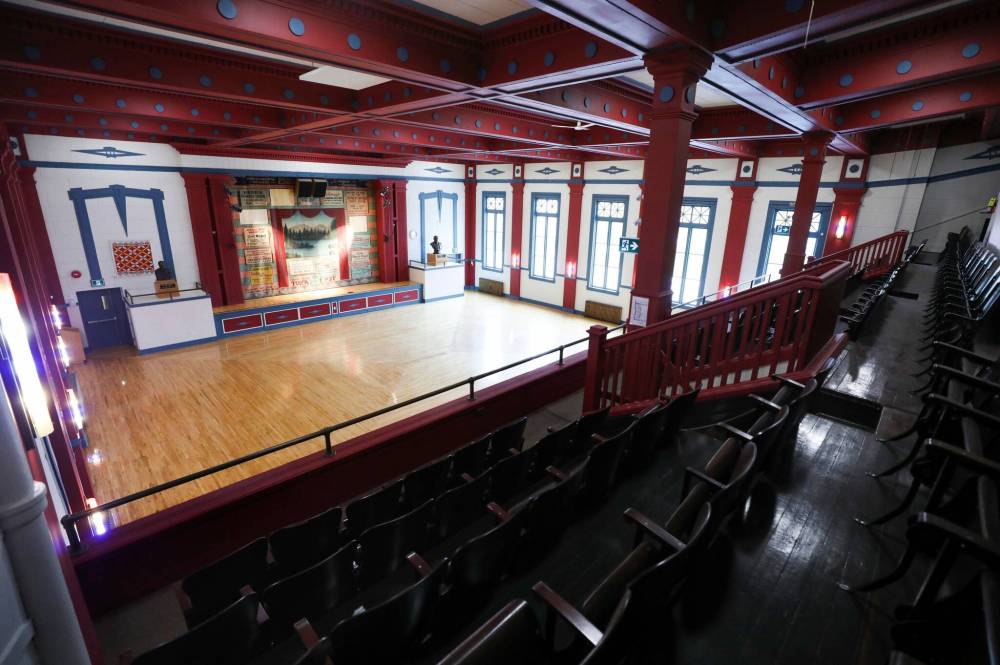
Throughout these changes, key elements have been preserved, like the original balcony seating – dark wood flip-up chairs that cleverly conceal metal hat racks underneath. (As archival pictures of the Winnipeg General Strike demonstrate, that was an era of hats.)
The stage’s fire curtain has been kept as it was decades ago, with painted advertisements for neighbourhood businesses, including some that still exist today, like Naleway Catering and Cropo Funeral Chapel. On the back of the curtain is a beautifully painted backdrop featuring a landscape of farm fields and factories that calls up socially-engaged theatre productions of the past.
And hidden away downstairs is an intact vintage lunch counter, complete with chrome-edged spinning stools and some arborite tables. “That’s our next project,” according to Michalchuk.
Like the building, the organization’s political component has stood up to a century of history. There was a brief rupture in 1939, at the outbreak of the Second World War, when the Canadian government seized the property and temporarily turned it over to a right-leaning Ukrainian group. “There were fights outside the building because the Ukrainian nationalists were trying to plaster over the Labour Temple cornerstone,” said Janke.
Martyr’s shrine among destinations on Doors Open weekend
Posted:
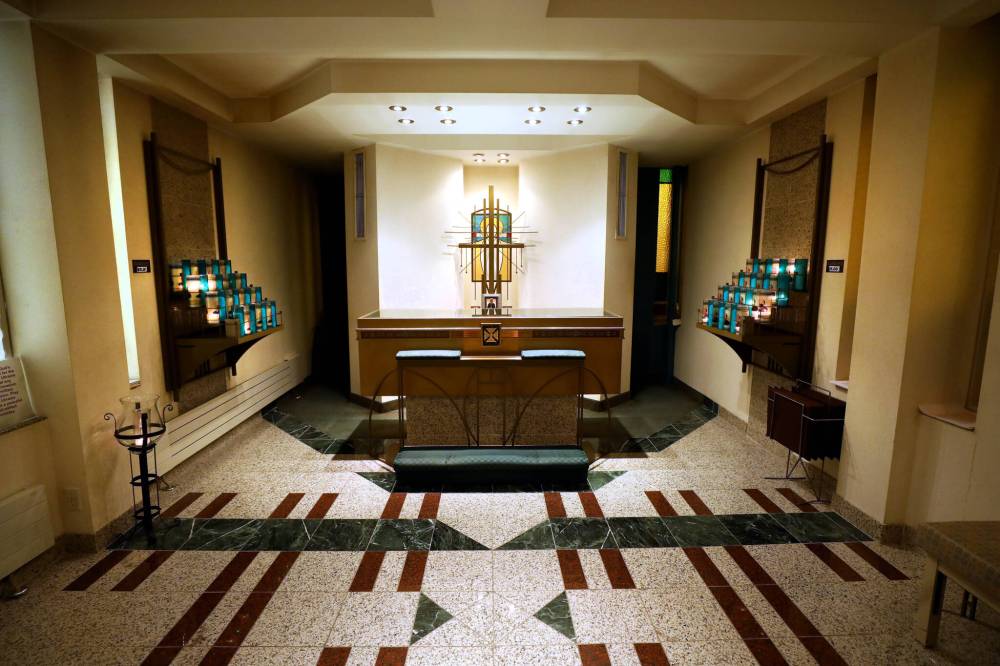
On Jefferson Avenue, attached to St. Joseph’s Ukrainian Church, sits an unassuming beige brick building housing the mortal remains of Blessed Vasyl Velychkovsky, a Ukrainian Catholic martyr beatified by Pope John Paul II in 2001.
“There has always been a myriad of political issues going on,” she suggests. “It’s gone through a couple of iterations through the years, as the group’s politics have shifted and the world has changed around it, but it’s essentially still a group of Ukrainian workers.”
In boxes in the upstairs offices, there are posters for Depression-era labour picnics, for International Women’s Day events in the 1970s, for protests calling for nuclear disarmament during the Reagan years. As Michalchuk suggests, “As the Association of United Ukrainian Canadians, it has always been about a progressive social agenda for Canada. That’s the main thing.”
Just recently the Ukrainian Labour Temple held a fundraiser for Ukraine, with money raised going to Doctors Without Borders. Coming full circle, the organization is preparing to welcome another wave of Ukrainian newcomers, this time refugees from the current war.
alison.gillmor@freepress.mb.ca
Landmarks: Unique and iconic Winnipeg locations
Posted:
Landmarks is a monthly feature in which columnist Alison Gillmor explores unique and iconic Winnipeg buildings and locations.

Studying at the University of Winnipeg and later Toronto’s York University, Alison Gillmor planned to become an art historian. She ended up catching the journalism bug when she started as visual arts reviewer at the Winnipeg Free Press in 1992.
Our newsroom depends on a growing audience of readers to power our journalism. If you are not a paid reader, please consider becoming a subscriber.
Our newsroom depends on its audience of readers to power our journalism. Thank you for your support.