Figaro delivers high notes, high emotion amid the hijinks
Advertisement
Read this article for free:
or
Already have an account? Log in here »
To continue reading, please subscribe:

Digital Subscription
One year of digital access for only $205*
- Enjoy unlimited reading on winnipegfreepress.com
- Read the E-Edition, our digital replica newspaper
- Access News Break, our award-winning app
- Play interactive puzzles
*First annual payment billed as $205.00 + GST for one year. This annual subscription will automatically renew at $233.00 + GST every 52 weeks (10% off the regular annual price of $259.35). Offer available to new and qualified returning subscribers only. Cancel any time.
To continue reading, please subscribe:
Add Free Press access to your Brandon Sun subscription for only an additional
$1 for the first 4 weeks*
- Enjoy unlimited reading on winnipegfreepress.com
- Read the E-Edition, our digital replica newspaper
- Access News Break, our award-winning app
- Play interactive puzzles
*Your next Brandon Sun subscription payment will increase by $1.00 and you will be charged $17.95 plus GST for four weeks. After four weeks, your payment will increase to $24.95 plus GST every four weeks.
Read unlimited articles for free today:
or
Already have an account? Log in here »
You’d be hard pressed to find a more madcap opera than Mozart’s The Marriage of Figaro, the closing production of Manitoba Opera’s 2025/26 season, with the beloved opera buffa chronicling one crazy day in the lives of its love/lust-struck characters.
The three-plus-hour production (including one intermission) — originally created by Pacific Opera Victoria in 2024 and stage directed locally by Winnipeg’s Robert Herriot — opened Saturday night and runs through Friday.
It’s the final work presented by MO’s outgoing artistic director, Larry Desrochers, stepping down after 25 years at the helm, and it’s a final curtain call that leaves us laughing at the preposterous imponderables of life.
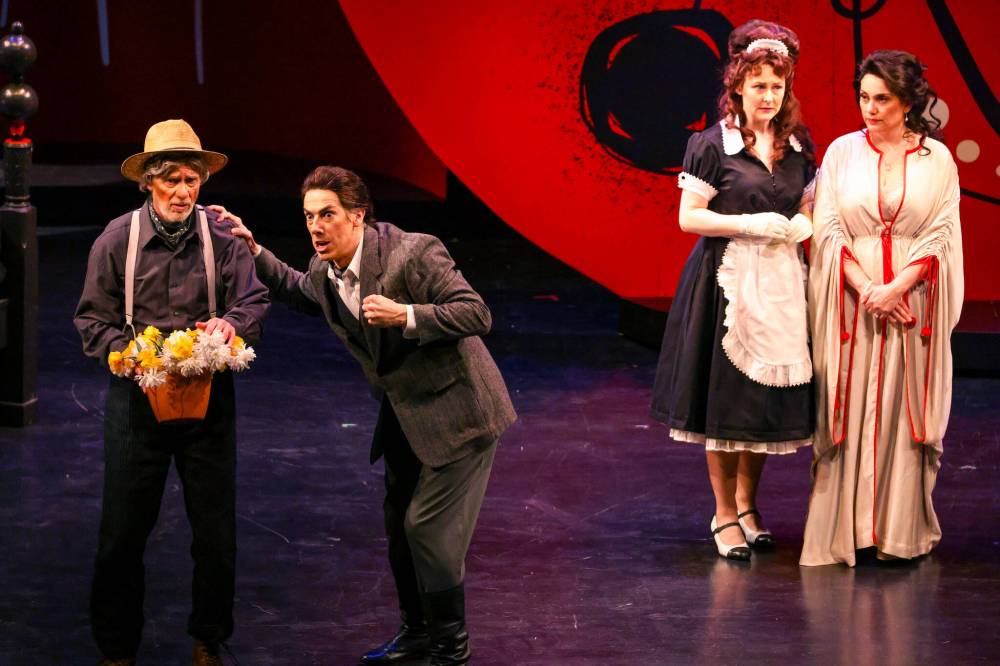
Last presented here in November 2015, the four-act comedy sung in Italian (with English surtitles) and based on Lorenzo Da Ponte’s libretto is listed among the top 10 operas performed worldwide.
There’s good reason for that. One iconic hit seems to follow on the heels of the other, with Regina Symphony Orchestra maestro Gordon Gerrard leading the Winnipeg Symphony Orchestra with finesse throughout, delivering a particularly sprightly overture.
The opera, set in Count Almaviva’s (baritone Phillip Addis) manor near Seville, is transplanted to the 1950s, where the barber-turned-valet Figaro (baritone Robert Mellon) is preparing to wed his beloved Susanna (soprano Caitlin Wood), a maid to Countess Almaviva (soprano Miriam Khalil), until the lascivious count, who wishes to exercise his “droit du seigneur” feudal rights, attempts to seduce her.
Many convoluted plot twists and head-spinning turns later, the paired-off couples ultimately realize the redemptive power of love, and how the simple act of forgiveness heals all wounds.
Figaro, which picks up several years after Mozart’s prior opera, The Barber of Seville, is fundamentally an intimate ensemble work; thankfully, strong casting created a tightly knit unit with nary a weak link onstage.

In the title role, Mellon crafted a swaggering, robust protagonist with comedic timing as sharp as his (now retired) barber’s blade, steadfastly measuring his new chamber’s floor to the inch during his opening duettino, Cinque, dieci, venti, sung with Wood. He well earned his cries of bravo from the sold-out audience for his Act IV aria, Aprite un po’ quegli occhi, spitting out his tongue-twisting text as he breaks the fourth wall to decry the fickle capriciousness of women.
Wood likewise marked a fine MO debut as the dutiful Susanna, charming us with her fleshed-out character (as much as possible with any broad-strokes farce) while sparring with her betrothed as lovers do. Her crystal-clear soprano soared through her Act III Deh vieni, non tardar, with the singer — now disguised as the countess — singing her pretend love song to her “husband” with lilting grace.
Addis crafted a compelling Count Almaviva, lording power over others while succumbing to his own thwarted ambitions and desires. Exuding confidence, he projected his strongly resonant vocals during Act III’s Hai già vinta la causa! … Vedrò, mentr’io sospiro, which served as brooding counterpoint to the comic froth. By contrast, his touching finale, Contessa perdono!, in which he begs his wife for her forgiveness, added its own potent grace note.
Khalil’s powerhouse vocals infused her portrayal as the long-suffering countess with natural regal bearing. It was balanced by aching humanity, as she pulls her bedcovers over her head at the end of Act II as she grapples with her husband’s wandering ways.
Her eagerly anticipated solos, Porgi amor and later, Dove sono I bei momenti — two of the opera canon’s most famous arias — stirred the soul.
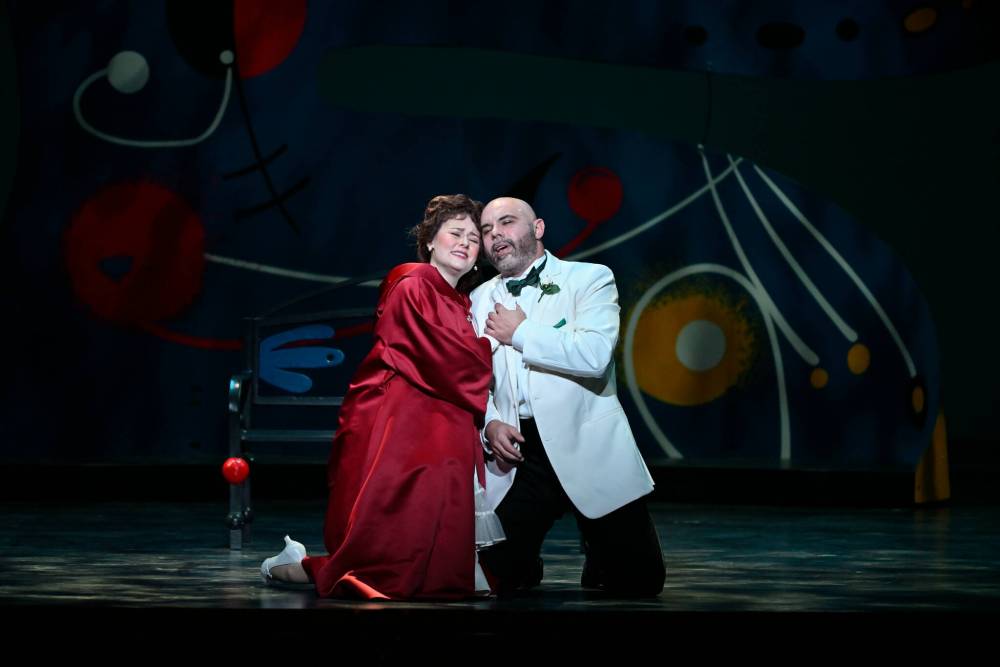
Robert Tinker Photo
Caitlin Wood (left) as Susanna and Robert Mellon as Figaro
The latter aria suprisingly proved edgier (though slightly marred by several minor intonation issues during her runs), as she discovered her own fire as a newly empowered heroine.
Herriot’s sharp direction ensures his Figaro is filled with plenty of hijinks: slapstick physical comedy, mugging and sidesplitting visual effects.
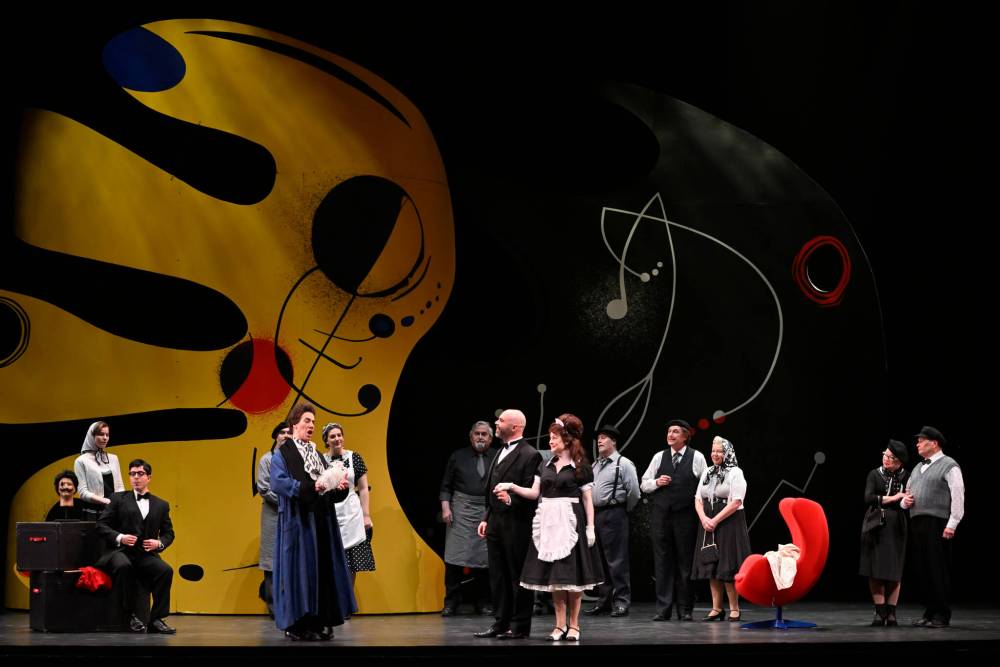
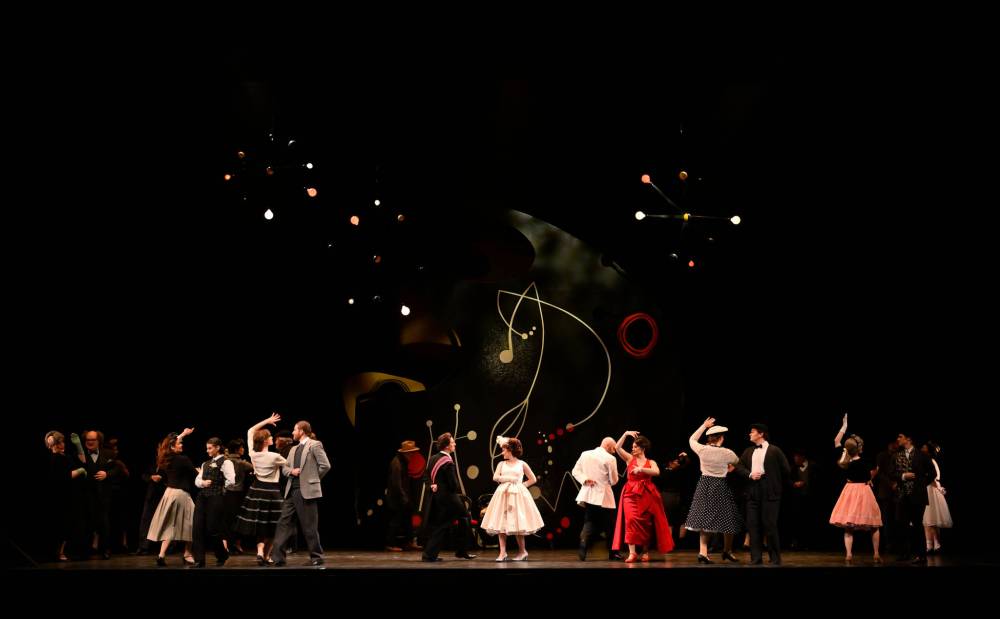
Several scenes could have been pushed further blocking-wise, at times feeling overly static. Ken MacDonald’s original, sculptural set design modelled after the eye-popping abstractions of Joan Miró — it includes a “frame” flanking both sides of the stage, suggesting we are witnessing a living painting — filled the stage with bold primary colour while adding to the overall surrealistic effect.
Scott Henderson’s lighting design did not always allow singers to be fully visible, with Act IV particularly dim (yes, it’s a night/garden scene, but still). Nancy Bryant’s original costumes include glorious haute couture gowns for royalty, although the MO Chorus, well prepared as always by Tadeusz Biernacki, saw many strangely garbed in funereal black during Figaro and Suzanne’s nuptials.
Nevertheless, Herriot has a goldmine on his hands with several additional performances. One of those is baritone Peter McGillivray’s larger-than-life reprisal of Dr. Bartolo, one of the Canadian opera treasure’s many signature roles. His tufted wig, evoking Bozo-like buffoonery, was underpinned by deeply resonant vocals during his Act I aria La vendetta, among others.
His sidekick, mezzo-soprano Krisztina Szabo, made every moment of her relatively brief stage time as Marcellina count, with her aria Il capro et la capretta heard on this stage back in 2015, sadly left on the cutting floor during this run.
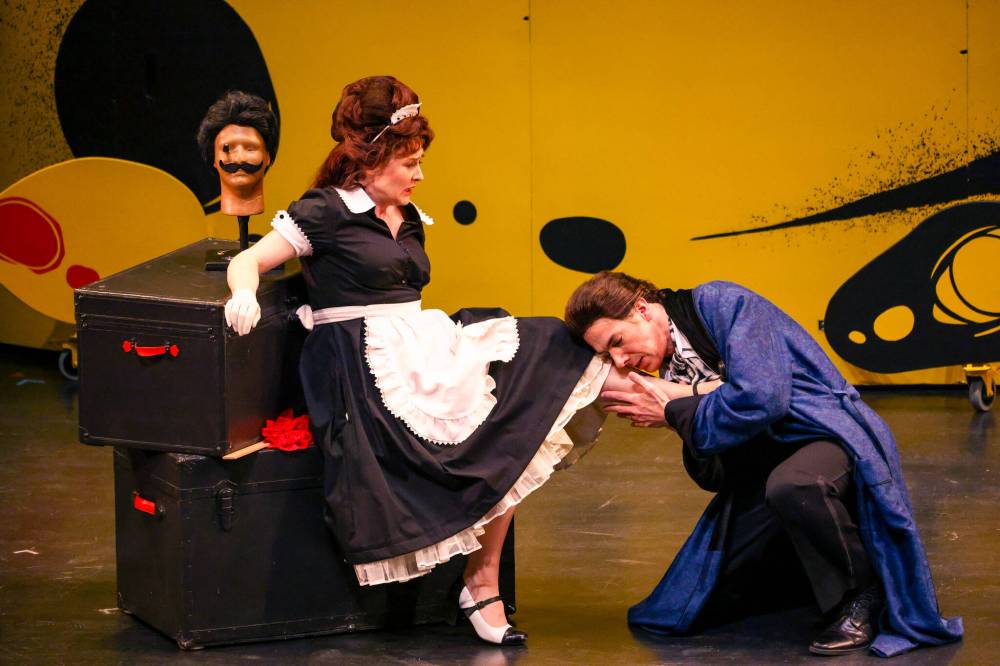
Mezzo-soprano Pascale Spinney, in the trouser role of Cherubino, elicited some of the night’s loudest guffaws, with her “big feelings,” gender-bending pageboy’s Act I Voi, che sapete evoking the sweetness of Chaplin’s tramp.

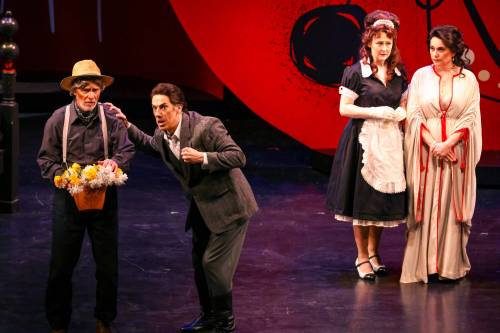
It’s always a joy seeing MO veteran David Watson onstage, with the bass-baritone’s stumbling gardener Antonio fretting about his crushed geraniums after Cherubino’s high-flying leap through the countess’s window.
Soprano Grace Budoloski marked her own auspicious MO debut, filling her Barbarina with innocent girlish charm as she harnesses her feminine wiles — and stratospheric colouratura voice — to woo, and ultimately win over Cherubino. Her heartfelt solo of Act IV’s L’ho perduta, me meschina proved this is a singer to watch.
Kudos to tenor Jean-Philippe Lazure, replacing ailing tenor James McLennan, for his convincing double roles as Don Basilio and Don Curzio.
Beyond all the tomfoolery, Figaro is at its heart an ode to love, as well as the games people play, with the ensemble’s final “Don’t walk, run and celebrate life!” ringing as a rallying cry.
winnipegfreepress.com/hollyharris

L. Norman photo
Pascale Spinney (left) as Cherubino and Caitlin Wood as Susanna