

Fest’s films inspire dialogue about space, community
Advertisement
Read this article for free:
or
Already have an account? Log in here »
To continue reading, please subscribe:
Digital Subscription
One year of digital access for only $1.44 a week*
- Enjoy unlimited reading on winnipegfreepress.com
- Read the E-Edition, our digital replica newspaper
- Access News Break, our award-winning app
- Play interactive puzzles
*Billed as $5.77 plus GST every four weeks. After 52 weeks, price increases to the regular rate of $19.95 plus GST every four weeks. Offer available to new and qualified returning subscribers only. Cancel any time.
To continue reading, please subscribe:
Add Free Press access to your Brandon Sun subscription for only an additional
$1 for the first 4 weeks*
- Enjoy unlimited reading on winnipegfreepress.com
- Read the E-Edition, our digital replica newspaper
- Access News Break, our award-winning app
- Play interactive puzzles
*Your next Brandon Sun subscription payment will increase by $1.00 and you will be charged $17.95 plus GST for four weeks. After four weeks, your payment will increase to $24.95 plus GST every four weeks.
Read unlimited articles for free today:
or
Already have an account? Log in here »
Architecture + Design Film Festival surely boasts some of Winnipeg’s sleekest festival branding.
A wandering eye for design knows not just how to detail a facade, but how to ensure that the minutia of a poster looks just so.
However, the festival is about more than elegant films, buildings and branding. As its curator emphasizes, it’s also about ideas. Function along with form.
Supplied
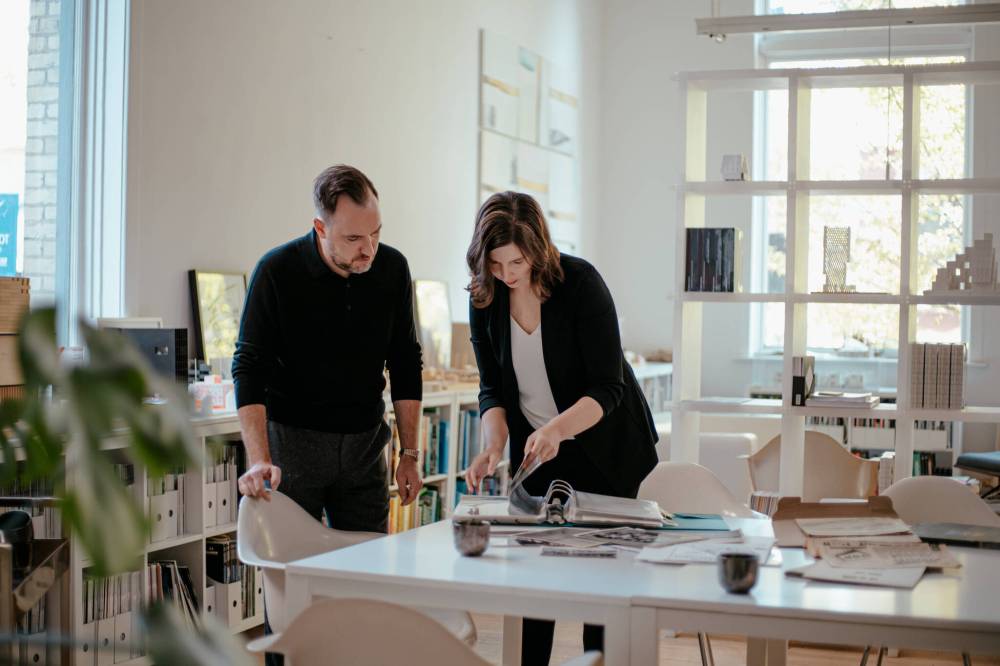
Jeffrey Thorsteinson (left) and Brenna Smith discuss local architecture in Meeting a Moment.
“We’re very pleased to bring films that are not readily accessible to people from all over the world,” says Susan Algie, executive director of the Winnipeg Architecture Foundation.
“We have 22 films from 11 countries. We try to have quite a variety of different things to get people thinking about their city, their environment.”
Opening night is likely to stir discussion. It features Meeting a Moment — The Art of Social Architecture, a 44-minute doc by Danielle Sturk about affordable housing in Winnipeg.
While Winnipeg is known to be a cheaper place to live than many other cites, it’s a broadly blue-collar town with a significant homeless population and an aging non-market housing stock, small in supply compared to need. It’s also known for the occasional fiasco: think of the tragic fate of Centre Village on Balmoral Street, an ambitious experiment in affordable housing for newcomers and low-income residents, which famously faced the wrecking ball only 14 years after it opened.
Meeting a Moment appears to take a more upbeat view on the city’s complex history of affordable housing, or at least a more panoramic one.
It moves from Green, Blankstein and Russell’s Willow Park Housing Co-operative in the Burrows-Keewatin neighbourhood — widely regarded as Canada’s first permanent family housing co-op, built during the Great Depression — to the contemporary transformation of the iconic Hudson’s Bay Company building into Wehwehneh Bahgahkinahgohn, whose design includes about 370 affordable residential units.
“The word ‘affordable,’ it’s a pretty messy word, huh? Affordable to whom?” says Algie. “(But) Winnipeg has such an amazing stock of buildings that the opportunity to reuse buildings is strong. There’s a lot of real estate downtown where there’s retail or an office or something on the main floor and upper floors are empty or underutilized.”
Meeting a Moment is one of three Canadian films at the festival. The others are The Lady Architect about Edmontonian Margaret Buchanan — who, in 1937, became Canada’s first female architecture graduate — and Rule of Stone about the role of architecture in shaping modern Jerusalem, both esthetically and politically.
While affordable housing is a big topic in Winnipeg, Algie hopes the festival will plant a few seeds for thinking through other public needs as well.
Supplied
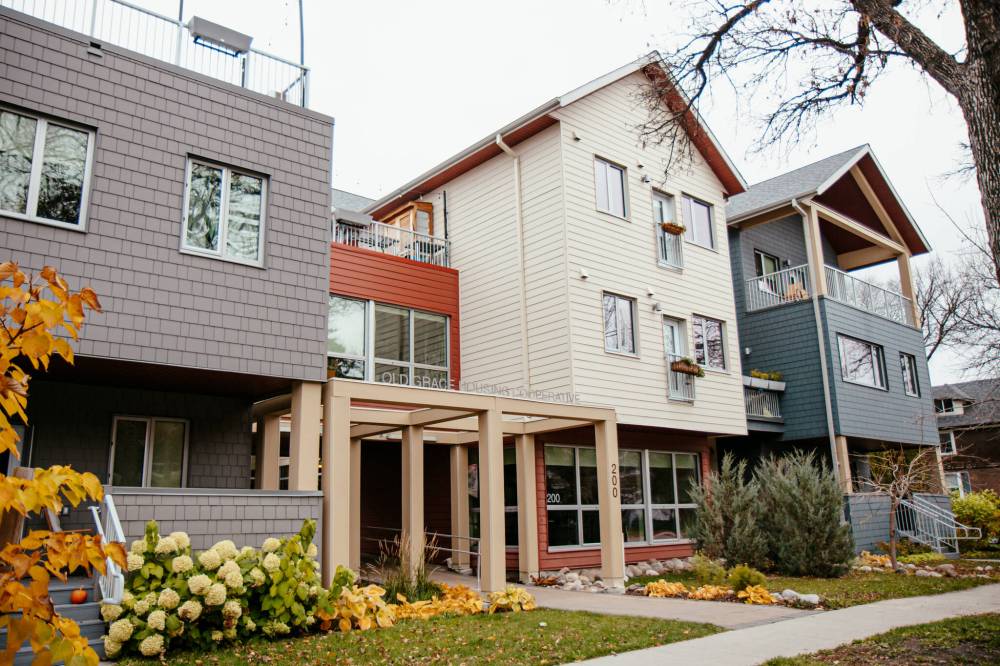
The Old Grace Housing Co-operative is featured in the Winnipeg-focused Meeting a Moment — The Art of Social Architecture.
“The other thing that we don’t have so much of in central Winnipeg is green space. A place to play, a place to sit, a place to wander,” she says.
Much of downtown Winnipeg was built before parks were a major planning priority, though there is that triangular strip of grass and trees built back in 1893 inside the intersections of Colony Street, Cumberland Avenue and Ellice Avenue, known as Central Park. Given its modest size, it may hardly seem deserving of its name.
Yet the park is a boisterous, socially complex gathering place for the largely newcomer and Indigenous communities who use it, many of them enjoying the soccer pitch finished over a decade after Scatliff + Miller + Murray’s $5.6-million revitalization of the park.
That same firm sponsors the festival’s film Máximapark, named after a Dutch park of the same name built in 2013, voted the Netherlands’ most popular park. Developed over a decade, the sprawling 300-hectare park is rich with rare flora, fauna, climbing plants and green space that offers a hub for music, sports and gatherings.
For its boosters, Máximapark stands out as a shining example of city planning as lofty in results as ambition, especially in integrating housing dynamics with public green space. It gets Algie thinking about Winnipeg.
“Let’s dream that the railway tracks disappear and that all becomes a multi-use space. We need more green space for all those people who live downtown and near downtown to do all the things that we want to do in the parks,” she says.
Algie highlights a few of the festival’s more whimsical titles too, such as Googie and The Great Arch.
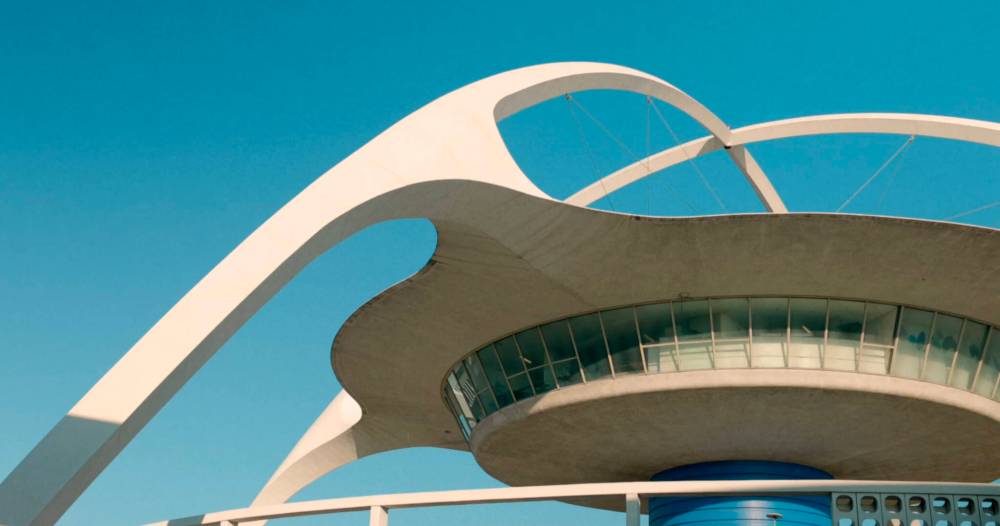
You’ve seen the style a thousand times: in McDonald’s arches, The Jetsons’ skylines and the garish neon signs, drive-ins and motels of Los Angeles. Googie explores this boldly “Atomic Age” style whose comet tails, rocket ships and starbursts advertised the delights of America’s postwar consumer culture while subtly evoking that age’s nuclear threat.
Jake Gorst
Googie explores the ‘Atomic Age’ style whose comet tails, rocketships and starbursts advertised the delights of America’s postwar consumer culture.

The Great Arch is about French president François Mitterrand’s hunt for an architect to design the Grande Arche at La Défense — propelling an obscure, eccentric Danish architect into the centre of political intrigue, as he runs up against France’s thick bureaucracy and power brokers.
“It’s a (dramatic) film based on a real story, but I think all of the politics that come into discussion and the shenanigans can resonate with our own city when we’re talking about big projects,” Algie says.
While the lineup is meant to entertain, Algie hopes that — whether the films are light or more provocative — the festival will leave people thinking about how space and community shape one another in Winnipeg.
“How could it be better? How could it be different? It’s intended to get that conversation going,” she says.
winnipegfreepress.com/conradsweatman
Conrad Sweatman is an arts reporter and feature writer. Before joining the Free Press full-time in 2024, he worked in the U.K. and Canadian cultural sectors, freelanced for outlets including The Walrus, VICE and Prairie Fire. Read more about Conrad.
Our newsroom depends on a growing audience of readers to power our journalism. If you are not a paid reader, please consider becoming a subscriber.
Our newsroom depends on its audience of readers to power our journalism. Thank you for your support.