

Joy story
Winnipeg-born author faces hard facts on search for meaning of happiness

Advertisement
Read this article for free:
or
Already have an account? Log in here »
To continue reading, please subscribe:
Monthly Digital Subscription
$1 per week for 24 weeks*
- Enjoy unlimited reading on winnipegfreepress.com
- Read the E-Edition, our digital replica newspaper
- Access News Break, our award-winning app
- Play interactive puzzles
*Billed as $4.00 plus GST every four weeks. After 24 weeks, price increases to the regular rate of $19.95 plus GST every four weeks. Offer available to new and qualified returning subscribers only. Cancel any time.
Monthly Digital Subscription
$4.99/week*
- Enjoy unlimited reading on winnipegfreepress.com
- Read the E-Edition, our digital replica newspaper
- Access News Break, our award-winning app
- Play interactive puzzles
*Billed as $19.95 plus GST every four weeks. Cancel any time.
To continue reading, please subscribe:
Add Free Press access to your Brandon Sun subscription for only an additional
$1 for the first 4 weeks*
- Enjoy unlimited reading on winnipegfreepress.com
- Read the E-Edition, our digital replica newspaper
- Access News Break, our award-winning app
- Play interactive puzzles
*Your next subscription payment will increase by $1.00 and you will be charged $16.99 plus GST for four weeks. After four weeks, your payment will increase to $23.99 plus GST every four weeks.
Read unlimited articles for free today:
or
Already have an account? Log in here »
Kate Bowler wants you to know that joy is still made for you.
“Even now,” she says. “And even especially now.”
The Winnipeg-born, Durham, N.C.-based author, podcaster and Duke University professor of American religious history is back with Joyful, Anyway (Dial Press, an imprint of Penguin Random House), a new self-help-book-meets-memoir that continues Bowler’s ongoing mission: “Giving you permission to feel human.”
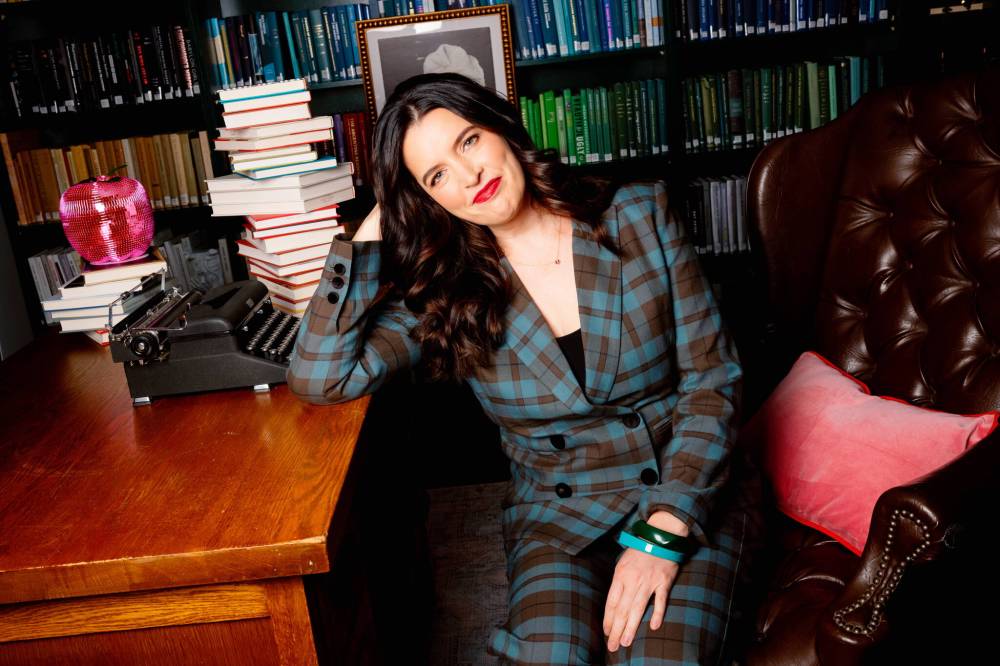
Michaella Jelin photo
Kate Bowler’s ongoing mission is giving people permission to feel human.
A decade ago, Bowler, now 45, was diagnosed with Stage 4 colon cancer and was told, for years, it was incurable. The gruelling experience of treatment and recovery — she is in remission — changed her forever, and put our “good vibes only, everything happens for a reason” culture into stark relief. (Her 2018 New York Times bestseller is called Everything Happens For a Reason: And Other Lies I’ve Loved, and her podcast is called Everything Happens.)
What if, she wondered, we could be honest with each other about the fact that life is incredibly hard?
In advance of her sold-out hometown book launch tonight at Westworth United Church, the Free Press caught up with Bowler to talk about the ache we all feel, why happiness isn’t joy and how we can be joyful, anyway.
The conversation has been lightly edited for length and clarity.
Free Press: You say that this is not a book about “fixing” your life. What is it about?
Kate Bowler: The more apocalyptic things become, the more we lose the category for why we need to feel the goodness of our own lives.
I think everything is steering us toward feeling the meaninglessness, the capriciousness, the AI-ness of it all, because then our own humanity is more and more in question, and then we don’t exactly know whether being joyful would just be another form of delusion.
And I just really truly believe that now is the perfect time for people to recover a deeper sense of joy, the kind of joy that can actually carry us.
FP: You love a Venn diagram. I love a Venn diagram. Before we talk joy, we have to discuss the Ache — that “is this it?” feeling, that pit of want that lives in all of us. You put the Ache at the centre of the Venn diagram of grief, guilt and longing. How did you come to recognize and name this within yourself?
KB: Well, my desire to have more language about this ache inside came mostly out of feeling like there must be something wrong with me. Like, surely someone who has survived so much shouldn’t be so ungrateful as to still want more. So what is this wanting? Is it just narcissism? Is it a midlife crisis?
I wanted more of a philosophical and spiritual language for it as a category because the ache really made me feel like I must be a bad survivor or certainly a bad woman, because a good woman is always so grateful for their families, grateful to be at the soccer practice or getting the 1,300th email from her son’s school this week.
And I certainly must be a bad Christian because I have really always been taught that that we find our rest in God and that peace is the sign that we are faithful.
Father Ron Rolheiser (Roman Catholic priest and author) describes the ache as being a universal condition and that really, all cultures have some kind of language for it. We all know the loveliest things break our hearts. The most beautiful song makes us want to cry. In the highs and the lows, we know that whatever it is, it’s only for a moment and that there can never actually be enough.
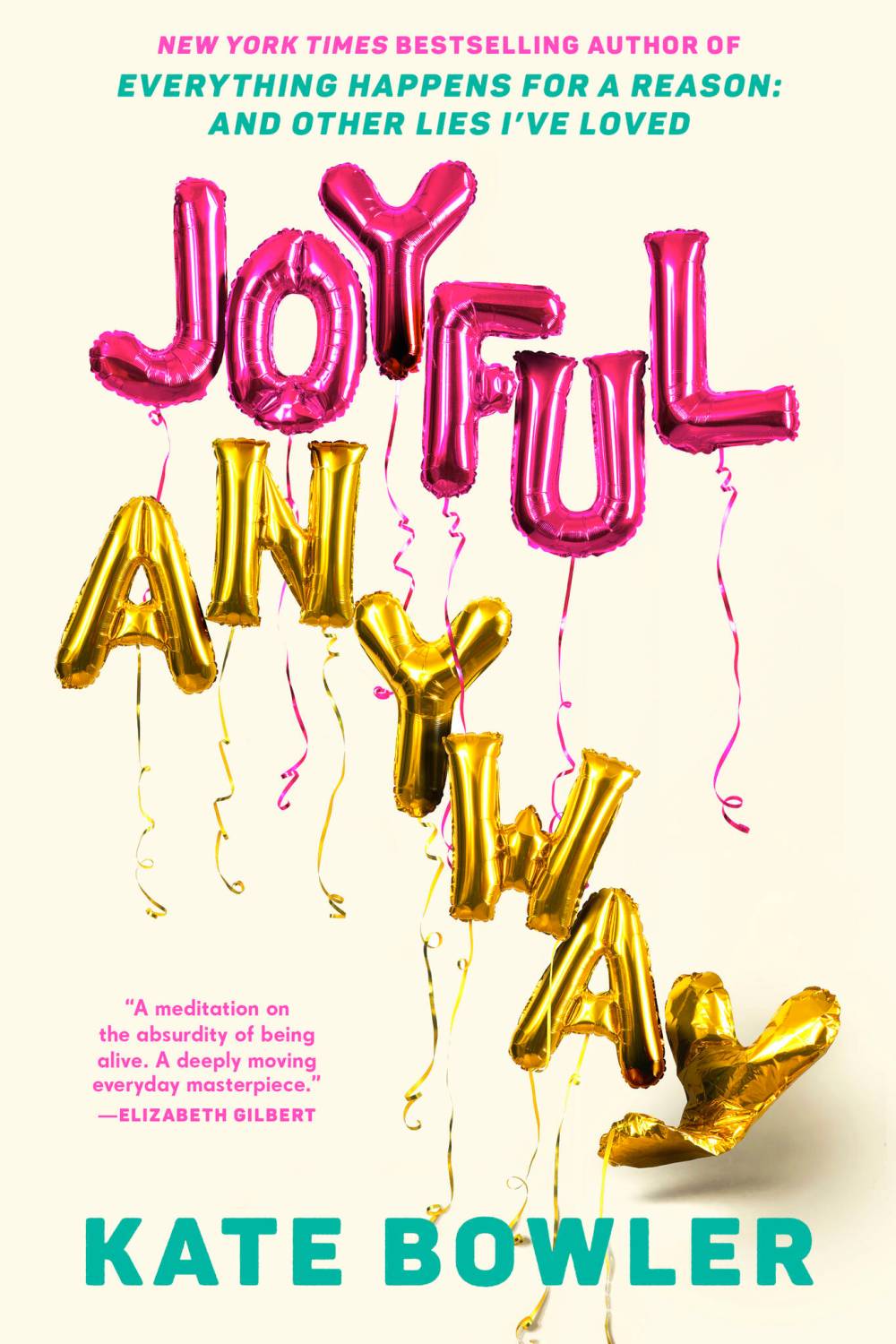
Joyful, Anyway
So this feeling I really had felt, especially when I was sick and I looked at my son, and I felt like I was just going to starve to death. That hunger is actually probably the best indication that we are alive and that we are desperate to not just live our lives, but to love our lives.
FP: You write a lot about how chasing happiness often takes us further from joy. Joy and happiness, as it turns out, are not synonyms.
KB: It really isn’t even the same thing neurologically. Happiness is a sense of ease. It’s related to the Norse word “happ,” as in happenstance, as in just stuff that happens to us. It’s an accumulated sense of life going your way. And it’s a beautiful thing when you have it.
Having looked at this Good Vibes Only culture, I just wondered, honestly, if there was a kind of fragility to the way we were talking about happiness, that if it’s built out of so many five-step plans to drink more water, write in your gratitude journal and do your breathing app, why is it that there’s such a fear and intensity underneath it? And I think it’s because happiness is really just a different way of describing luck.
I think that’s why I was so excited to learn that joy is this bright, big, enlivening feeling that can co-exist with both our reward systems, like our dopamine, but also our stress systems, which explains why even in the worst times you can still somehow find that joy is increasing your capacity to live inside your reality. And those are the kinds of virtues that I’m very interested in right now. Things that help us live more beautifully inside of what is, instead of imagining we can escape it.

FP: Joy is a feeling, but it’s also a practice. How can we cultivate more joy in our lives, especially when it feels impossible?
KB: I think it’s good to remember that joy is a story we can tell. It’s an existential claim, right? It’s like, do we believe that it is good to be alive? It is good that you, in particular, are on this earth, giving your gifts, loving who you love. And I think that joy when, as a practice of saying yes, looks a lot like — well, it looks a lot like love.
I met this old man who said that he was practising love like an assignment, like it was his job every day to accept the people in front of him as part of his assignment. And I noticed that joy has three cousins. It ends up feeling a lot like hope because it’s a refutation of despair. And it feels a lot like gratitude because it really makes you want to say thank you. And it feels a lot like delight because it surprises us and makes us laugh.
The thing that’s tricky is you can’t work it from the bottom up. For example, you can’t make a gratitude journal in such a detailed way that you’ll sort of unlock a door, and the door is joy. You just have to trust that you’re on a hero’s journey to love your own life and to somehow believe that this joy is made for you — like this world is made for you, even if it mostly feels like it isn’t — and that magic is going to come your way.
winnipegfreepress.com/jenzoratti
Jen Zoratti is a Winnipeg Free Press columnist and author of the newsletter, NEXT, a weekly look towards a post-pandemic future.
Our newsroom depends on a growing audience of readers to power our journalism. If you are not a paid reader, please consider becoming a subscriber.
Our newsroom depends on its audience of readers to power our journalism. Thank you for your support.
Book launch
Kate Bowler: Joyful, Anyway
● Westworth United Church
● Tonight, 7 p.m.
● Sold out
Jen Zoratti is a Winnipeg Free Press columnist and author of the newsletter, NEXT, a weekly look towards a post-pandemic future.
Our newsroom depends on a growing audience of readers to power our journalism. If you are not a paid reader, please consider becoming a subscriber.
Our newsroom depends on its audience of readers to power our journalism. Thank you for your support.
Advertisement Advertise With Us
Advertisement Advertise With Us