

Sweet horror
Touching story buried in creepy Canadian film

Advertisement
Read this article for free:
or
Already have an account? Log in here »
To continue reading, please subscribe:
Monthly Digital Subscription
$1 per week for 24 weeks*
- Enjoy unlimited reading on winnipegfreepress.com
- Read the E-Edition, our digital replica newspaper
- Access News Break, our award-winning app
- Play interactive puzzles
*Billed as $4.00 plus GST every four weeks. After 24 weeks, price increases to the regular rate of $19.95 plus GST every four weeks. Offer available to new and qualified returning subscribers only. Cancel any time.
Monthly Digital Subscription
$4.99/week*
- Enjoy unlimited reading on winnipegfreepress.com
- Read the E-Edition, our digital replica newspaper
- Access News Break, our award-winning app
- Play interactive puzzles
*Billed as $19.95 plus GST every four weeks. Cancel any time.
To continue reading, please subscribe:
Add Free Press access to your Brandon Sun subscription for only an additional
$1 for the first 4 weeks*
- Enjoy unlimited reading on winnipegfreepress.com
- Read the E-Edition, our digital replica newspaper
- Access News Break, our award-winning app
- Play interactive puzzles
*Your next subscription payment will increase by $1.00 and you will be charged $16.99 plus GST for four weeks. After four weeks, your payment will increase to $23.99 plus GST every four weeks.
Read unlimited articles for free today:
or
Already have an account? Log in here »
Flawed but still fascinating, this Canadian horror flick — which made its North American debut at last year’s Toronto International Film Festival — is also, at times, an oddly sweet and sincere love story.
That’s an unusual genre mashup, but it could be because Honey Bunch’s creators are Ontario-based Madeleine Sims-Fewer and Dusty Mancinelli (Violation), a scripting and directing team who are also partners in life.
Set in the 1970s — a decade that’s resonating right now at the movie theatre — Honey Bunch centres on husband and wife Homer and Diana, played by Ben Petrie and Grace Glowicki (also a real-life couple, who have worked together previously on The Heirloom).
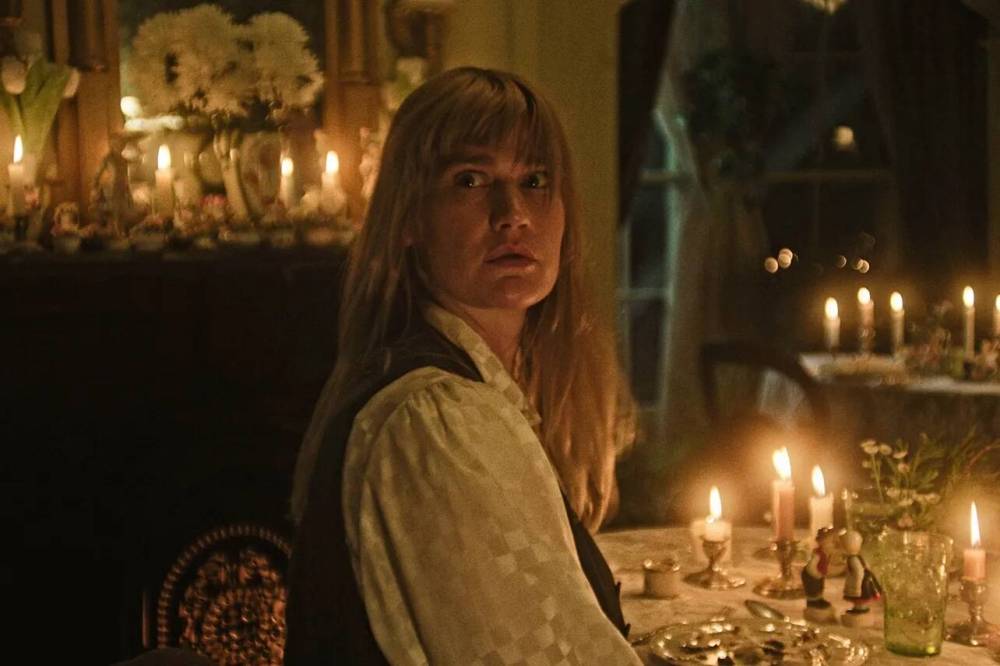
Elevation pictures
Diana (Grace Glowicki) faces numerous challenges following a car accident.
After a catastrophic car crash, Diana is left with chronic pain and a brain injury that has led to short-term memory loss.
Homer, desperate for a cure, is taking Diana to an experimental medical facility housed in an isolated and gloomy old manor.
“The trauma place,” Diana calls it, which turns out to have a double meaning.
They are met by the institute’s administrator, Farah (Dept. Q’s Kate Dickie), who tells them, “If you believe in the program, you’ll get better,” which could sound hopeful or ominous, depending on your point of view.
Soon another pair arrives, Joseph (Jason Isaacs from The White Lotus) and his daughter Josephina (Invasion’s India Brown), an elite athlete who is also struggling with physical and mental issues after a rowing accident.
At first, Diana and Homer joke about the somewhat gothic atmosphere, comparing Farah to the forbidding Mrs. Danvers from Hitchcock’s Rebecca. But Diana soon finds the house seriously oppressive, with its strange, muffled sounds and blocked staircases.
And where is the famous doctor Farah is always talking about with such reverence? And why is every single room haunted by a sad portrait of the doctor’s late wife?
As the aggressive treatment begins, Diana is bombarded by disturbing hallucinations and phantom memories. Suddenly recalling arguments with Homer, she’s unable to sort out what’s real and what’s not.
It’s clear that the men know something the women do not. Homer might seem like a doting and devoted “wife guy,” but at some point, his evasions and motivations start to feel sinister.
Sims-Fewer and Mancinelli draw on some old-school influences, including 1970s and early 1980s horror films of the “classy” kind, from Rosemary’s Baby to Don’t Look Now. There’s also a hedge maze right out of The Shining and some explicit riffs on The Stepford Wives.
There are thematic explorations of disability issues, bodily autonomy and wellness culture.
But the throughline here is Mancinelli and Sims-Fewer’s sensitive examination of love. Embodied by Glowicki and Petrie’s committed performances, this look at love is given weight and texture by their small affectionate gestures and the lived-in familiarity of their fights.
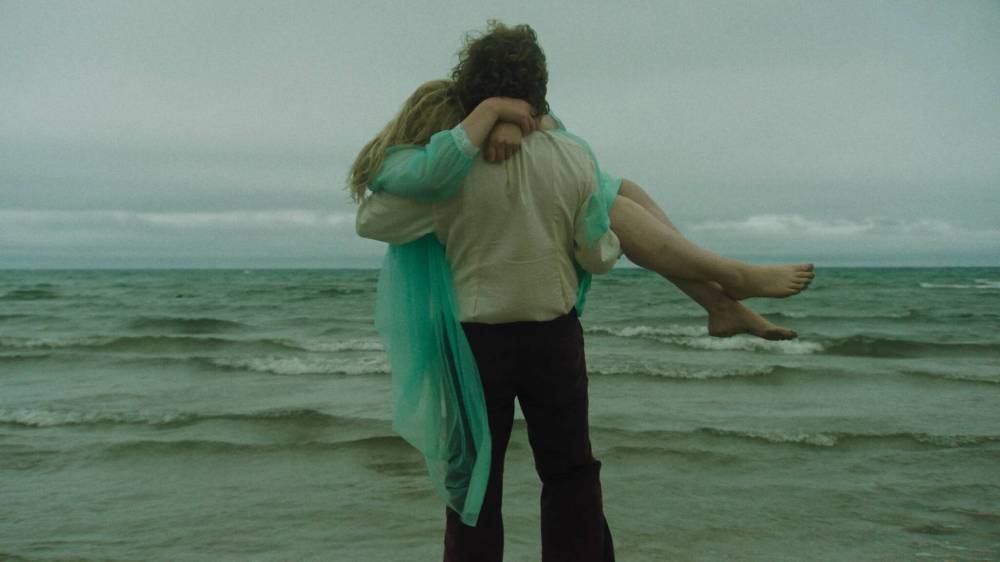
Elevation pictures
At times, Honey Bunch is a sensitive examination of love.
In a key flashback to before the accident, Diana wonders whether Homer will still love her when she’s sick or old or when passion has dimmed.
“Passion is easy,” Homer suggests. “Seventeen-year-olds have passion.”
It’s what comes after that interests Homer, jumping together into the unknown, to face the changes brought by time and circumstance.

“When you’ve seen every version of someone and you keep coming back, that’s romance, baby,” Homer declares.
At the same time, the film is also demonstrating that good intentions can go awry, love can be misapplied and intimacy can be terrifying.
Mancinelli and Sims-Fewer’s plotting and explication can be clunky, and there are third-act problems. The Big Reveal is painfully literal and the ensuing chaos and sudden descent into body horror lead to a tonal rupture.
But even if Honey Bunch fails at the end, it fails in an interesting way. When we finally learn the secret of the creepy manor house and its mysterious medical interventions, the story is surprisingly touching. Horrifying, of course, but touching.
winnipegfreepress.com/alisongillmor
Studying at the University of Winnipeg and later Toronto’s York University, Alison Gillmor planned to become an art historian. She ended up catching the journalism bug when she started as visual arts reviewer at the Winnipeg Free Press in 1992.
Our newsroom depends on a growing audience of readers to power our journalism. If you are not a paid reader, please consider becoming a subscriber.
Our newsroom depends on its audience of readers to power our journalism. Thank you for your support.
Movie Review
Honey Bunch
Starring: Grace Glowicki, Ben Petrie and Jason Isaacs
● McGillivray
● 113 minutes, 14A
★★★½ out of five
Other Voices
Glowicki and Petrie are immensely committed and often fearless performers — so much so that you can see them frequently bouncing against the constraints of the story surrounding them.
— Barry Hertz, Globe and Mail
The effect is an intensely dreamlike visual and auditory palette, quickly devolving into a nightmare where you’re sinking deeper and deeper into a setting that frequently feels rotten and miserable for everyone involved.
— Jim Vorel, Paste Magazine
This isn’t a movie that flirts with weirdness, it commits to the relationship, embedding a social and sexual commentary into a story that plays like a nightmare or a death dream after a fight with your loved one leads to a car accident.
— Brian Tallerico, RogerEbert.com
Studying at the University of Winnipeg and later Toronto’s York University, Alison Gillmor planned to become an art historian. She ended up catching the journalism bug when she started as visual arts reviewer at the Winnipeg Free Press in 1992.
Our newsroom depends on a growing audience of readers to power our journalism. If you are not a paid reader, please consider becoming a subscriber.
Our newsroom depends on its audience of readers to power our journalism. Thank you for your support.
Advertisement Advertise With Us
Advertisement Advertise With Us