A Hindi-speaking comedian walks into a bar…
Show mixes world’s fourth most spoken language with English

Advertisement
Read this article for free:
or
Already have an account? Log in here »
To continue reading, please subscribe:

Digital Subscription
One year of digital access for only $205*
- Enjoy unlimited reading on winnipegfreepress.com
- Read the E-Edition, our digital replica newspaper
- Access News Break, our award-winning app
- Play interactive puzzles
*First annual payment billed as $205.00 + GST for one year. This annual subscription will automatically renew at $233.00 + GST every 52 weeks (10% off the regular annual price of $259.35). Offer available to new and qualified returning subscribers only. Cancel any time.
To continue reading, please subscribe:
Add Free Press access to your Brandon Sun subscription for only an additional
$1 for the first 4 weeks*
- Enjoy unlimited reading on winnipegfreepress.com
- Read the E-Edition, our digital replica newspaper
- Access News Break, our award-winning app
- Play interactive puzzles
*Your next Brandon Sun subscription payment will increase by $1.00 and you will be charged $17.95 plus GST for four weeks. After four weeks, your payment will increase to $24.95 plus GST every four weeks.
Read unlimited articles for free today:
or
Already have an account? Log in here »
Hey there, time traveller!
This article was published 23/06/2022 (1501 days ago), so information in it may no longer be current.
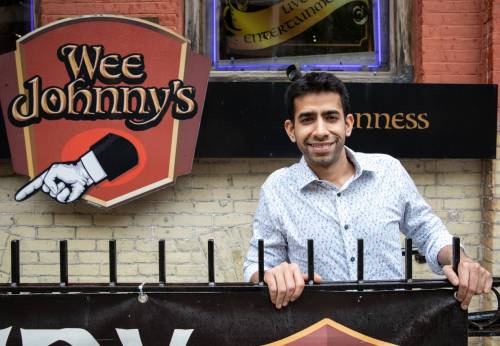
The first jokes Rajat Kashyap told on stage were in Hindi. He was a young man living in Delhi, with an off-kilter sense of humour, and after some gentle encouragement from friends, he decided to stand up in front of a pub full of strangers and see whether he would die of embarrassment or revel in adoration.
He told “hack” jokes about being an engineer, and other “surface level” topics, but the audience ate it up. “I had a really good set, but the next time, I bombed horribly,” says Kashyap, 30. “I wondered how I could be so beloved one day and hated the next.”
The life of a comedian.
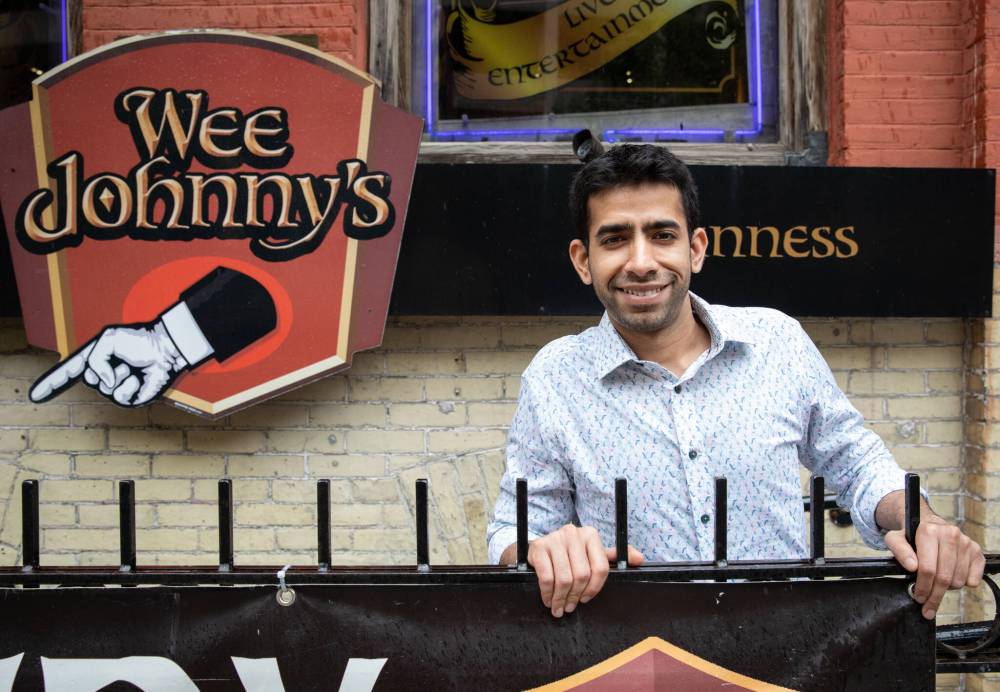
It was a good early lesson for Kashyap: stand-up is tough work. And he decided to make it somewhat tougher when he left India for Montreal, where he got a master’s degree in information studies from McGill University: he would perform not in Hindi, but in English, in the province of Quebec. Bonne chance!
Kashyap was reasonably competent in anglais, but struggled with the intricacies of gendered French nouns. He joked about how he was expected to learn the language while also having legal access to cannabis. “And then you expect me to remember whether a table is a man or a woman?”
In comedy, language — both spoken and otherwise — is key. And for Kashyap, who moved to Winnipeg just before the pandemic began, it’s a frequent source of his material: he jokes about how a friend’s received death threat wasn’t serious because it only had one exclamation point, not three or more, and about how ridiculous he found the term “person of colour” when he first heard it. You wouldn’t call a tall person a person of height, would you, he wondered.
Now, he is putting language at the heart of a showcase Friday night at Wee Johnny’s, a downtown pub that’s become a central cog in Winnipeg’s comedy machine in recent years. The comic will host in his native tongue, inviting his videshi (foreign) friends to tell their jokes in English. He’s billing it as Canada’s First Hindi & English Comedy Show (probably).
Kashyap first fell for comedy when he saw Canadian comedian Russell Peters – also of Indian descent – perform. Then he started expanding his comic universe. “I watched someone like Bill Burr, and I wondered, how is it that I can relate to a 45-year-old white guy? What is it that he’s doing?”
It was another lesson for Kashyap. “At some point, you can transcend culture if you talk about life in a certain way.”
In Winnipeg, Kashyap has done just that. He often plays his experience as an immigrant for laughs, achieving an easy chemistry with audiences, who have embraced his style and point of view.
But Kashyap has often wished those audiences looked more like him, and that there were more comedians who looked like him sharing the spotlight. That’s a major reason for the bilingual show. Kashyap wants to get Winnipeg’s considerable South Asian population more integrated into the comedy scene, and he wants to appeal to a Hindi-speaking audience in an inviting way.

Since Kashyap began performing comedy, he says the medium has exploded in popularity in India and South Asia, with comics such as Zakir Khan and Kanan Gill achieving great acclaim, while in North America, acts such as Peters, Aziz Ansari, and Hasan Minhaj have become some of the most well-known names in the industry.
The local scene is diversifying, but is still largely represented by white comedians for whom English is the primary language. Kashyap would like to tilt the scales, with the bilingual show serving as an entrypoint for comedians of different ethnicities and nationalities to find their voices, and hopefully use them.
He said he hasn’t spent a lot of time promoting the show, but has received a good number of direct messages on Instagram from people interested in attending and perhaps performing at a future instalment. He hopes to make the Hindi-English show a monthly occurrence.
“One of the big problems immigrants can face is social isolation and loneliness,” says Kashyap, who works as a business intelligence analyst for a local tech company as his day job. “Comedy helped me a lot with that.”
ben.waldman@winnipegfreepress.com
Ben Waldman covers a little bit of everything for the Free Press.
Our newsroom depends on a growing audience of readers to power our journalism. If you are not a paid reader, please consider becoming a subscriber.
Our newsroom depends on its audience of readers to power our journalism. Thank you for your support.
Event preview
Rajat and His Videshi Friends
Canada’s First Hindi & English Comedy Show (probably)
● When: Fri. June, 24
● Where: Wee Johnny’s, 177 McDermot Ave.
● Doors: 8 p.m.
● Show: 9 p.m.
● Performers include Ash Chakra, Jimmy Skinner, Dana Smith, Scott K, Matt Kay, Octavius, Spencer Adamus, and more
● Tickets: $10, via Eventbrite or at the door
Follow Rajat Kashyap on Instragram @trashnaan for more
Ben Waldman covers a little bit of everything for the Free Press.
Our newsroom depends on a growing audience of readers to power our journalism. If you are not a paid reader, please consider becoming a subscriber.
Our newsroom depends on its audience of readers to power our journalism. Thank you for your support.
Related Articles
Warm and fuzzy for Winnipeg winter


.jpg?w=100)
Advertisement Advertise With Us
Advertisement Advertise With Us