Finding her voice Cree singer Rhonda Head stumbled into classical music… and then she made it her own

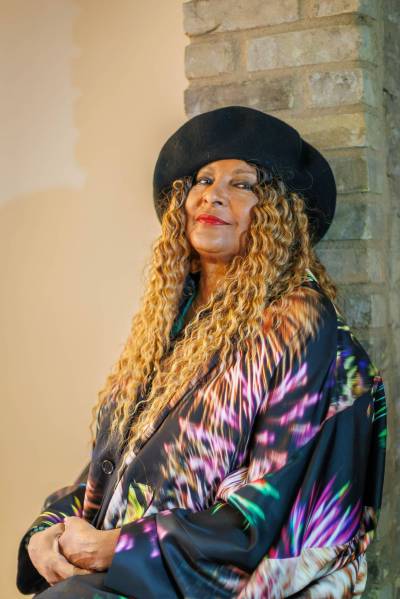
Singer Rhonda Head has travelled a long and winding road to get her voice heard.

Read this article for free:

or

Already have an account? Log in here »

To continue reading, please subscribe:

Subscribe and receive a limited-edition Free Press branded hat or tote.

Digital Subscription

One year of digital access for only $205*

  • Enjoy unlimited reading on winnipegfreepress.com
  • Read the E-Edition, our digital replica newspaper
  • Access News Break, our award-winning app
  • Play interactive puzzles

*First annual payment billed as $205.00 + GST for one year. This annual subscription will automatically renew at $233.00 + GST every 52 weeks (10% off the regular annual price of $259.35). Offer available to new and qualified returning subscribers only. Cancel any time.

To continue reading, please subscribe:

Add Free Press access to your Brandon Sun subscription for only an additional

$1 for the first 4 weeks*

  • Enjoy unlimited reading on winnipegfreepress.com
  • Read the E-Edition, our digital replica newspaper
  • Access News Break, our award-winning app
  • Play interactive puzzles
Start now

*Your next Brandon Sun subscription payment will increase by $1.00 and you will be charged $17.95 plus GST for four weeks. After four weeks, your payment will increase to $24.95 plus GST every four weeks.

Hey there, time traveller!
This article was published 01/09/2021 (1784 days ago), so information in it may no longer be current.

Singer Rhonda Head has travelled a long and winding road to get her voice heard.

Her classically trained vocals have received worldwide recognition after she received two bronze medals from the Global Music Awards, an online competition that specializes in classical and jazz artists and composers.

Head, who hails from Opaskwayak Cree Nation, near The Pas, earned the acclaim for two Cree language songs, Kisahkihitin I Love You, which was in the contemporary classical category, and 500 Years, which received honours among protest songs.

She began taking singing lessons in 1987, after she graduated from high school at the University of Winnipeg Collegiate and moved to Toronto to study fashion. She found, almost by chance, that singing suited her better.

“When people ask me how I got into classical music, I usually say classical music found me, because I didn’t go looking for it,” Head says.

“At the time, Toronto’s phone book was huge. I looked in the music section and there was an inch (of pages) of music teachers. I said, ‘Oh my goodness, how am I going to find a teacher?’ So I went to half of that inch, closed my eyes and put my finger on a name and that’s the person I called.

“When I got there, this beautiful man that looked like Warren Beatty opened the door. I almost ran away he was so handsome.”
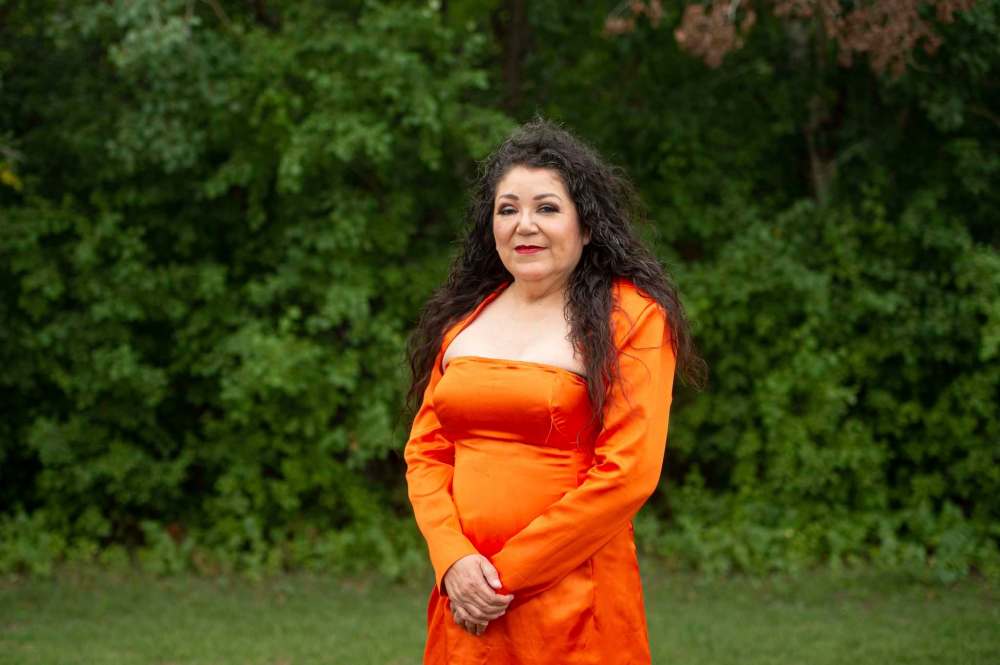
MIKE SUDOMA / Winnipeg Free Press
Opera singer Rhonda Head was born in Opaskwayak Cree Nation and often sings in Cree.
MIKE SUDOMA / Winnipeg Free Press Opera singer Rhonda Head was born in Opaskwayak Cree Nation and often sings in Cree.

She learned about opera, and how to sing in the operatic languages such as Italian, Latin, German and English. It wasn’t long before she realized she needed to sing in her native language, Cree, and when she made her first public performance, that was the language she chose.

“I didn’t start singing in front of a crowd till 2000 at an Opaskwayak Cree Nation Blizzard hockey game, and I sang the national anthem in Cree,” Head says. “It was really nerve-racking but I did it and I had huge applause and that was it for me. I liked music and I’m going to continue to sing in public.”

Since then, she’s been able to create a bridge between Indigenous and European music, singing Cree language interpretations of classical standards, such as Ave Maria, and using her classical training to re-imagine Cree hymns and traditional songs.

“When I was studying the songs in Italian and French and Latin, I kind of put the brakes on,” she says. “I needed to start singing in my own language. I’m learning all these different languages but not my own.

“I started experimenting, putting the Cree language into where the Italian was in an opera aria and I found it fit perfectly… I often say to people that Cree is a language of love.”

The Cree word kisahkihitin, from the title of the first of Head’s award-winners, means “I love you” when translated into English.

She recorded her parts in Winnipeg and the Prague Orchestra, part of a music recording program called Musiversal, laid down the strings and horns that Head was able to watch via the Zoom video-conferencing app.

Her second award-winning song, 500 Years, also with the Prague Orchestra, is about remembrance and empathy, and focuses on Canada’s residential school history and how it affected her family.

Her mother was taken from her family and sent to a residential school; when she returned home she was unable to leave the memories of abuse she endured behind, Head says.

“They were just treated horribly. When they came home they were so traumatized. They started having their own families and children and because of what happened to them in residential school, that’s how we were treated,” Head says, describing a condition called inter-generational trauma.

“I understood why she was the way she was at that moment when she shared some of her experiences at residential school.”

Traumatic memories like this hit home for all Canadians this summer after ground-penetrating radar discovered hundreds of unmarked graves of children at former school sites across the country.

“I think about all the children that never made it home and the families that were waiting for them,” she says.

Fall Fair Friday

Indigenous performers highlight the three music stages at the Fall Fair on Friday, which have performances running from noon to midnight.

Country Stage: Jesse Bandura, Band of Brotherz, Gator Beaulieu, Martin Desjarlais, Lucien Spence, Brandi Vesna, Chokmah, Darren Lavalee, Catie St. Germain, Clint & Riley Dutiaume Band, Desiree Dorion and Jerry Sereda

Rock Stage: Kristen McKay, the Resilience, Shades of Dawn, the Black Saddle Band, Joe Maxim, Loretta Johnston N the Mixxx, Crackin Foxy, Rescued by Dragonflyz and Billy Joe Green

Red Barn Stage: Ivan Flett Memorial dancers with Ryan Richard and Felicia Morriseau; Inuit throat singer Zeann Manernaluk; Double the Trouble; Rhonda Head; the Mosquitoz 2.0; Ojibway Elvis; Tracy Bone; Kimberley Dawn; Eagle & Hawk; Keewatin Breeze and the C-Weed Band

Head, who lives in The Pas, has been in Winnipeg for the past week performing before audiences again, including appearnaces at the Sakihiwe Festival and opening a new performance area at Assiniboine Park.

On Friday, she performs at the Fall Fair, the stand-in carnival for the postponed Red River Ex. Her performance at the Red Barn Stage is part of an all-Indigenous lineup that includes Métis fiddlers Double the Trouble and rock groups Eagle and Hawk and the C-Weed Band

She’s had to learn lessons about the music industry from scratch. Despite her music being different to many other Indigenous artists, she has become a mentor and has worked with the Manitoba Arts Network, helping with young Indigenous performers.

“I’m known as Auntie Rhonda in the music business because I freely share my knowledge in the music industry because of what I went through,” she says. “It’s really rewarding for me to see them doing well because when I was an emerging artist, no one was there for me. I did it all on my own.”

alan.small@freepress.mb.ca

Twitter:@AlanDSmall

Alan Small

Alan Small
Reporter

Alan Small has been a journalist at the Free Press for more than 22 years in a variety of roles, the latest being a reporter in the Arts and Life section.

Our newsroom depends on a growing audience of readers to power our journalism. If you are not a paid reader, please consider becoming a subscriber.

Our newsroom depends on its audience of readers to power our journalism. Thank you for your support.


Report Error Submit a Tip

More Stories

October storm impact pegged at $10M

Jessica Botelho-Urbanski 3 minute read Preview

October storm impact pegged at $10M

Jessica Botelho-Urbanski 3 minute read Friday, Jan. 10, 2020

The city's finance chairman was relieved to learn Friday of new — and much lower — projected costs of the massive October snowstorm that downed more than 30,000 trees in Winnipeg.

A report presented to the finance committee said estimated cleanup and staff overtime costs from the storm would be about $7.6 million altogether — or roughly $10 million when factoring in non-incremental costs already within the city's budget.

In October, Mayor Brian Bowman had said the storm costs could be in the tens of millions.

"It is a relief. And I can appreciate perhaps why some of the early numbers were so high," said Coun. Scott Gillingham (St. James). "There's so much unknown (when) you're in the midst of, our staff is in the midst of cleanup, in the midst of still assessing the impact of the storm."

Read
Friday, Jan. 10, 2020

Trump and the threshold of pain

Gwynne Dyer 5 minute read Preview

Trump and the threshold of pain

Gwynne Dyer 5 minute read 2:00 AM CDT

It would be so easy for Donald Trump to escape from the trap he has built for himself in the Persian Gulf. Just declare a victory and leave.

So what if the Iranians also declare a victory (with a lot more accuracy)? The “nuclear weapons” that gave Trump (and Israeli leader Benjamin Netanyahu) a pretext for attacking Iran never really existed. This would be as close to cost-free for the United States as a lost war ever gets — only a dozen American dead.

The only audience that really matters for Trump is the MAGA supporters back home, and they would be so glad to see him drop this nonsense that they wouldn’t say a word against him. The oil price would drop and Republicans might even manage to hold onto both houses of Congress in the November mid-term elections.

But Trump just can’t accept defeat, either in politics or in war. That’s why he’s still re-litigating the presidential election he lost in 2020, long after everybody else has moved on. It’s why he is escalating a lost war in the Persian Gulf, even though the consequences may be catastrophic for the region.

Read
2:00 AM CDT

Students must be at forefront in strike talks

Editorial 4 minute read Preview

Students must be at forefront in strike talks

Editorial 4 minute read Tuesday, Nov. 16, 2021

New Manitoba premier Heather Stefanson and senior ministers have gone to considerable lengths to distance themselves from many unpopular aspects of the legacy of former premier Brian Pallister. The strike by University of Manitoba faculty is an opportunity to show how the new PC team is different from the old.

About 1,200 professors and librarians went on strike Nov. 2 after contract talks broke down over salary increases. There is a discouraging sense of déjà vu to seeing professors on the picket line instead of lecturing to a class — the last U of M faculty strike, in 2016, lasted for 21 days.

Ms. Stefanson and Advanced Education Minister Wayne Ewasko might say they want to stay out of the matter and let collective bargaining proceed without direct government interference but, like it or not, the past actions of their government are at the crux of the job action.

Faculty say they are striking because Mr. Pallister’s government imposed restrictive measures that froze wages in 2016, giving U of M professors some of the lowest salaries of Canadian research universities. They say this rock-bottom pay scale makes it hard to attract and keep good staff, with the inevitable result that students will look to other provinces for a highly regarded education.

Read
Tuesday, Nov. 16, 2021

Trudeau urges 'peaceful' end to blockades

Mia Rabson, The Canadian Press 5 minute read Preview

Trudeau urges 'peaceful' end to blockades

Mia Rabson, The Canadian Press 5 minute read Monday, Feb. 24, 2020

OTTAWA - The spirit of reconciliation requires a "peaceful resolution" to the blockades that have kept rail traffic from operating across the country, Prime Minister Justin Trudeau said Monday, hours after Ontario Provincial Police began dismantling one in eastern Ontario.

Trudeau convened an early morning meeting of his cabinet's incident-response group about an hour after the police moved in to take down barriers across the rail line on Tyendinaga Mohawk Territory in eastern Ontario, arresting several people in the process.

That meeting also came about 12 hours after Teck Resources Ltd. announced it was withdrawing its application to build a massive new oilsands mine in northern Alberta, a decision Conservative Leader Andrew Scheer said is entirely a result of Trudeau's doing "literally nothing" to end the blockades for almost three weeks.

The blockades have gripped the government's attention as Trudeau has tried to find a path forward that respects Indigenous rights as he has also called for the rule of law to be followed. The one at Tyendinaga was the most economically damaging but others have gone up intermittently on rail lines, roads and bridges from coast to coast.

Read
Monday, Feb. 24, 2020

Just four players wearing Jets jerseys in October 2011 are still with the team

Mike McIntyre 15 minute read Preview

Just four players wearing Jets jerseys in October 2011 are still with the team

Mike McIntyre 15 minute read Friday, Apr. 3, 2020

The anticipation. The hype. The excitement. And, at long last, the return. Oh, what a magical moment that was.

We take you back to Oct. 9, 2011, when the Winnipeg Jets faced off against the Montreal Canadiens at Bell MTS Place. It was the first time an NHL puck was dropped in the regular season around these parts since April 28, 1996 — a span of 5,642 days, for those keeping track at home.

History shows the bleu blanc et rouge crashed the homecoming party with a convincing 5-1 victory, but the result didn't dampen the fact that the best hockey league in the world was finally back where it belonged.

"I got picked up on waivers from the Coyotes three days before the first game. The minute I touched down in Winnipeg you could feel the excitement in the city. I remember walking to the rink and the streets were packed with fans ready to welcome the NHL back to Winnipeg. Easily the loudest crowd I have ever been a part of and although we lost, I was lucky enough to be on the ice for the first goal and all I remember is the roar of the crowd. That will sit with me forever," ex-forward Brett MacLean told the Free Press this week as we caught up with a few members of that squad.

Read
Friday, Apr. 3, 2020

A decade of deadly delay

Ryan Thorpe 13 minute read Preview

A decade of deadly delay

Ryan Thorpe 13 minute read Wednesday, Feb. 23, 2022

For the past 11 years, independent researcher and traffic-safety activist Christian Sweryda has been urging the City of Winnipeg to install eye-level safety lights at pedestrian corridors.

It has been a long, drawn-out battle, featuring a forgotten report, a pilot project bordering on the absurd, a spate of major crashes and dead children.

Despite the deaths and near-tragedies, the city has resisted the mass rollout of a cheap and proven safety initiative. To this day, the vast majority of pedestrian corridors in Winnipeg do not have eye-level safety lights.

The financial cost of delays is minuscule, but the human cost has been immeasurable.

Read
Wednesday, Feb. 23, 2022