Creature comfort
Animal-assisted therapy helps manage anxiety, psychogenic seizures

Advertisement
Read this article for free:
or
Already have an account? Log in here »
To continue reading, please subscribe:
Digital Subscription
One year of digital access for only $1.44 a week*
- Enjoy unlimited reading on winnipegfreepress.com
- Read the E-Edition, our digital replica newspaper
- Access News Break, our award-winning app
- Play interactive puzzles
*Billed as $5.77 plus GST every four weeks. After 52 weeks, price increases to the regular rate of $19.95 plus GST every four weeks. Offer available to new and qualified returning subscribers only. Cancel any time.
To continue reading, please subscribe:
Add Free Press access to your Brandon Sun subscription for only an additional
$1 for the first 4 weeks*
- Enjoy unlimited reading on winnipegfreepress.com
- Read the E-Edition, our digital replica newspaper
- Access News Break, our award-winning app
- Play interactive puzzles
*Your next Brandon Sun subscription payment will increase by $1.00 and you will be charged $17.95 plus GST for four weeks. After four weeks, your payment will increase to $24.95 plus GST every four weeks.
Read unlimited articles for free today:
or
Already have an account? Log in here »
Hey there, time traveller!
This article was published 09/08/2021 (1899 days ago), so information in it may no longer be current.
Macyn Comeault experiences anxiety but the 11-year-old Winnipegger is finding clarity and connection through animal therapy offered in southern Manitoba.
Macyn has what’s called “pseudoseizures’’ or psychogenic non-epileptic seizures (PNES), which are episodes of movement, sensation or behaviours, including fainting, that mimic epileptic seizures. PNES does not have a neurologic origin. Instead, these seizures are a physical manifestation of psychological distress.
She had her first fainting episode in February 2019. She spent time in and out of the hospital — often taken there by ambulance — and was officially diagnosed with PNES that October.
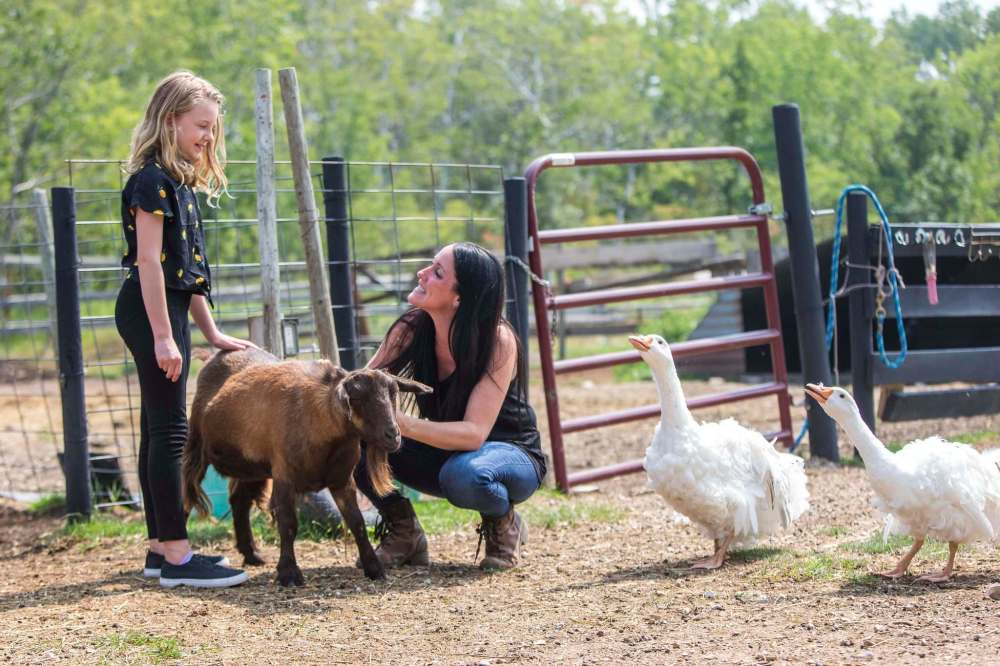
“I didn’t really know what was going on and I just wanted to get to the bottom of it,” Macyn says. “I didn’t like the hospital, especially when I had to sleep there.”
Even after medical professionals told her she had PNES, it took some time to fully understand how it affects her body.
“Sometimes I don’t even know what I’m worried about,” Macyn says. “It’s not like my teacher announces that we’re having a math test and I just faint. It happens later on and it’s just random.”
Macyn does not take medication for PNES but says talking about it helps. Her mom, Carissa, says the diagnosis required some explaining from the doctors.
“The neurologist explained to us that it’s a medical condition. Macyn has no control when these things happen,” Carissa says. “Macyn’s body responds differently to stress, worry and anxiety. When she feels overwhelmed or worried, she faints.”
Carissa, a high school resource teacher, has worked closely with refugee Yazidi students from northern Iraq. Some of them have also experienced fainting episodes in response to traumatic experiences. She says receiving Macyn’s diagnosis was “shocking.”
“I had a little bit of knowledge about it (from working with the students). I couldn’t believe that my daughter was given this same diagnosis,” she says. “These girls were captured by ISIS and have had horrible things happen to them. Theirs is more trauma-induced whereas Macyn’s is more stress and worry.”
When Macyn was first diagnosed, she was referred to a psychiatrist who she saw for nearly a year, visits that she didn’t like.
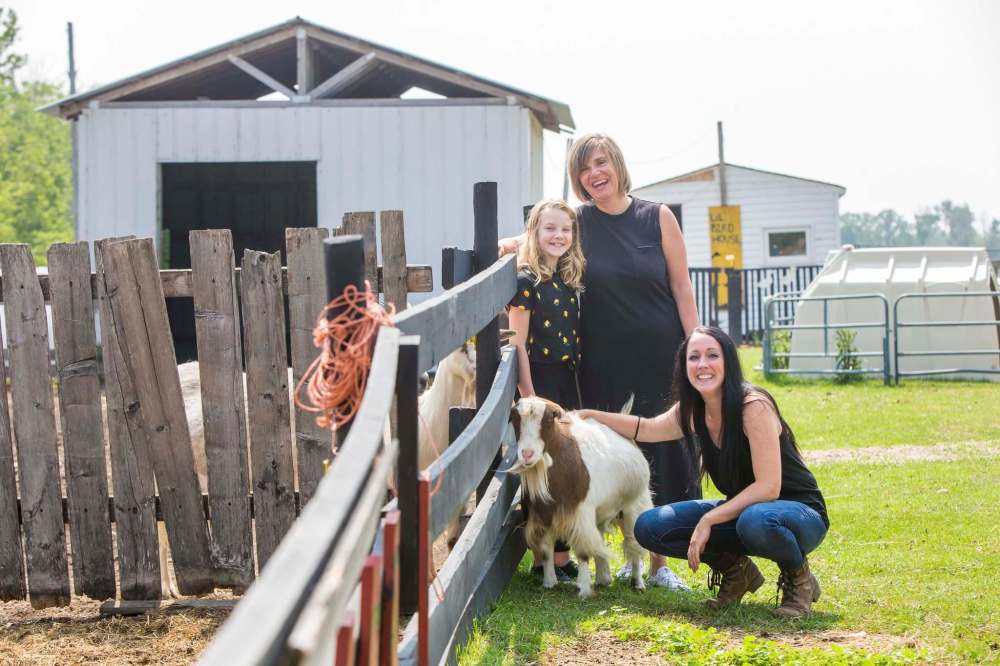
“We didn’t find it, Macyn particularly, super helpful,” Carissa says. “Even the psychiatrist mentioned that maybe Macyn take a bit of a break from that type of therapy session.”
So about a year and a half ago, Macyn and Carissa connected with Lucy Sloan, an animal-assisted therapist and owner of Lil’ Steps Wellness Farm located in St, Malo, about 70 kilometres south of Winnipeg.
Macyn was hesitant to go at first because of her previous experience with therapy, but her first visit to the Wellness Farm proved to be positive.
“I got to meet all the animals and they were unique in their own way. I had a huge smile on my face,” she says. “Some of the animals have issues, like a horse named Cyrus who’s blind. There’s a bunch of animals, who, kind of like humans, have some, well, I’m not going to call them problems, they’re just different.”
Sloan has worked as a registered professional counsellor for more than two decades, spending the majority of her career working with adults in the justice system and then moving to community mental health. Now, she spends most of her time with kids like Macyn.
Sloan has been practising animal-assisted therapy on her St. Malo farm since 2015. She discovered animal therapy about a decade ago after suffering a major head injury that left her unable to work. It was during her recovery when she adopted two miniature horses, Peanut and Sweety, that she experienced the benefits of animal-assisted therapy first-hand. This led her to introduce farm animals to her counselling portfolio.
“I realized this whole world of animals and healing, so I created it for kids,” she says. “One of the pieces of working with adults throughout my career is that I realized if we can identify these pieces for kids, and provide education to both kids and caregivers, we might be able to prevent health difficulties down the road.”
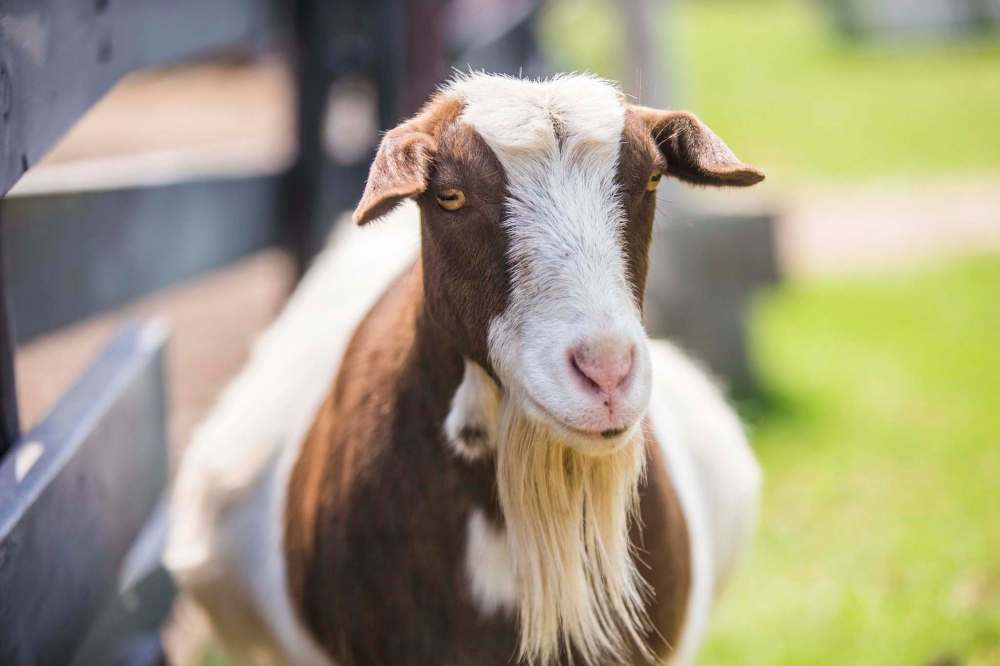
Two years ago, Sloan released a children’s book, Cindy and Cristabelle’s Big Scare, about her farm animals. The book talks about managing anxiety and the main characters, two fainting goats, teach children about anxiety and how to deal with it.
“Carissa had contacted me to let me know of the connection that Macyn was able to make with Cristabelle (in the book) and her myotonic disorder or, as we know them, fainting goats,” Sloan says.
While working with Macyn, Sloan connected similarities of Cristabelle’s disorder to what Macyn was experiencing.
“When (Cristabelle) gets scared or upset, her body goes into a freeze response and stiffens up,” she says. “We talked about how Cristabelle’s brain does this as a way to protect her from danger but it’s like a false alarm and goes off at the wrong times. We also talked about how this must feel when it happens and ways that the goat can better manage it.”
Upon meeting Sloan, Cristabelle and the other animals, Macyn felt a connection right away.
“We talked about my diagnosis,” she says. “Lucy was the first person to tell us my diagnosis in a way that made sense so that we would understand it more.”
Sloan’s children’s book inspired a new school-based program, Being Me, which provides education around understanding anxiety and teaches strategies to help foster positive mental well-being. The program was piloted in the Red River School Division last year and will continue this upcoming school year.
“(The program) is designed for all kids. I developed it because there was such an increase in anxiety and kids,” she says. “The concept is we all experience anxiety of all levels, whether it’s an emotion or feeling, a problem or a disorder.”
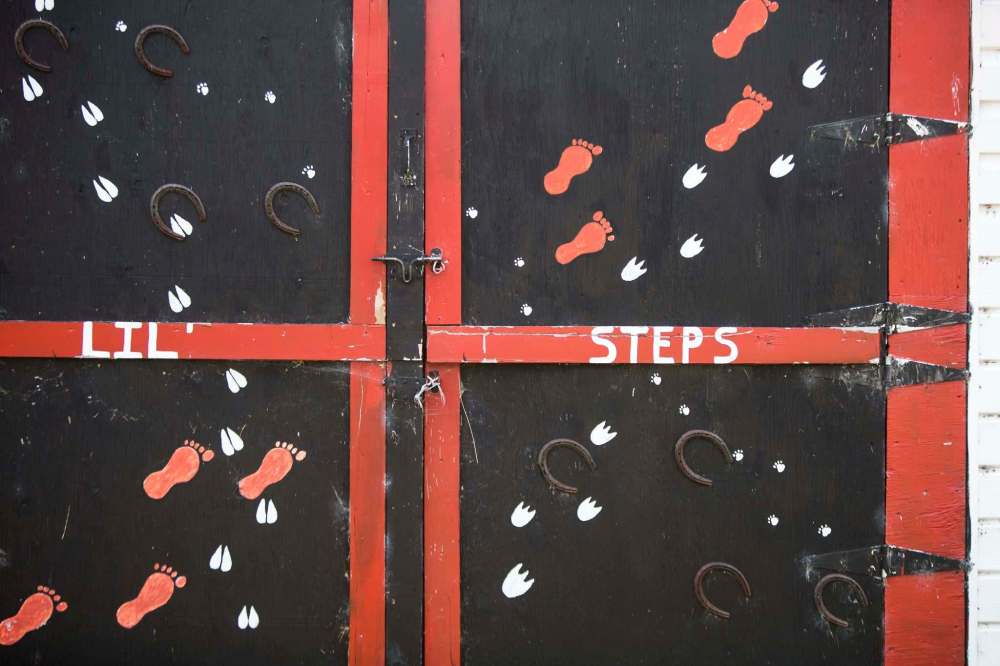
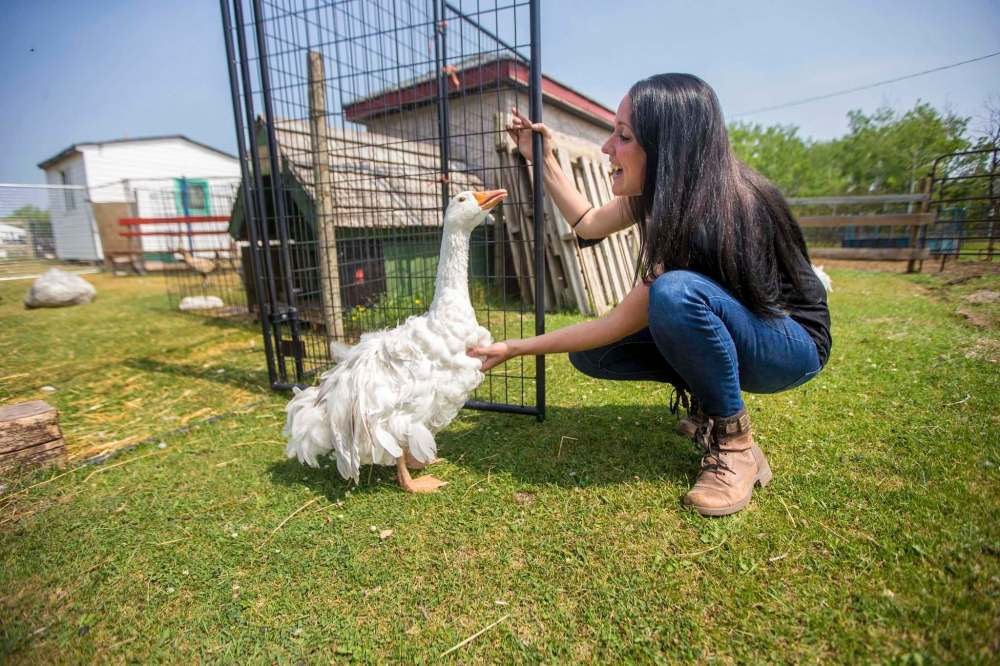
Over the last six years at Lil’ Steps, Sloan has adopted several farm animals, including two miniature fainting goats, pigs, sheep, birds and horses, and has expanded her counselling business to include group programming, animal wellness workshops, day camps and mental health professional development programs.
She provides individual animal-assisted therapy to children, teens and adults. Sessions typically begin with a farm tour and focus on building relationships with the animals through connection, trust exercises and storytelling.
“At our farm, we do a lot of storytelling. All the animals have different stories and come from different places. A lot of them have been rescued,” Sloan says.
Children connect to the stories and emotions of the animals and, in turn, are able to express and process some of their own struggles.
Sloan says this storytelling connection is very effective, especially for children who aren’t able to express themselves or talk about their emotions.
Macyn has a special connection with one particular animal on the farm.
“His name is Apple and he’s a sheep. Even though he can’t talk and doesn’t respond to what you’re saying to him, I can still tell he has empathy and is listening to me,” she says.
Kids often don’t understand why they’re responding or feeling a certain way, Sloan says. But when they say it out loud and identify it, it enables it to be talked about and they’re able to process that information. And the special bond kids develop with the animals provides them with an opportunity to learn more about their experiences with anxiety and mental health.
“It doesn’t even seem like therapy,” Macyn says. “The animals help you in a way that you don’t even know that you’re being helped.”
Over the last 18 months, Sloan has seen an increase in clients, including many kids, whose lives have been uprooted.
“There’s been so much change in routine,” she says. “There’s almost a perfect storm of anxiety that’s happened — a lack of control and social outlets, more isolation and so much change and unknown. Those are huge factors for anxiety. It’s almost like anxiety is in the air and it’s kind of chronic now.”
Sloan says it’s important for parents and caregivers to recognize that a lot of this uptick in anxiety is normal and to be expected.
“Children will have more worries, questions and seek more reassurance,” she says. “A lot of time as parents, we try to fix emotional problems with our kids but that’s a bit of a bandage solution. What may work better is sitting with your child in those big emotions, letting them talk about it and then helping them problem-solve solutions for it.”
Over the last year, COVID-19 restrictions threw a wrench into Macyn being able to visit Sloan and the animals as much as she wanted to. However, both Carissa and Macyn hope they’ll get more opportunities moving forward.

“What that farm does and what Lucy does for Macyn is awesome,” Carissa says. “Having this resource is so important, especially with what COVID has done to so many kids.”
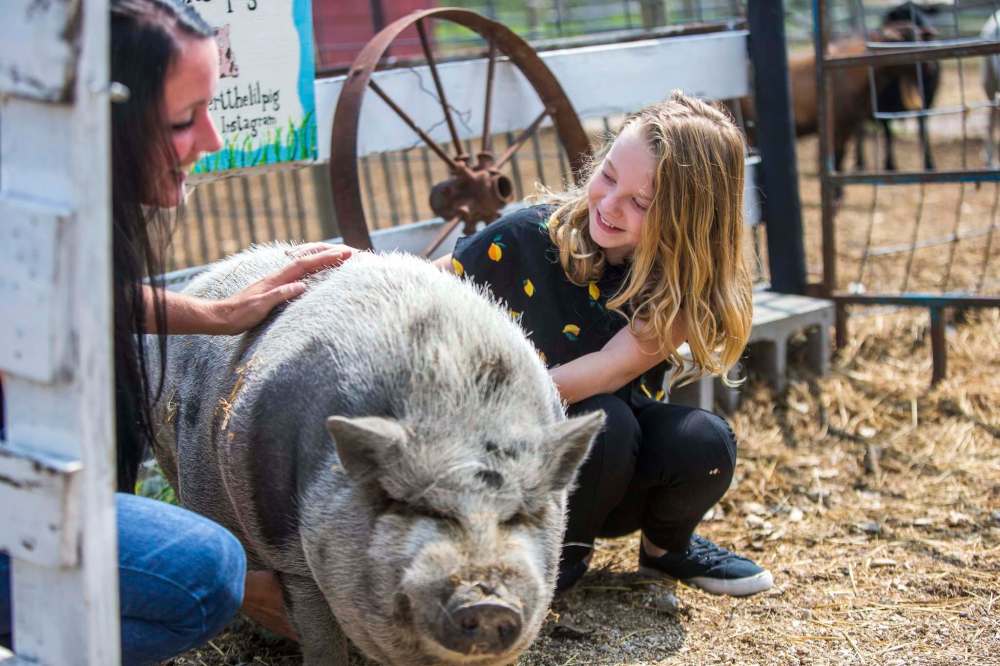
The connection to animals runs deep — they’re non-judgemental, accepting and easy to build strong relationships with.
“Animals have fantastic intuition. The farm gives kids the space to be who they are but also talk about things that are problematic and work on those things,” Sloan says. “When you have all this love coming from all these different animals, it just makes you feel good inside.”
sabrinacarnevale@gmail.com
Twitter: @SabrinaCsays
Sabrina Carnevale is a freelance writer and communications specialist, and former reporter and broadcaster who is a health enthusiast. She writes a twice-monthly column focusing on wellness and fitness.
Our newsroom depends on a growing audience of readers to power our journalism. If you are not a paid reader, please consider becoming a subscriber.
Our newsroom depends on its audience of readers to power our journalism. Thank you for your support.
Sabrina Carnevale is a freelance writer and communications specialist, and former reporter and broadcaster who is a health enthusiast. She writes a twice-monthly column focusing on wellness and fitness.
Our newsroom depends on a growing audience of readers to power our journalism. If you are not a paid reader, please consider becoming a subscriber.
Our newsroom depends on its audience of readers to power our journalism. Thank you for your support.
Related Articles
Warm and fuzzy for Winnipeg winter


Advertisement Advertise With Us
Advertisement Advertise With Us