
Curtain finally comes down on The Garrick Victim of the COVID-19 pandemic, venue to be used as virus testing site
Read this article for free:
or
Already have an account? Log in here »
To continue reading, please subscribe:

Digital Subscription
One year of digital access for only $205*
- Enjoy unlimited reading on winnipegfreepress.com
- Read the E-Edition, our digital replica newspaper
- Access News Break, our award-winning app
- Play interactive puzzles
*First annual payment billed as $205.00 + GST for one year. This annual subscription will automatically renew at $233.00 + GST every 52 weeks (10% off the regular annual price of $259.35). Offer available to new and qualified returning subscribers only. Cancel any time.
To continue reading, please subscribe:
Add Free Press access to your Brandon Sun subscription for only an additional
$1 for the first 4 weeks*
- Enjoy unlimited reading on winnipegfreepress.com
- Read the E-Edition, our digital replica newspaper
- Access News Break, our award-winning app
- Play interactive puzzles
*Your next Brandon Sun subscription payment will increase by $1.00 and you will be charged $17.95 plus GST for four weeks. After four weeks, your payment will increase to $24.95 plus GST every four weeks.
Read unlimited articles for free today:
or
Already have an account? Log in here »
Hey there, time traveller!
This article was published 12/12/2020 (2094 days ago), so information in it may no longer be current.
The Garrick Theatre opened in 1921 as a movie house, its construction beginning two years earlier at the tail end of the influenza pandemic. Nearly a century later, the historic performance venue’s doors are closing, possibly for good, as another virus rages on.
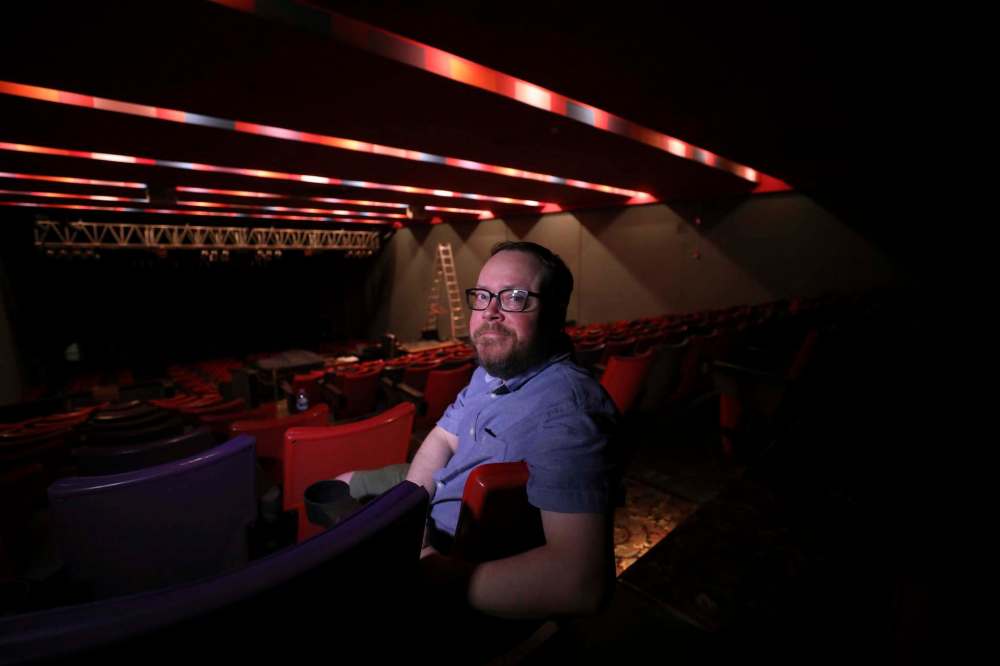
Sam Smith saw the writing on the wall. The operations and production manager for the Garrick, which was reborn in the mid-2000s as a live music venue after decades as a downtown Winnipeg multiplex, knew the pandemic would put an untenable strain on the centre’s bottom line.
That didn’t make it any easier for him when the lease for the property was effectively terminated and he handed back the keys earlier this week for a new tenant to move in.
“As much as I’ve said this was not a surprise, turning in the keys made it register with me. This is actually real,” he says.
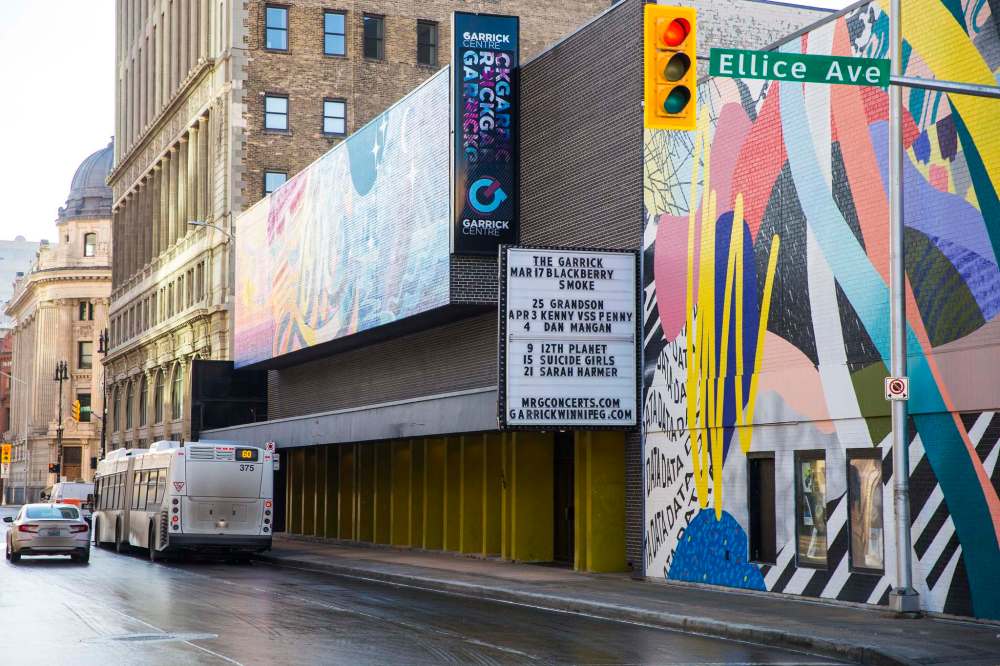
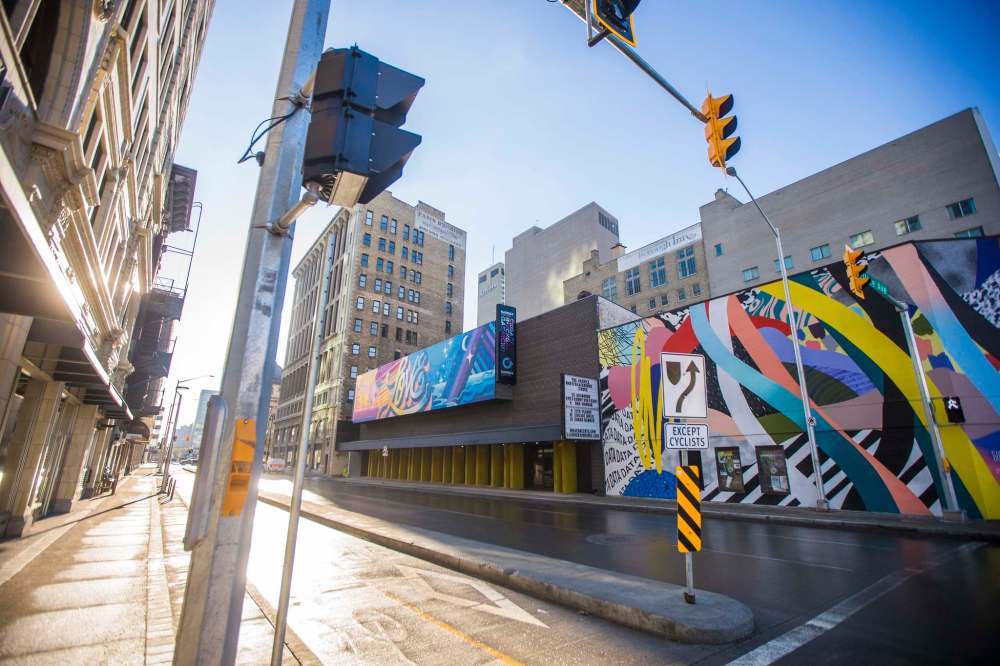
In a bit of dramatic irony, the venue’s abrupt end was spelled out by the pandemic, and the lobby where crowds of fans would normally gather will now host a walk-in testing site for COVID-19, run by the provincial government, for the foreseeable future.
“It’s hard to pick a favourite moment here,” adds Smith, who’s been associated with the venue since his days as an independent producer. “We made magic all the time. It never felt like work.”
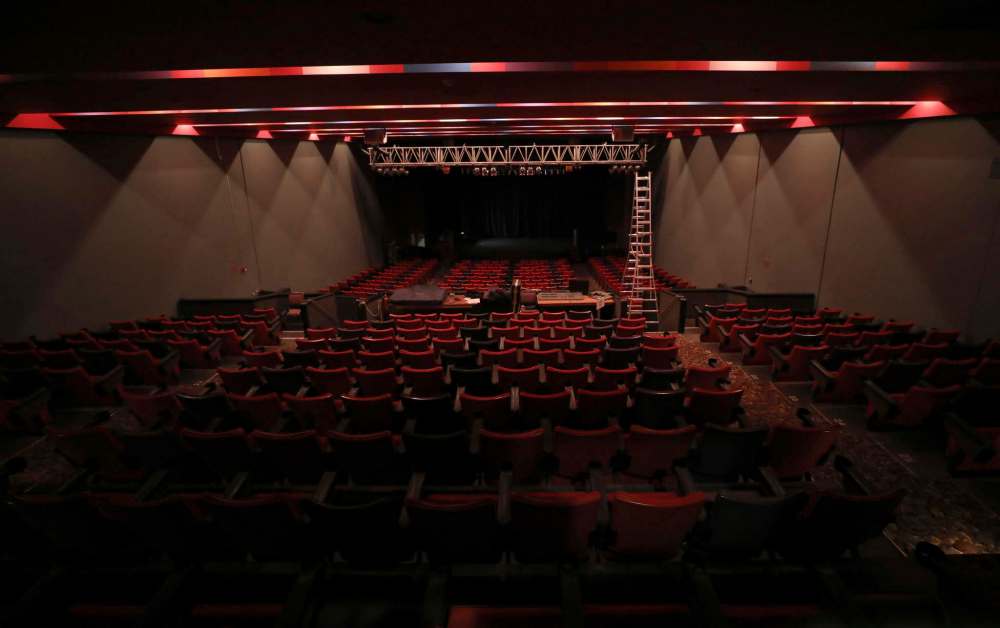
For the last two decades, the Garrick became a key spot for local music, with a room big enough — able to hold 700 to 800 — to support artists with a sound and following more suited to its cavernous style than to the grand Burton Cummings Theatre or the confines of the city’s smattering of smaller venues. Different genres like punk, EDM, heavy metal, and hip-hop found a home there, drawing artists who otherwise might have skipped over the city on their Canadian tours: pioneering hip-hop troupe Public Enemy, electronic duo Zeds Dead, metal group GWAR, and emo icons Jimmy Eat World are prime examples.
But the venue also provided a room for local groups, like Propagandhi and Comeback Kid, to fill and play in a style that suited their punk sensibilities, and for hip-hop groups like the Lytics to open for touring acts like the late Mac Miller, who stopped in Winnipeg in 2011 long before he achieved superstardom.
“(Playing the Garrick) was a symbol of graduation and being in that next phase for an artist,” says the Lytics’ Anthony Sannie. “For younger artists coming up, playing at the Garrick for the first time was always a special moment.”
“It fell under an umbrella no other venue in Winnipeg could as far as its size and what it could accomplish with its sound,” said Andrew Neufeld of Comeback Kid, a local band which played some of its most memorable shows there, including one of the very first concerts held at the Garrick after it became a music venue.
“It isn’t a beautiful, state-of-the-art place, but it got the job done and the sound was fantastic,” says Mat Perlman, a longtime stagehand.
The Garrick also had the distinction of holding a liquor licence and hosting all-ages shows, which made the venue an ideal entry point for young fans like Lexi Brodeur, who worked there for the last three years but started attending shows there as a teen.
“It was big enough to feel big, but small enough to feel like you were at a private show at times,” Brodeur said. And, “There used to be a way to sneak through the hotel and come out the stage doors. I was a bit of a troublemaker then,” she laughs.
The 2002 purchase of the theatre by Manfred Boehm, the owner of the neighbouring Marlborough Hotel, helped jumpstart the venue. Boehm invested over $1.5 million to bring the centre up to modern standards as a conference and entertainment venue.
For a time, the plan worked, the venue becoming a reliable stopover point for bands that couldn’t quite fill Bell MTS Place or would feel out of place in the Burt. “It was a really interesting intersection,” said Jack Jonasson, who worked as the centre’s bar manager until February. “There is nothing else like it.”
But Boehm said the pandemic made clear that the business model would not be sustainable, and the opportunity to get some income from the building by renting it to the province made sense, as former leaseholder the MRG Group had not generated income in months.
“Obviously I’d have liked things to continue based on the long-term lease I had with MRG,” Boehm said. “At the end of the day, I have to make decisions based on financial viability.”
Venue owners across the city will likely be faced with similarly tough decisions in the coming months, as live music to a capacity crowd is likely one of the last activities to be given the green light in the COVID world.
“It’s a big setback and it’s disappointing, but at the end of the day, it is what it is and we have to try to make the best of the situation,” Boehm said, adding that the annual revenue loss for the centre was 100 per cent.
“I feel very bad for Sam, he did everything he could,” Boehm added. “I wish it were different.”
Smith says he feels bad for the city. “It’s a void that’s going to be hard to fill,” he says.
“But the bones of that building will always scream to be the Garrick again,” he adds. “Once the need for testing goes away and COVID is a memory, it would be a tremendous waste or loss to not resurrect it as a concert facility.”
“Would I like to see it as an entertainment venue again? Sure,” says Boehm. “But when will that be? My crystal ball is as good as yours.”
ben.waldman@freepress.mb.ca

Ben Waldman covers a little bit of everything for the Free Press.
Our newsroom depends on a growing audience of readers to power our journalism. If you are not a paid reader, please consider becoming a subscriber.
Our newsroom depends on its audience of readers to power our journalism. Thank you for your support.







![WINNIPEG FREE PRESS ARCHIVES
On Wednesday, June 4, 1919 In front of the government Building Norris, with policeman, to the left of the [illegible] Loyal Returned Soldiers](https://staging.winnipegfreepress.com/wp-content/uploads/sites/2/2022/05/NEP8820082.jpg?w=500)