

Trotsky’s killer devoted to Stalin, communism
Advertisement
Read this article for free:
or
Already have an account? Log in here »
To continue reading, please subscribe:
Monthly Digital Subscription
$1 per week for 24 weeks*
- Enjoy unlimited reading on winnipegfreepress.com
- Read the E-Edition, our digital replica newspaper
- Access News Break, our award-winning app
- Play interactive puzzles
*Billed as $4.00 plus GST every four weeks. After 24 weeks, price increases to the regular rate of $19.95 plus GST every four weeks. Offer available to new and qualified returning subscribers only. Cancel any time.
Monthly Digital Subscription
$4.99/week*
- Enjoy unlimited reading on winnipegfreepress.com
- Read the E-Edition, our digital replica newspaper
- Access News Break, our award-winning app
- Play interactive puzzles
*Billed as $19.95 plus GST every four weeks. Cancel any time.
To continue reading, please subscribe:
Add Free Press access to your Brandon Sun subscription for only an additional
$1 for the first 4 weeks*
- Enjoy unlimited reading on winnipegfreepress.com
- Read the E-Edition, our digital replica newspaper
- Access News Break, our award-winning app
- Play interactive puzzles
*Your next subscription payment will increase by $1.00 and you will be charged $16.99 plus GST for four weeks. After four weeks, your payment will increase to $23.99 plus GST every four weeks.
Read unlimited articles for free today:
or
Already have an account? Log in here »
Leon Trotsky was a leading light of the Russian Revolution (1917) and subsequent civil war.
His rival within Russian communism was Josef Stalin; the two leaders had a visceral dislike for one another. When Stalin consolidated his power, Trotsky was obliged to flee, eventually settling in Mexico.
But Trotsky could not find safety anywhere; Stalin was bent on killing him. A Soviet agent succeeded in this grim task, assassinating Trotsky with an ice axe in 1940.
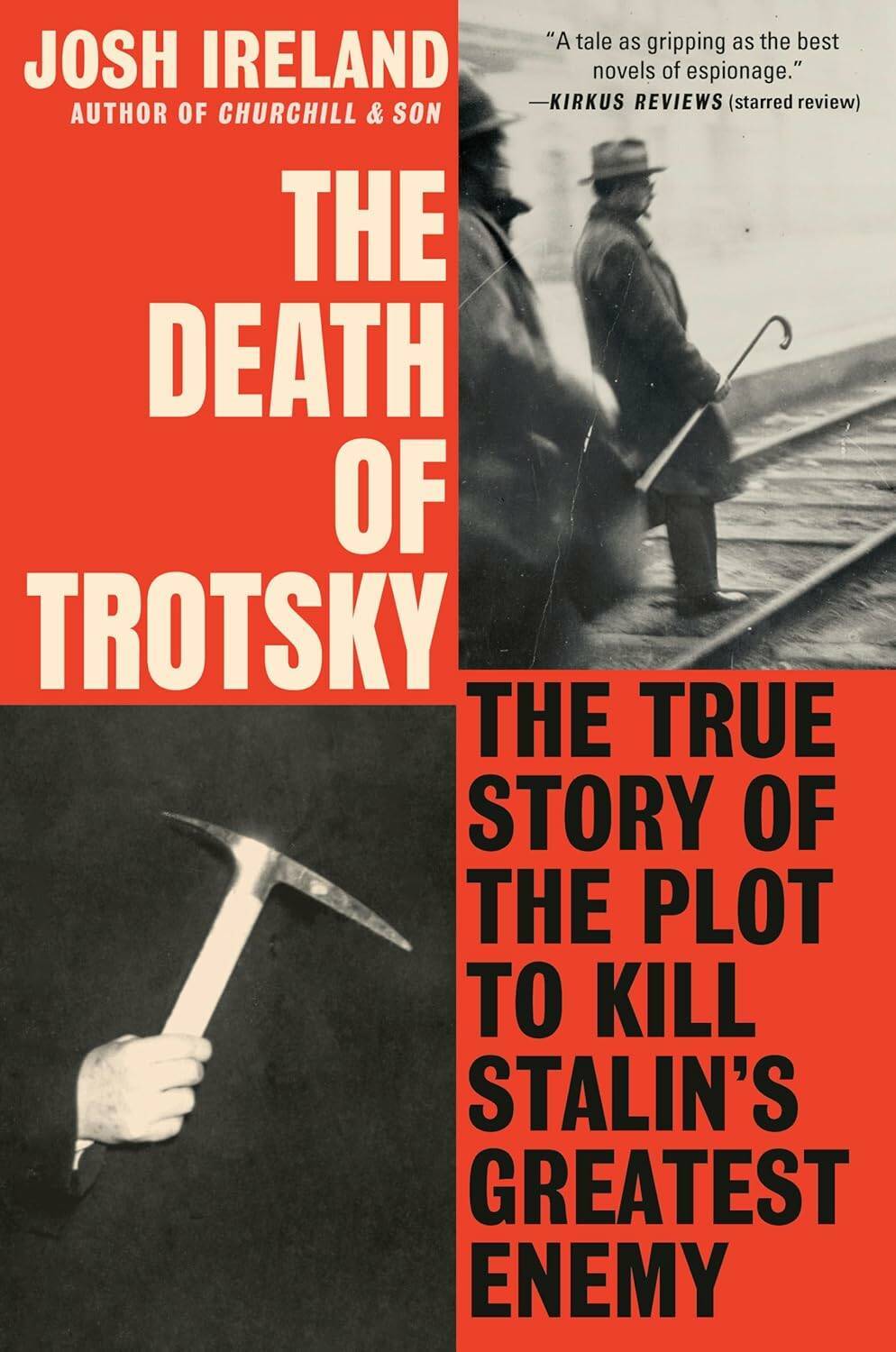
The Death of Trotsky
British journalist and popular historian Josh Ireland details the events leading up to Trotsky’s violent death in his absorbing account.
Ireland alternates between depictions of Trotsky’s daily life in Mexico and the machinations of Soviet intelligence, the NKVD, a forerunner of the more famous KGB. Ireland shows how the spy who ultimately eliminated Trotsky insinuated himself into Trotsky’s circle.
The assassin was named Ramon Mercader, a Spaniard, although he had numerous aliases. He was, Ireland says, “the perfect spy” and a “fanatic communist.” His mother was also a communist working for the NKVD.
Indeed, what is most valuable about this book is the light it shines on the mentality of Western progressive intellectuals and Soviet officials who doggedly supported Soviet communism in the 1930s.
These groups believed that the Russian Revolution was a positive force that overcame private property, greed for power, social distinctions and sexual taboos.
And the future would be even better. A fully realized communist system would create a world without borders in which ethnic and religious differences would be swept away. The Soviet Union was advancing rapidly under the policies of Soviet dictator Stalin; he was building “a utopia… in steel and concrete.”

Mercader never wavered in his fidelity to Soviet communism, despite serving a 20-year prison sentence in Mexico for the killing of Trotsky.
As his brother observed, Mercader “was completely mesmerized by the idea of communism, and absolutely sure that there was nothing in the world better than the Soviet Union.”
But his mother became disillusioned with the Soviet system: “They cheated us… They deceived us with their revolutionary books, their propaganda and their so-called paradise. It is the worst hell that has ever existed.”
Ireland explores the sordid underground of Russian espionage which, combined with utopian ideology, produced murderous results. And the Russian regime is still assassinating its opponents, giving Ireland’s narrative particular relevance.
Graeme Voyer is a Winnipeg writer.