Humbled in the home stretch Glen Murray seen as front-runner, before allegations of unprofessional behaviour surfaced
Read this article for free:
or
Already have an account? Log in here »
To continue reading, please subscribe:

Digital Subscription
One year of digital access for only $205*
- Enjoy unlimited reading on winnipegfreepress.com
- Read the E-Edition, our digital replica newspaper
- Access News Break, our award-winning app
- Play interactive puzzles
*First annual payment billed as $205.00 + GST for one year. This annual subscription will automatically renew at $233.00 + GST every 52 weeks (10% off the regular annual price of $259.35). Offer available to new and qualified returning subscribers only. Cancel any time.
To continue reading, please subscribe:
Add Free Press access to your Brandon Sun subscription for only an additional
$1 for the first 4 weeks*
- Enjoy unlimited reading on winnipegfreepress.com
- Read the E-Edition, our digital replica newspaper
- Access News Break, our award-winning app
- Play interactive puzzles
*Your next Brandon Sun subscription payment will increase by $1.00 and you will be charged $17.95 plus GST for four weeks. After four weeks, your payment will increase to $24.95 plus GST every four weeks.
Read unlimited articles for free today:
or
Already have an account? Log in here »
Hey there, time traveller!
This article was published 07/10/2022 (1447 days ago), so information in it may no longer be current.
If you needed to find a calm before a storm, you couldn’t find a better location than the Palm Room at the Hotel Fort Garry.
It is mid afternoon on a late September Wednesday, that sleepy moment after the lunch rush and well before happy hour. Glen Murray is finishing up a call at a table on the perimeter of the round-shaped room, servers are resetting the tables and the dulcet tones of Louis Armstrong singing Dancing Cheek to Cheek are wafting up to the golden-domed ceiling.
This moment is also just 12 hours or so before Murray’s pack-leading mayoral campaign — the latest poll result showed Murray with a commanding lead in a crowded field — was about to suffer a major setback. A CBC story detailed allegations of toxic behaviour during a one-year stint as executive director of the Pembina Institute, a non-governmental environmental lobby.
During an hour-long interview, Murray never raised the impending storm that was about to descend on his campaign although he did frequently refer to his time at the Pembina Institute. Murray said he loved the job, but a demanding work schedule convinced him it was time to come back to Winnipeg in mid-2018 to start Creative Applications for Sustainable Technology, a software-development company.
By the time Murray landed at the Pembina Institute, he had experienced a whirlwind of career opportunities. He left Winnipeg in 2004, shortly after he resigned his post as mayor to run in the federal election as a Liberal candidate. Unsuccessful in his bid to go to Ottawa, Murray assumed many different roles: academic; CEO of the Canadian Urban Institute; chair of the National Round Table on the Environment and Economy; and a seven-year stint as an MPP and minister in Ontario’s Liberal government.
Murray left politics, or so it seemed, in 2017 just before the Ontario Liberals imploded. Almost immediately, he took a position at the Pembina Institute. Despite the fact he has continued to describe his time at the lobby as his “dream job,” the CBC story revealed he resigned after only one year, after receiving a termination notice. The story described instances of unprofessional behaviour that Pembina employees alleged included sexual and physical harassment.
In the interview that preceded the publication of that damaging story, Murray would say only that his role at the institute was very demanding. He also claimed a series of personal setbacks prompted him to plan, along with his longtime partner Rick Neves, an emergency-room nurse, a return to Winnipeg. Murray’s aging mother was suffering from dementia and had to be placed in a long-term care facility, and his adopted son Michael had become estranged. (After years of drug addiction and trouble with the law, Michael took his own life in 2019.)
“With all of the travel, I became concerned about my health,” Murray said. “I needed to be somewhere where I could have time for myself.”
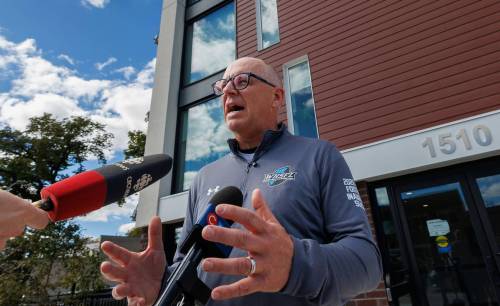
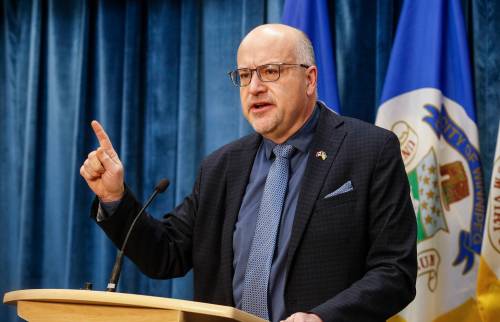
Once the Pembina Institute allegations were fully aired on Sept. 29, Murray faced reporters to admit there had been problems during his time there but refuted allegations of sexual or physical harassment. He said he was brought in to ease the institute through a period of transition and clearly, he had been the wrong person for the job.
“In my time at the Pembina Institute, I was ambitious and working hard on goals I thought we all shared as a team. It was also, however, a time of great change in my private life, and it is clear that I allowed that pressure to spill over into my work life. I am sorry for this and I take responsibility.”
Glen Murray was, by all reasonable measurements, a political neophyte when he registered as a candidate in the 1989 civic election to serve as councillor in the Fort Rouge ward.
He came to Winnipeg in the 1980s and established a public profile through work in public health and human rights. He campaigned to have sexual orientation included as a basis for discrimination in the Manitoba Human Rights Code, and established the Village Clinic, Canada’s first community health facility for the care and treatment of those suffering from HIV/AIDS.
Murray won that first election and was re-elected in 1992 and 1995. Although he was always vocal, he built a potent profile as city hall’s most active critic of former mayor Susan Thompson, who served from 1992 to 1998. When Thompson left, it created an opportunity for the mercurial Murray to finally put all of the ideas he had been preaching from the fringes of council into action. He became Canada’s first openly gay mayor in the 1998 mayoral vote, and was re-elected with a larger plurality in 2002.
Murray put his stamp on the city with a series of high-profile infrastructure projects: Red River College’s Princess Street campus; the Canadian Museum for Human Rights; Manitoba Hydro’s downtown headquarters; and the downtown arena now home to the Winnipeg Jets.
Former premier Gary Doer worked closely with him on many of those projects. Doer said Murray repeatedly showed firm resolve in sharing the cost and the controversy of those projects. Unlike other political leaders, Murray was not dissuaded from getting involved in projects that were the objects of derision for what he called “the nitpicker’s convention.”
“(Murray) was willing to stand his ground when the critics showed up and make those deals with the federal and provincial governments,” he said.
Murray also served as a national voice for an ambitious plan to reinvent municipal revenue streams. He got council support for a property-tax freeze while also leading a powerful national lobby of big-city mayors seeking revenue-sharing deals with the senior levels of government.
In the current election, however, Murray has been defined by his critics and opponents less by what he built, and more by the manner in which he left civic politics. In particular, his decision to resign his mayoral post to stand as the Liberal candidate in the 2004 federal election.
With his profile as one of the big-city mayors, Murray was considered a shoo-in for the Paul Martin-led Liberals. However, the emergence of a united Conservative party meant Murray could no longer count on vote-splitting to get him over the top. He lost a very close race to Tory Steven Fletcher.
Murray’s decision still draws criticism.
Chris Lorenc, head of the Manitoba Heavy Construction lobby group and a former city councillor, said Murray had, in the mayor’s office, all of the profile and platform he needed to push the New Deal for cities. Lorenc said Murray failed to realize the federal Liberal government had reached its best-before date. That made throwing his hat into the 2004 election a triumph of personal ambition over public priorities.
“I told Glen at the time that leaving city hall was going to mean a missed opportunity to reinvent relationships between municipal, federal and provincial governments,” Lorenc said. “And it turned out to be a missed opportunity for structural change in this country. One that we still need today.”
To this day, Murray said believes running federally was the right decision. Martin had promised him a cabinet post from which he could galvanize a new revenue deal for local governments through revenue-sharing schemes.
“I really thought I could win,” Murray said. “I don’t have any regrets. Failure is not trying something and not succeeding; failure is never getting off the couch to try it.”
When the Pembina Institute story broke late last month, many political observers believe Murray made two big mistakes when he summoned reporters to hear his side of the story.
First, after having been accused by his Pembina detractors of being chronically late for meetings, he showed up 30 minutes late for his own news conference. And second, he did not take any questions.
In an interview a few days later, Murray said he was trying to move on with his campaign, even though he acknowledges the allegations are very serious. He reiterated that he was never confronted with any allegations of physical or sexual harassment during or after his time at the institute. That is consistent with the details of the original story, in which the complainants confirmed they had not made those allegations to anyone else at the time.
Murray acknowledged the story puts him in a precarious position. However, for the three weeks of campaigning he has left, Murray said he will stay true to the message he started his campaign with.
“I’m focused on the future of the city of Winnipeg.”
dan.lett@winnipegfreepress.com

Born and raised in and around Toronto, Dan Lett came to Winnipeg in 1986, less than a year out of journalism school with a lifelong dream to be a newspaper reporter.
Our newsroom depends on a growing audience of readers to power our journalism. If you are not a paid reader, please consider becoming a subscriber.
Our newsroom depends on its audience of readers to power our journalism. Thank you for your support.
Related Articles
Ouellette banks on new tax to fund housing units