WEATHER ALERT

Transition to King Charles III as Canada head of state automatic after Queen’s death

OTTAWA - As momentous as the death of Queen Elizabeth II may be after her 70 years on the throne, it's pretty much business as usual in terms of Canada's governance.

Read this article for free:

or

Already have an account? Log in here »

To continue reading, please subscribe:

Subscribe and receive a limited-edition Free Press branded hat or tote.

Digital Subscription

One year of digital access for only $205*

  • Enjoy unlimited reading on winnipegfreepress.com
  • Read the E-Edition, our digital replica newspaper
  • Access News Break, our award-winning app
  • Play interactive puzzles

*First annual payment billed as $205.00 + GST for one year. This annual subscription will automatically renew at $233.00 + GST every 52 weeks (10% off the regular annual price of $259.35). Offer available to new and qualified returning subscribers only. Cancel any time.

To continue reading, please subscribe:

Add Free Press access to your Brandon Sun subscription for only an additional

$1 for the first 4 weeks*

  • Enjoy unlimited reading on winnipegfreepress.com
  • Read the E-Edition, our digital replica newspaper
  • Access News Break, our award-winning app
  • Play interactive puzzles
Start now

*Your next Brandon Sun subscription payment will increase by $1.00 and you will be charged $17.95 plus GST for four weeks. After four weeks, your payment will increase to $24.95 plus GST every four weeks.

Hey there, time traveller!
This article was published 08/09/2022 (1416 days ago), so information in it may no longer be current.

OTTAWA – As momentous as the death of Queen Elizabeth II may be after her 70 years on the throne, it’s pretty much business as usual in terms of Canada’s governance.

The monarch remains the constitutional head of state in this country, no matter who is filling the role at any given time, says Philippe Lagassé, an associate professor of international affairs at Carleton University and an expert on the role of the Crown in the Westminster system of government.

Hence, the succession from the Queen to her eldest son Charles, to be known as King Charles III, is automatic. There is no disruption to governing bodies that sit in her name or to legislation, oaths and other legal documents issued in her name.
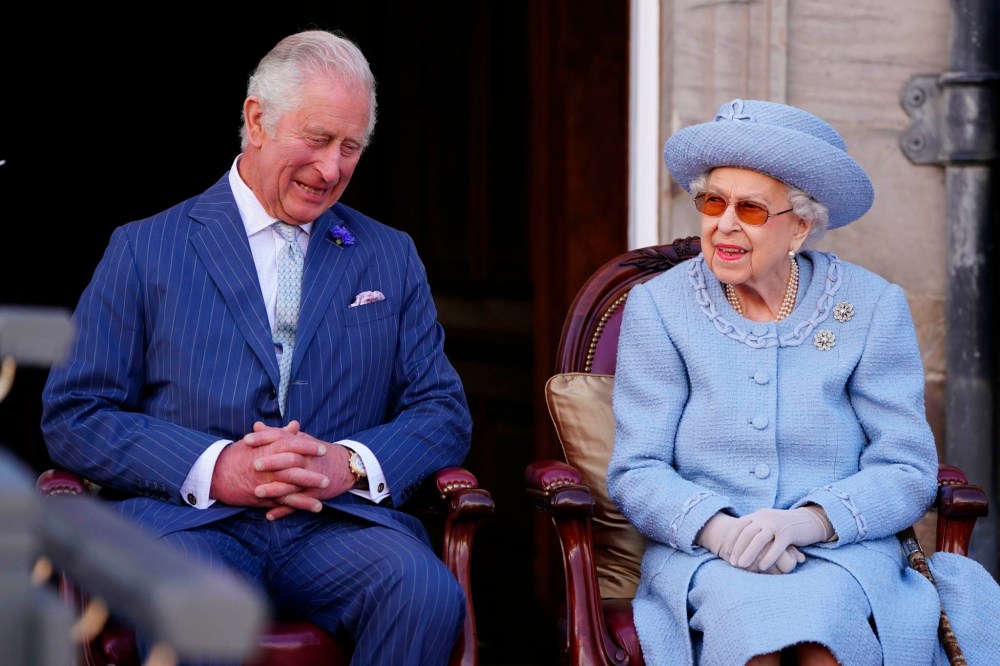
Britain's Queen Elizabeth II and Prince Charles, known as the Duke of Rothesay when in Scotland, attending the Queen's Body Guard for Scotland (also known as the Royal Company of Archers) Reddendo Parade in the gardens of the Palace of Holyroodhouse, Edinburgh last month. (Jane Barlow / Pool via AP)

“This transition does not require any action on Canada’s part,” Lagassé says.

“The phrase ‘The Queen is dead, long live the King!’ applies here and in the U.K.”

In common law, Lagassé says, the Queen and King are “the same legal person.” That’s because the Crown is what is known as a “corporation sole.”

“This means that, in their official capacity, the legal personality of the Queen (or) King does not change when different natural persons hold the position.

“That further means that any legal documents and instruments issued in the name of the Queen or that mention the Queen will apply and be understood to be from the King.”

That includes oaths of allegiance to the monarch, which are required in a host of cases, including becoming a member of Parliament or a member of the Canadian Armed Forces or a Canadian citizen.

“So, there’s no need to re-swear or re-sign anything,” Lagasse says.

Britain's Prince Charles, Prince of Wales, in his role as Colonel of the Welsh Guards, takes part in the Trooping the Color parade, in London, last month, on the first of four days of celebrations to mark the Platinum Jubilee. (Adrian Dennis / Pool Photo via AP)

It wasn’t always that way.

In days of yore, the death of a monarch meant that parliaments sitting in that individual’s name in the United Kingdom and its colonies, including those that eventually became Canada, were automatically dissolved and elections had to be held.

“Dissolution by demise of the Crown” as it is known, flowed from the “premise that the Sovereign summons a parliament in his or her personal capacity and that, therefore, a parliament must die along with the individual King or Queen who sent for it,” says James Bowden, an acknowledged authority on such matters, in an April 2021 post on his scholarly blog, Parliamentum.

The practice reflected “an older medieval status of the Crown” when parliaments sat rarely, summoned by the monarch only when necessary, Bowden says. It was obviously “impractical and disruptive” in more modern times, as parliaments began sitting regularly and the monarch’s role became more ceremonial.

Dissolution by demise of the Crown was abolished in the U.K. in 1867 and the Parliament of the newly created Confederation of Canada followed suit in its first session the same year, according to Bowden.

Today, the Parliament of Canada Act expressly states that “Parliament shall not determine or be dissolved by the demise of the Crown and, notwithstanding the demise, shall continue, and may meet, convene and sit, proceed and act, in the same manner as if that demise had not happened.”

Similarly, oaths of allegiance to the Queen have been changed to include the words “and her heirs and successors,” explicitly doing away with the need to re-swear an oath to the new monarch after her death.
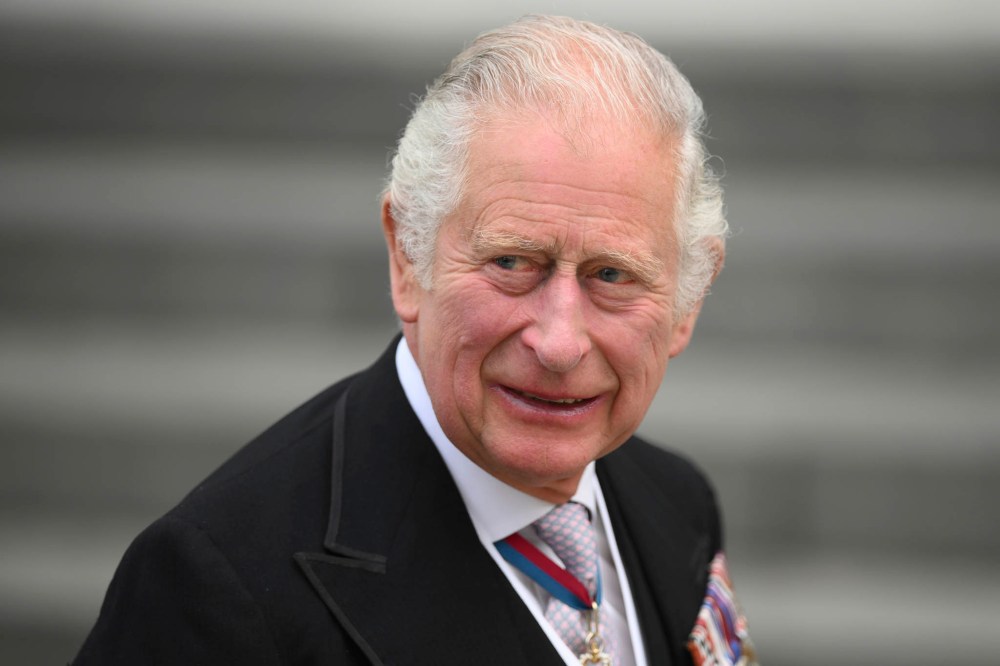
Britain's Prince Charles arrives for a service of thanksgiving for the reign of Queen Elizabeth II at St Paul's Cathedral in London last month on the second of four days of celebrations to mark the Platinum Jubilee. (Daniel Leal / Pool Photo via AP)

Provinces and territories have all adopted similar provisions.

However, in their zeal to remove references to the monarch in the act governing the National Assembly in 1982, Quebec also removed a provision that specified the legislature would not dissolve automatically on her death.

Historians and constitutional experts raised the alarm that this omission could plunge the province into an election upon the Queen’s death and potentially mean that all laws passed following her death would be scrapped.

The Quebec government introduced a bill in March 2021 to rectify the omission.

While the business of government in Canada will continue undisturbed, Lagassé says there are some formalities that will have to be observed.

For instance, Canada’s Privy Council, which includes all current and former cabinet ministers, is expected to meet when a new monarch ascends the throne. The governor general, the Crown’s representative in Canada, must also issue a proclamation on the new monarch.

“It is important to note, however, that this step merely affirms what has already occurred in law,” says Lagasse.

The succession from the Queen to her eldest son Charles is automatic, without any disruption to governing bodies that sit in her name or to legislation, oaths and other legal documents issued in her name. (Kevin Frayer / Canadian Press files)

There are also a number of protocols surrounding the official 10-day mourning period. It will culminate in a funeral service in London, which Commonwealth prime ministers and governors general are expected to attend.

Flags are already at half mast on official government buildings, including the Peace Tower on Parliament Hill, and members of the federal cabinet sported black ribbons on Thursday afternoon to commemorate the loss.

The public will be able to sign books of condolences online and in person at Rideau Hall, the governor general’s residence in Ottawa.

This report by The Canadian Press was first published Sept. 8, 2022.

Report Error Submit a Tip

More Stories

Jazz fest's pop-up venue an experiment in sound design and architecture

Erin Lebar 6 minute read Preview

Jazz fest's pop-up venue an experiment in sound design and architecture

Erin Lebar 6 minute read Tuesday, Jun. 18, 2019

The Winnipeg International Jazz Festival prides itself on being a downtown event with Old Market Square serving as its hub for six days of free concerts and headlining acts filling venues such as the Burton Cummings Theatre and the Centennial Concert Hall.

But this year, the festival is expanding its boundaries by collaborating with RAW:Gallery to create RAW:JazzFest, a pop-up venue just outside of the downtown borders in St. Boniface at Parc Elzéar Goulet on Taché Avenue overlooking the Red River.  

"It felt like a unique opportunity to create a concert experience for Winnipeggers that they haven’t had before, and to also kind of be part of making a cool building. There’s unique value in that," says jazz fest artistic director Mike Falk.

"We love having music in small spaces; I think that when people are crushed together a bit more their kinetic energy bounces around and makes for good shows, so I think with this project it’s definitely designed to both animate the space and animate the people, and have some fun, as well."

Read
Tuesday, Jun. 18, 2019

The heat is on Valour FC goalkeeper Sirois to perform

Mike Sawatzky 6 minute read Preview

The heat is on Valour FC goalkeeper Sirois to perform

Mike Sawatzky 6 minute read Monday, Mar. 28, 2022

A year ago, Jonathan Sirois was a promising young goaltender with a limited resume.

He spent the next six months putting his unique stamp on the 2021 Canadian Premier League season, pitching a shutout in his first start for Valour FC — a 2-0 win over Forge FC — and adding eight more clean sheets on his way to the league’s goalkeeper of the year honours.

He led all CPL goalkeepers in shutouts (nine), saves (94) and played 2,160 minutes — the most of any under-21 player in the league — as Valour FC narrowly missed a top-four finish and a berth in the post-season.

It was a stunning rise for 20-year-old native Montrealer, who was developed at the CF Montreal Academy and loaned to Valour as a 19-year-old.

Read
Monday, Mar. 28, 2022

Help new mom practically; disregard grapevine

Maureen Scurfield 4 minute read Monday, Apr. 22, 2024

DEAR MISS LONELYHEARTS: My friend insists she and her husband are happy, although they’ve had almost no sex since the birth of their baby three months ago. None! She says they both like it that way — it’s very relaxed. They just had their first child, which is what they both wanted so much, and it was a difficult birth.

I happen to know, via another friend, that the new mom’s husband has a flirtation going on with an acquaintance of mine, as we all work together. I don’t know if it’s gotten to private meetings and sex or if it’s just flirting at work.

Is it my duty as a close friend of the wife to tell her what I’ve heard or to hint to her husband that his flirting is not going to be kept secret for long?

— Concerned for New Mama, River Heights

Mayor tight-lipped about firefighter charged with disobeying protection order while on job

Malak Abas 5 minute read Preview

Mayor tight-lipped about firefighter charged with disobeying protection order while on job

Malak Abas 5 minute read Yesterday at 5:13 PM CDT

Mayor Scott Gillingham said he can’t talk about the case of a firefighter accused of breaching a protection order while on the job this month — a man who has been jailed twice in the past 10 years for harassing two women.

Christopher Goethals was arrested July 21 after breaching a protection order requiring that he not come within 200 metres of a protected person.

Police said Goethals, 59, was in full uniform, driving a Winnipeg Fire Paramedic Service fleet vehicle, and was performing “modified duties” on the job when he breached the order.

When asked about Goethals being able to serve as a firefighter under those circumstances, Gillingham called it a human resources issue. He said he wouldn’t get into specifics, but would “look into this matter further.”

Read
Yesterday at 5:13 PM CDT

National Newspaper Week recognizes efforts of the journalists keeping small-town papers alive

Malak Abas 8 minute read Preview

National Newspaper Week recognizes efforts of the journalists keeping small-town papers alive

Malak Abas 8 minute read Wednesday, Oct. 7, 2020

On the evening of Oct. 14, 2007, the Cartwright Community Centre arena burned to the ground.

Fondly referred to as the Clipperdome, it was a communal space in the small Manitoba town of Cartwright, about 180 kilometers southwest of Winnipeg. It was especially lively in the winter, when the hockey arena was a busy hub for locals to connect, many of whom were members or knew members of the Cartwright Clippers senior hockey team.

“Sorrow” was the word Vicki Wallace — the editor, publisher and sole reporter of Cartwright weekly newspaper the Southern Manitoba Review — used when describing the fire and the community’s response.

“I’ll tell you right now, you made me cry,” she told a Free Press reporter when recalling the time.

Read
Wednesday, Oct. 7, 2020

Canada's little-known wartime internment camps

Morgan Lowrie, The Canadian Press 6 minute read Preview

Canada's little-known wartime internment camps

Morgan Lowrie, The Canadian Press 6 minute read Monday, Nov. 9, 2020

MONTREAL - In 1940, a Jewish student in the United Kingdom named Edgar Lion was sent to Canada against his will on a ship that carried both German and Austrian Jews and Nazi prisoners of war.

And when he first arrived at an internment camp in Trois-Rivieres, Que., the Austrian-born Lion quickly realized the local citizens gathered near the camp entrance didn’t know the difference between the two groups.

“People were cursing us and throwing stones at us. We had to cross a gauntlet of citizens who knew some of us were prisoners of war, but (didn’t know) some of us were just ordinary prisoners," he said in a recent interview.

"We were in the wrong place. We weren’t supposed to be interned.”

Read
Monday, Nov. 9, 2020