

The fix is in
Why North Dakota is rolling in cash for highways and Manitoba isn’t

Advertisement
Read this article for free:
or
Already have an account? Log in here »
To continue reading, please subscribe:

Digital Subscription
One year of digital access for only $205*
- Enjoy unlimited reading on winnipegfreepress.com
- Read the E-Edition, our digital replica newspaper
- Access News Break, our award-winning app
- Play interactive puzzles
*First annual payment billed as $205.00 + GST for one year. This annual subscription will automatically renew at $233.00 + GST every 52 weeks (10% off the regular annual price of $259.35). Offer available to new and qualified returning subscribers only. Cancel any time.
To continue reading, please subscribe:
Add Free Press access to your Brandon Sun subscription for only an additional
$1 for the first 4 weeks*
- Enjoy unlimited reading on winnipegfreepress.com
- Read the E-Edition, our digital replica newspaper
- Access News Break, our award-winning app
- Play interactive puzzles
*Your next Brandon Sun subscription payment will increase by $1.00 and you will be charged $17.95 plus GST for four weeks. After four weeks, your payment will increase to $24.95 plus GST every four weeks.
Read unlimited articles for free today:
or
Already have an account? Log in here »
Hey there, time traveller!
This article was published 10/10/2015 (3985 days ago), so information in it may no longer be current.
In the heat of a federal election campaign, where infrastructure has been a key issue for all parties, trucking company owner Dave Tyrchniewicz would like politicians vying to form government to know something.
Our roads suck.
“The roads all over Canada are deplorable,” Tyrchniewicz said.
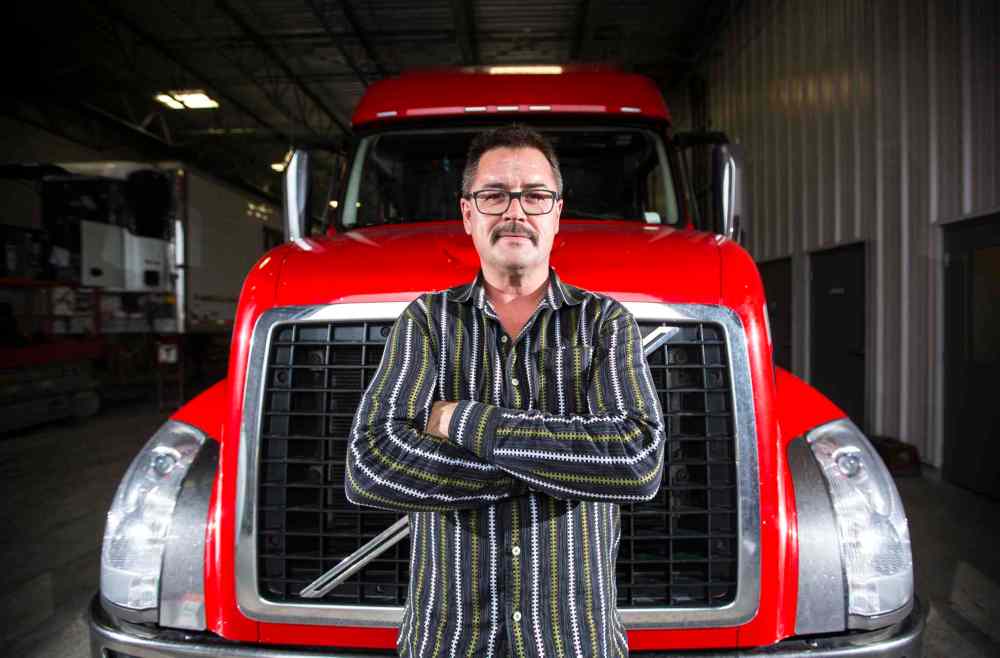
He has been driving trucks all over central and western North America for nearly 30 years. During that time, he’s come to one inescapable conclusion: the highway is much better on the other side of the border.
“It’s really not even close,” said Tyrchniewicz, owner of TURK Enterprises, a hauling company that boasts a fleet of 65 trucks.
Truck drivers are uniquely qualified to report anecdotally on road conditions. Tyrchniewicz said big rigs are more sensitive to bumps in the roads than a smaller vehicle. Each crack, dip and pothole will reverberate though the trailer and into the cab with teeth-rattling intensity, he said.
“There is no doubt that we feel it more,” he said. “And when you’re driving on those Canadian roads, you know that it’s going to cost you more money.”
Running on bad roads means lower speeds on long trips, more repairs and even an increase in operating costs. Tyrchniewicz said his trucks are outfitted with expensive air suspension to negotiate the bumpier rides in Canada, while American truckers can get by with metal springs that are less costly to install and maintain.
“The state of the roads in this country is a pretty sensitive topic for truckers,” he added.
Reports from truckers such as Tyrchniewicz are consistent with the sense that roads in Canada are not as good as they are in the U.S. And while those opinions are based almost entirely on anecdotal evidence, it turns out there are numbers that back up the theory.
A Free Press analysis of road conditions in Manitoba and North Dakota reveals for the first time the similarities and differences in road and highway construction and financing that explains in large part why the ride is so much better south of the border.
First off, let it be said that from a technical point of view — materials, methods and technology — highway construction in North Dakota and Manitoba are strikingly similar.
Both jurisdictions build new highways from concrete of various depths that is poured over an aggregate and soil base. Both use rebar and dowels to re-enforce the concrete. Both expect a new concrete highway will last from 20 to 30 years before it has to be covered with layers of asphalt. Both hope the original concrete, with the help of regular maintenance and several cycles of asphalt, will last about 50 years before it has to be replaced.
So, if the materials and construction techniques are more or less the same, then what are the differences?
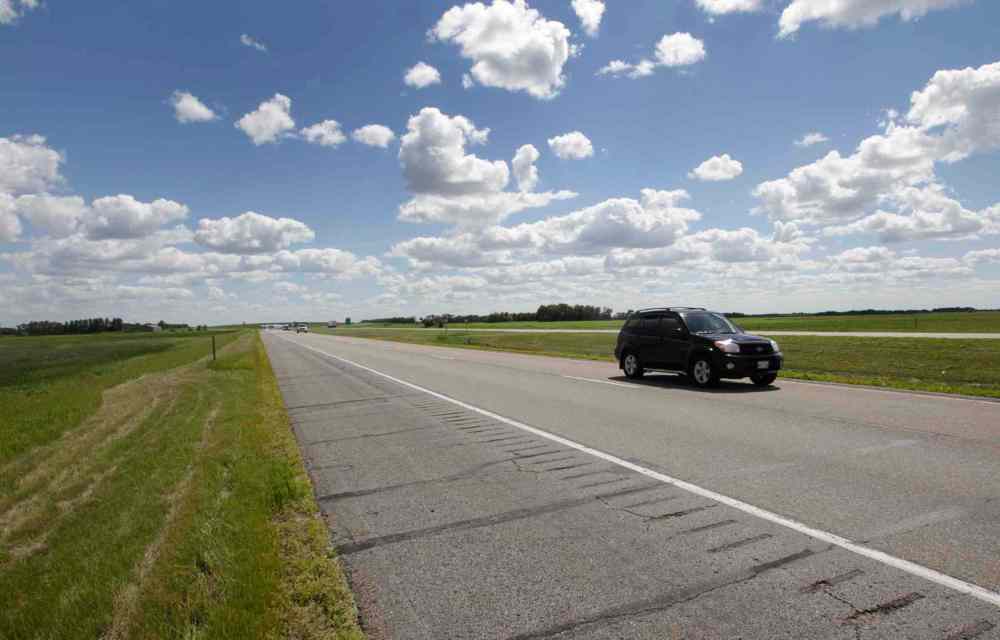
When you dig deep into the culture of highway construction in both countries, what you find is that the U.S. spends considerably more money each year maintaining its highway system than does Canada. And make no mistake about it, infrastructure is one of those problems that can be fixed by throwing more money at it.
An examination of highway financing in Manitoba and North Dakota reveals a funding disparity in extremely graphic terms.
In 2014-15, the last year for which final numbers are available, Manitoba invested a record $554 million into provincial roads and highways. Additional money is spent on the winter road system, and clearing snow from roads in the south.
On its own, that budget is a pretty impressive number, and it’s been growing. In the past decade, total spending on roads and highways has risen by nearly 350 per cent. Somewhat surprisingly, however, it still pales in comparison to the annual road/highways budget in North Dakota.
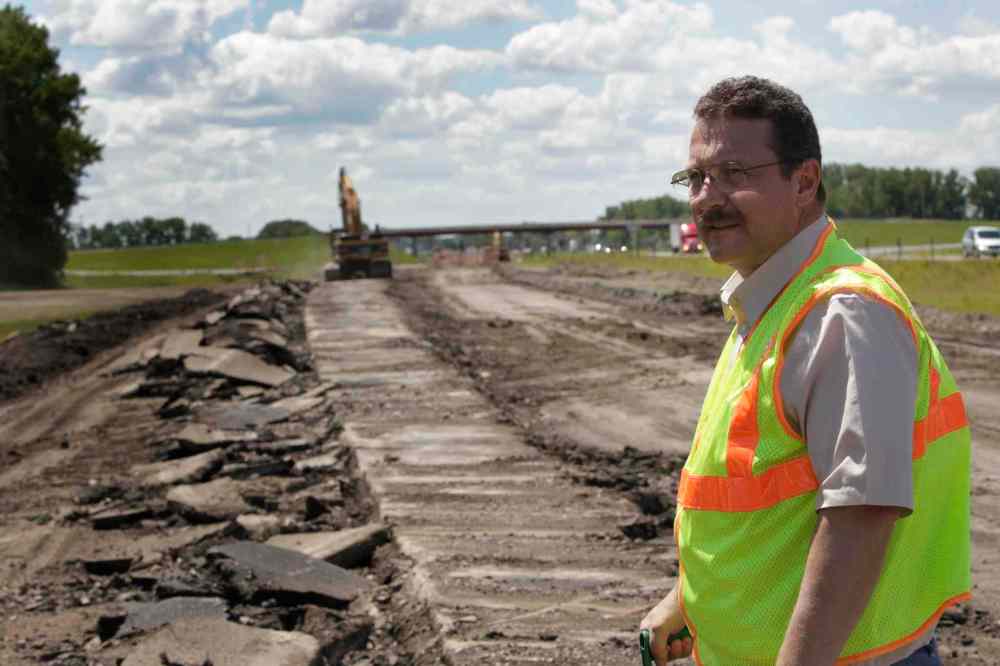
In 2014-15, North Dakota spent a record $800 million on its roads and highways. That is remarkable given the state is one-third the size of Manitoba, has 500,000 fewer residents and a road/highway network that is 8,000 kilometres smaller.
Even when you look at numbers over a longer period of time, North Dakota still outspends Manitoba by a considerable margin. From 2007 to 2014, North Dakota invested $4 billion in its roads and highways; in the same period, Manitoba spent $3.4 billion. That works out to be, over an eight-year period, about $75 million more per year spent in North Dakota.
What does this funding disparity mean for the two jurisdictions? First and foremost, it means North Dakota can reconstruct more new concrete roads each year than Manitoba. Although drivers may not notice the difference between new asphalt and new concrete, the latter typically means better overall driving conditions for a longer period of time.
Concrete is very expensive to pour. In Manitoba, it costs an average of Cdn$1.6 million for one kilometre of two-lane highway; in North Dakota, the cost is estimated at about US$1.4 million per two-lane kilometre. At those prices, and with demands much greater than available resources, both jurisdictions have to be deliberate about how much of their total budgets is dedicated to concrete.
Still, thanks to the funding gap, every year in North Dakota state officials try to pour about 20 miles, or about 32 kilometres, of new concrete roadway. In Manitoba, the average during the past decade has been about 13.25 kilometres, or about 40 per cent of the total concrete poured in the state to the south.

Lance Vigfusson, deputy minister of Manitoba Infrastructure and Transportation, said the funding disparity with North Dakota affects much more than just the amount of concrete being poured. Less money also means fewer repairs and major rehabilitation: less crack sealing, concrete repairs and asphalt overlays.
“There is no doubt that if you invest less money, you get less of the important repair and rehabilitation work that extends the design life of a road,” he said.
However, the total amount of money spent in each jurisdiction does not, on its own, tell the whole story. To get a more complete picture of the differences in financing between Canada and the U.S., you have to look at the sources of the money.
In North Dakota, funding for state highways comes from two sources: the state treasury and the Highway Trust Fund, a national fund that redistributes all revenue from federal gasoline and diesel fuel surtaxes.
In 1956, the U.S. Congress passed a law directing all federal fuel taxes (then set at three cents per gallon) to be used exclusively for highway construction and maintenance. After many years of small increases, in 1993 the tax was hiked to 18.4 cents per gallon; in 1997, the entire tax was once again directed to highway construction.
Each year, fuel taxes generate about US$40 billion in revenues that are redistributed to states for highways and related infrastructure. An equalization formula is used to determine state allotments, with some states receiving more than they pay in fuel taxes. Other states get less.
Simply put, the Highway Trust Fund has been a huge boon for states. In 2014, North Dakota received $240 million in federal HTF money, an extraordinary amount of money and considerably more than Manitoba receives from federal coffers for its highway system.
Les Noehre, the North Dakota department of transportation’s district engineer in Grand Forks, said the fund has been a critically important component of the state’s overall highway and road program each year, and one of the major reasons why total annual spending has reached record levels in the last two years.
“It’s been a real edge for us over the years,” Noehre said. “Something that has allowed us to build a real capacity for construction to meet annual needs.”
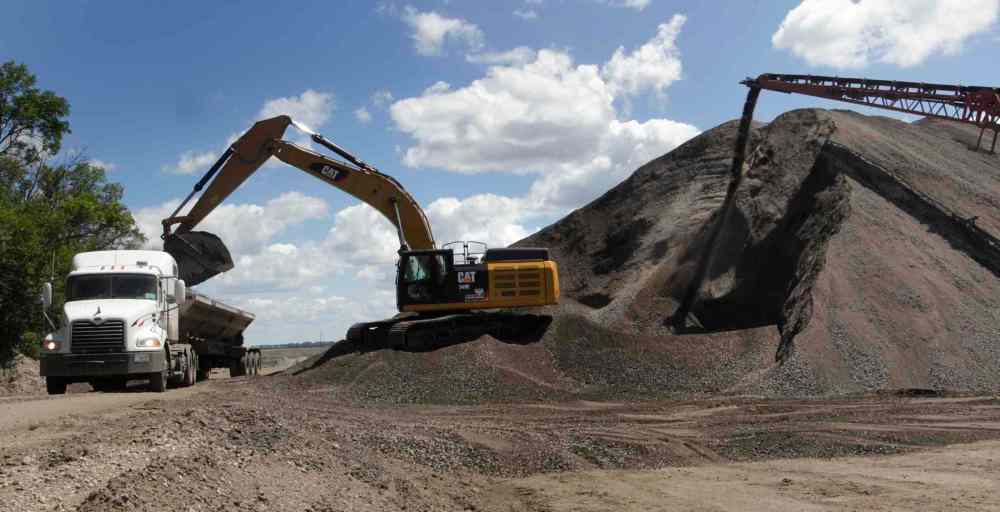
In both 2014 and 2015, North Dakota will spend in excess of US$800 million on its road network. The record expenditures are, in part, a reflection of the booming oilpatch in the western part of the state, Noehre said. Oil production has not only pumped hundreds of millions of dollars into the state treasury, but also necessitated major new roads and road repairs.
Heavy truck traffic related to oilpatch development has taken a huge toll on the roads, Noehre said. This has spurred the state to rebuild the popular routes to withstand heavier loads, a process that has been extremely expensive, he added.
The level and value of construction in North Dakota stands in stark contrast to the levels of spending in Manitoba.
In 2014, Manitoba only received $25.3 million in total federal contributions for highway infrastructure. In the last decade, the most Manitoba has ever received from the federal government in any single year was $84.9 million in 2010-11.
However, that single year definitely was the exception, driven in large part by federal stimulus spending designed to help the economy weather the global recession. Before and after that year, total federal investment in Manitoba’s roads and highways was much lower.
During the past decade, total federal support for Manitoba highways was $286 million, or just seven per cent of Manitoba’s total provincial expenditures on highways.
Premier Greg Selinger said in an interview that the lack of federal support on provincial road and highways systems is a top-of-mind issue for Canada’s premiers, and a frequent topic of conversation whenever they get together with the prime minister.
However, Selinger said those discussions stop short of a specific recommendation on how to deal with the growing gap between the value of the work that needs to be done and the total amount of federal funding. Selinger said most of the premiers believe Ottawa should be dedicating all of fuel taxes to rebuild roads and highways.
Right now, a share of federal fuel taxes is used to fund municipal infrastructure, and that does pump million of dollars more into the provinces each year. Currently, Infrastructure Canada estimates Manitoba municipalities will receive about $340 million in gas-tax rebates over the next five years, or about $68 million a year.

Selinger said that notwithstanding that contribution, Ottawa needs to do more.
“We desperately need a funding model that is sustainable and predictable,” Selinger said. “However, it has always been the case in Canada that the federal government has never had that much of a commitment to the national highway system. The funding we get now is too low and sporadic. We just can’t plan ahead.”
Could Canada adopt the U.S. model? A closer examination of the U.S. highway-funding model reveals that although it has done a lot of good over the years since its inception, there are problems that threaten its existence.
The biggest of those problems? The much-celebrated Highway Trust Fund is expected to run out of money, again, in 2016.
For some time now, the fund has been collecting and earning less than it has been paying out. This year alone, the Congressional Budget Office estimates there will be a US$13 billion deficit in the fund that will grow to a US$22 billion annual shortfall in 2025.
The U.S. problem is simple: demands for federal infrastructure funding continues to grow, but the revenues going into the fund are shrinking. This is due, in large part, to the fact motor vehicles are considerably more fuel-efficient than they were when the fund was created. The result is that even with more cars and trucks on the road, the fund generates less revenue.
Politically, the debate over what to do about the shortfall continues to be unresolved. The fund has more than $30 billion in one-off top-ups from federal general revenues, necessary because political factions cannot agree on a long-term funding solution. In fact, populist elements in Congress have tried, unsuccessfully, to cut or suspend fuel taxes with the full knowledge it would eliminate the fund, and foist the full cost of highway maintenance on state and local governments.
Still, when the rubber meets the road on both sides of the U.S.-Canada border here in Manitoba, the difference that you feel in road conditions is really part of a profound gap in federal funding.
Ottawa contributes far less than the federal government in the United States when it comes to infrastructure. It’s a shortfall that, over time, creates a palpable difference in the quality of the highways on both sides of the border.
A difference that you can see, and feel, every time you cross the border.
dan.lett@freepress.mb.ca
Born and raised in and around Toronto, Dan Lett came to Winnipeg in 1986, less than a year out of journalism school with a lifelong dream to be a newspaper reporter.
Our newsroom depends on a growing audience of readers to power our journalism. If you are not a paid reader, please consider becoming a subscriber.
Our newsroom depends on its audience of readers to power our journalism. Thank you for your support.
The life cycle of a highway
The average concrete road is expected to last about 50 years before it has to be completely dug out and reconstructed. This takes the road through a variety of life stages.
Infancy
(0-5 years)
A new road is constructed using concrete, laid upon a base of aggregate and crushed rock re-enforced with dowel baskets and rebar.
Shallow seams are cut in the fresh concrete to create places for it to expand and contract, and crack.
In some instances, the road will be given a fine diamond blade grind finish, which leaves behind tiny vertical grooves, to create a smooth, silent ride.
Adolescence
(5-10 years)
After just a few years of service, cracks begin to appear in the concrete surface.
If the road has been properly constructed, these cracks will be limited to the seams that were cut into the concrete when it was first laid.
Tar is used to seal the cracks to prevent moisture from leaking down into the base.
If any of the concrete panels are heaving or sagging, they will be cut out and new concrete is laid down.

Middle age
(10-20 years)
As a concrete roadway begins to show its age, transverse cracking and heaving will begin to appear.
The road will begin to display tilting in some of the panels. Gaps in the seams will widen.
This is a sign that the base is heaving, likely from moisture that expands and contracts in the freeze-thaw cycle.
During this period, roads will undergo extensive and expensive rehabilitation that includes grinding down the concrete by a few millimetres to smooth and even the surface, and replacing sections of concrete.
Crack sealing and patching is done as required.

Advanced adulthood
(20-40 years)
At this stage, most highways are due for a major facelift with the application of asphalt.
Repairs are performed at varying depths to the underlying concrete, and then up to three “lifts” of asphalt (a layer that is two to three inches thick) are applied on top and compacted.
Thus begins a cycle where every few years, as finances allow, old asphalt is milled off, the concrete base is repaired and fresh asphalt is laid back down again.

The golden years
(40-50 years)
When a road gets this old, even repeated asphalt overlays and repairs to the underlying concrete cannot produce a smooth, level surface for very long.
At this stage, cracks, bumps and sinkholes begin to appear as the underlying base shifts and fails.
At some point, realizing that even the most expensive rehabilitation will not improve the overall condition, the road is scheduled for reconstruction.
Currently in Manitoba, that costs about $1.7 million per two-lane kilometre.

Born and raised in and around Toronto, Dan Lett came to Winnipeg in 1986, less than a year out of journalism school with a lifelong dream to be a newspaper reporter.
Our newsroom depends on a growing audience of readers to power our journalism. If you are not a paid reader, please consider becoming a subscriber.
Our newsroom depends on its audience of readers to power our journalism. Thank you for your support.
Related Articles
Building great roads poses great challenge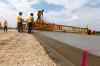
Advertisement Advertise With Us
Advertisement Advertise With Us