Lighting a fire under geothermal Aging arenas could benefit from renewable resource
Read this article for free:
or
Already have an account? Log in here »
To continue reading, please subscribe:
Digital Subscription
One year of digital access for only $1.44 a week*
- Enjoy unlimited reading on winnipegfreepress.com
- Read the E-Edition, our digital replica newspaper
- Access News Break, our award-winning app
- Play interactive puzzles
*Billed as $5.77 plus GST every four weeks. After 52 weeks, price increases to the regular rate of $19.95 plus GST every four weeks. Offer available to new and qualified returning subscribers only. Cancel any time.
To continue reading, please subscribe:
Add Free Press access to your Brandon Sun subscription for only an additional
$1 for the first 4 weeks*
- Enjoy unlimited reading on winnipegfreepress.com
- Read the E-Edition, our digital replica newspaper
- Access News Break, our award-winning app
- Play interactive puzzles
*Your next Brandon Sun subscription payment will increase by $1.00 and you will be charged $17.95 plus GST for four weeks. After four weeks, your payment will increase to $24.95 plus GST every four weeks.
Read unlimited articles for free today:
or
Already have an account? Log in here »
Hey there, time traveller!
This article was published 01/09/2022 (1504 days ago), so information in it may no longer be current.
The West Kildonan Memorial Community Centre is starting to show its age.
In recent years, the 75-year-old building with its drab grey exterior and low-slung roof, is just not as appealing when compared to newer arenas nearby. The centre’s losses are mounting as it faces the ice-cold reality of declining revenues and rising maintenance costs.
Coun. Ross Eadie (Mynarski) is looking for ways to keep the lights on.
JOHN WOODS / WINNIPEG FREE PRESS The West Kildonan Memorial arena is starting to show its age.
A motion passed at City of Winnipeg council in May freed up $8 million in provincial funds for the city’s aging arenas. Eadie says it provides an opportunity to breathe new life into the buildings and turn them into green energy sources for their neighbourhoods by replacing old natural gas heating systems with geothermal energy. Doing so, he says, will cut costs, reduce pollution and potentially generate a little revenue.
Geothermal heat pumps produce comparatively few emissions, and work by storing and redistributing heat to where it’s needed most.
“For the West Kildonan Memorial arena, this is a possibility to keep them financially viable well into the future,” Eadie says in an interview.
It costs $65,000 a year to heat the West Kildonan arena — equivalent to about 30 days of ice time rental. However, the rink, home to a smattering of neighbourhood hockey and ringett teams, produces large amounts of excess heat, currently pumped out of the building as part of the ice cooling process.
Eadie believes that wasted heat could be put to better use.
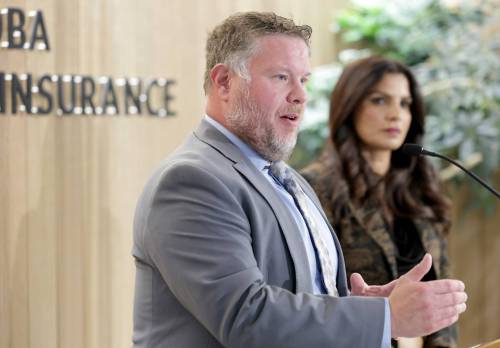
RUTH BONNEVILLE / WINNIPEG FREE PRESS Coun. Ross Eadie believes investing in geothermal heating at local arenas will save costs and emissions.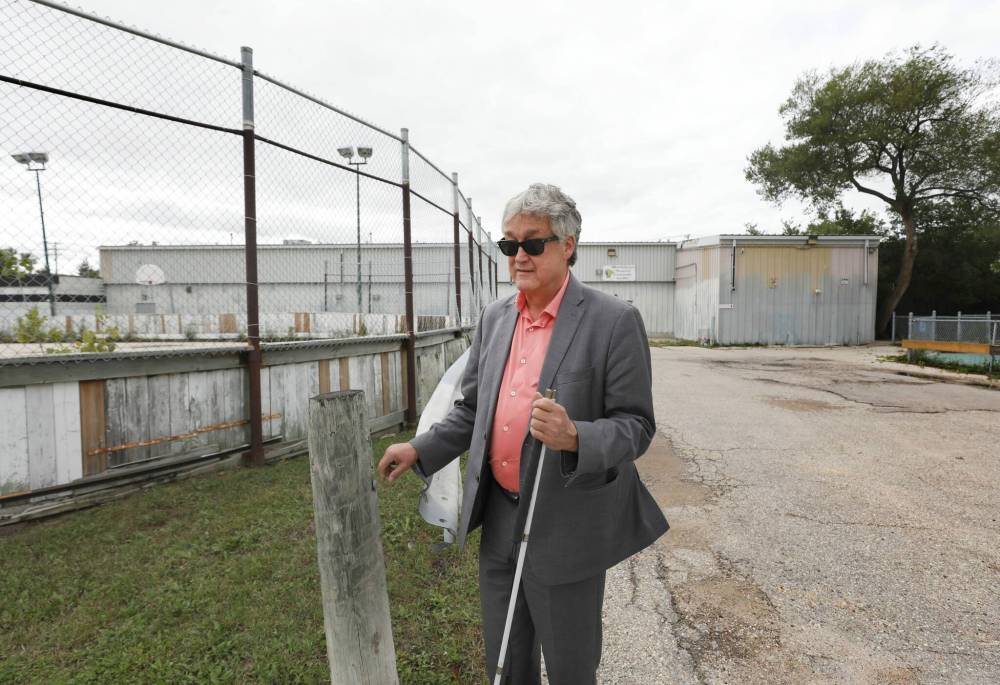
West Kildonan’s arena shares a block with École Seven Oaks Middle School. The Seven Oaks School Division office and West Kildonan library are across the street. With a geothermal system, excess heat from the arena could be used to replace natural gas at all four buildings, effectively eliminating the rink’s heating bill and saving money for a host of public buildings — all while slashing greenhouse gas emissions.
“Geothermal must be an option in Winnipeg,” Eadie says. “In the long run, it’s much better — not only for the environment but for your heating and cooling costs.”
Eadie is one of four councillors planning to push the city to explore geothermal heating systems for some of Winnipeg’s aging arenas; Couns. Brian Mayes (St. Vital), Matt Allard (St. Boniface) and Jason Schreyer (Elmwood-East Kildonan) are also on board.
Originally part of a three-year, $50-million investment for recreation centres and libraries announced in 2020, the $8-million fund finally made its way into Winnipeg’s budget in 2022.
At the same time, the city was searching for investors to match that money to pay for a new arena. Mayes saw another way: he proposed council spend the money upgrading its existing arenas. His motion was approved by a two-vote margin and council agreed to allocate a minimum of $100,000 each to a list of 12 city-owned and three community centre arenas.
JOHN WOODS / WINNIPEG FREE PRESS Geothermal heat pumps would replace the aging heating and cooling equipment in the arena.
The win came as a surprise to Mayes. But with money in place to give the aging arenas some much-needed revitalization, he saw a chance to address a long-standing gap in the city’s environmental plan.
Natural gas heating is one of Winnipeg’s largest sources of greenhouse gas pollution, accounting for one-third of the city’s emissions when it developed its climate action plan a decade ago. Only cars produced more pollution at that time.
A community energy investment road map released earlier this year reported residential, commercial and industrial buildings accounted for close to 45 per cent of Winnipeg’s emissions in 2020. But while the city plans to slash emissions in several key areas to achieve a 20 per cent overall reduction in annual emissions by 2030, it is projecting the annual pollution from buildings will increase by eight per cent over the same time span.
Arenas are some of Winnipeg’s biggest energy sinks. The city’s 2020 energy disclosure project report — part of an initiative to better understand and improve energy efficiency in city buildings — found ice rinks ranked fourth in overall energy consumption and third in greenhouse gas emission intensity.
That’s in part because rinks currently use large amounts of power to expel heat from the ice while also using large amounts of natural gas to pump heat back into the arena’s air. Geothermal pumps could help eliminate some buildings’ reliance on natural gas, thereby reducing greenhouse gas emissions.
JOHN WOODS / WINNIPEG FREE PRESS It costs $65,000 a year to heat the West Kildonan arena and the current process produces large amounts of excess heat, currently pumped out. Eadie believes that wasted heat could be put to better use.
In March 2020, Sustainable Building Manitoba hosted Winnipeg-based geothermal consulting firm GEOptimize to present a case study for geothermal heat pumps at the Dakota Community Centre in St. Vital. That proposal found the excess heat from the centre’s two indoor hockey rinks could fulfill the heating and cooling needs of the entire complex — including a 60,000-square-foot recreational space — plus a nearby library, high school, personal care home and more than 100 residential homes.
“There ain’t nothing complicated about it,” says Ed Lohrenz, GEOptimize’s founder, in an interview. “When you’re taking heat from the air, you have to get rid of that heat. If you’re connecting an ice rink to a ground loop, you can store that heat in the ground.”
Geothermal, or ground source, heat pumps work like a refrigerator. A network of underground pipes carrying a mixture of water and antifreeze help exchange heat between the ground and the air, using a bit of electricity to keep the heat in motion. In the winter, the fluid in the pipes absorbs heat from the ground and transfers it into the pump, which disperses the heat into the surrounding air. In the summer, the process works in reverse, with the pump forcing absorbed heat from the surrounding air into the ground, and dispersing cooler air into the room. Pumps in multiple buildings can be connected by a network of pipes, meaning excess heat from one building can be transferred to another.
The process requires very little energy, since geothermal pumps rely on the relatively stable temperature of the ground to move existing heat to where it’s needed most. While a high-efficiency natural gas furnace typically produces less than one unit of heat per unit of natural gas consumed, a geothermal pump is able to produce two to four units of heat per unit of electricity it consumes.
“It should be a no-brainer,” Lohrenz says.
JOHN WOODS / WINNIPEG FREE PRESS Four city councillors are proposing the city use provincial funds to check the feasibility of using geothermal energy in arenas, including the West Kildonan arena.
However, deploying geothermal systems requires a major investment at the beginning to lay a network of underground pipes. This upfront capital can be a major barrier for any community considering a geothermal retrofit.
In 2000, GEOptimize helped retrofit an aging hockey arena in the southern Manitoba community of Miami, using geothermal heat pumps to replace an existing natural ice rink with an artificially cooled one. The geothermal system cost more than $200,000 to install — about $30,000 more than a conventional heating system — but the project slashed $30,000 from the arena’s annual operating expenses, reducing the cost of energy by over 60 per cent.
It’s these kinds of savings that have the four Winnipeg councillors hopeful their proposal will capture the rest of city council’s attention.
“From a financial perspective, we have an energy source that’s currently untapped, and we can go from what is now a wasted energy source into a useful energy source with potential revenues for reduction in operating costs — so I think it’s win-win,” Allard says.
Two city-owned arenas in his ward — Bertrand and Maginot — are close to public buildings, and could be used to reduce heating costs across the neighbourhood, and potentially bring in a little revenue for the city.
JOHN WOODS / WINNIPEG FREE PRESS Installing geothermal heat pumps in some arenas, including West Kildonan, will provide major benefits for both the environment and the city’s coffers, Eadie says..
“The higher the price on pollution gets, the more attractive it’s going to be to pursue these types of initiatives because the business cases will get stronger with time,” Allard adds. “The solutions are there. It’s a matter of implementing them.”
For Eadie, installing geothermal heat pumps in some arenas, including West Kildonan, will provide major benefits for both the environment and the city’s coffers.
He expects the feasibility studies will cost around $50,000 for each arena. From there, he hopes council might become interested in a capital funding stream, partnering with other levels of government, to provide the upfront funding for the transition.
julia-simone.rutgers@freepress.mb.ca
This story is a joint collaboration between the Free Press and the Narwhal, funded by the Winnipeg Foundation.

Julia-Simone Rutgers is a climate reporter with a focus on environmental issues in Manitoba. Her position is part of a three-year partnership between the Winnipeg Free Press and The Narwhal, funded by the Winnipeg Foundation.
Our newsroom depends on a growing audience of readers to power our journalism. If you are not a paid reader, please consider becoming a subscriber.
Our newsroom depends on its audience of readers to power our journalism. Thank you for your support.
Related Articles
Country’s leading electric bus maker hopes to ride wave of zero-emission transit technology