|
The name of his new book seems bleak, but Corey Mintz is actually quite hopeful about the future of the restaurant industry. The Toronto-born and now (thanks to the pandemic) Winnipeg-based food reporter is the author of The Next Supper: The End of Restaurants as We Knew Them, and What Comes After.
Earlier this month, I sat down with Corey to chat about the book — which takes a look at the flaws baked into every kind of restaurant model and offers solutions for improvement. He covers everything from fast food to fine dining and shines a light on issues of worker exploitation, environmental degradation and food media complacency. It’s a fascinating read.
We talked for more than an hour and I couldn’t possibly include everything in the final story. Below is an extended version of our conversation.
Advertisement

Corey is a former chef and longtime restaurant critic and columnist with the Toronto Star. His work has also appeared in the Globe and Mail, the New York Times, the Walrus and elsewhere.

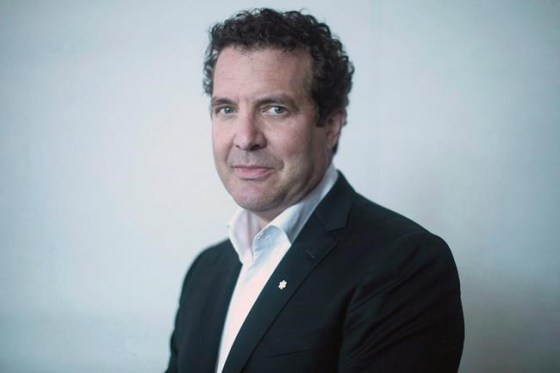
MIKE DEAL / WINNIPEG FREE PRESSCorey Mintz wrote The Next Supper in an unfinished attic, a cold basement and a gazebo.
Eva Wasney: What was that transition like for you, going from cooking in kitchens to writing about the food coming out of kitchens?
Corey Mintz: It was really comparable to someone saying, ‘Come have superpowers.’ But at the same time it was also like, hey, I’ve done this for a living and I’ve had someone stand over me telling me to do (something) perfectly every time because the customer’s needs are pre-eminent and we cannot afford to ever be less than perfect.
Everyone (involved in restaurants) has everything on the line all the time. So, I felt like I understood the stakes going in for the people I was writing about.
EW: Was there a moment when you started realizing the kind of stuff you were writing about was feeding into problematic narratives about the industry?
CM: Yeah, there was an exact moment. After the restaurant criticism, I wrote this column for five years, Fed, where I had people in my home for these dinner parties and it was tremendous in that it was writing school, it was politics school, economics school. It was learning about the world outside of food.
And it got me ready to write the story that I pitched on my first day at the Star, which was: why are cooks paid less the fancier the restaurant is? This required, like, proper investigative journalism and was not just a quickly tossed off thing.
It was a story that was important to me and it was the first pull on the loose string of a sweater that I couldn’t stop pulling.
EW: When did you know you wanted to write a book about these topics?
CM: There were two things happening. One was the limitations of freelance writing, of any kind, but specifically with food, where (publications) have small budgets and editors have… bosses who are telling them that food is more entertainment than news. So they just don’t have the resources or the support to be able to invest in the kind of stories I wanted to do.
At the same time, I kind of got to a level of conspiracy theory where the inside of your head or your desktop or your workspace looks like there’s a bunch of red strings attached and you’re constantly telling people like, ‘All these things are related, man, they’re all connected.’ At which point, you either need to step back, and just focus on little stories, or try to tell that whole story and find a way to make it coherent.
EW: What was the vision for the book before the pandemic?
CM: The topics and themes are all in the final product, the pandemic just made them more urgent and prominent.
EW: Did you immediately see the pandemic as an opportunity to expand on some of these issues?
CM: I don’t want to feel good about something that’s been a disaster for so many people. But, by mid-summer I could start to see that this is going to help the general public see all the problems that I have been Chicken Little-ing about.
It turned out to be true, the public became aware of the predatory nature of third-party delivery companies and the outrageousness of tipping culture and income disparity and the abusive chef narrative really flipped on its ear. It got to the point where workers out of work became so empowered and said, ‘I’m gonna talk shit in public, I’ve got nothing to lose,’ that the labour shortage I’ve been talking about for several years… came to pass.
EW: Are you seeing any meaningful change or anything that makes you hopeful about the direction the industry is heading?
CM: Absolutely. I mean, I don’t want to be naive… certainly nothing has changed yet or fast enough to pat ourselves on the back. But, I think the two things that aren’t up for debate, is workers are feeling empowered and aware of their rights, far more than they ever had before.
And I think consumer awareness has also gone through the roof in the past year. Those two things haven’t reshaped the industry yet. But I think there’s tremendous potential and reason for hope.
EW: What do you hope readers or consumers take away from the things that you’ve presented in the book?
CM: I hope they find some useful element of how to be a better diner. And hopefully the other chapters are intriguing enough that even if you’re never gonna go to the Cheesecake Factory, it was still interesting to learn more about it.
EW: As a diner, how have your habits shifted as these issues have become more important to you?
CM: Whenever I see the tip prompt, I just ask (the server), do staff get 100 per cent of tips? Does management get any share of this? And I feel like that’s a reasonable question and I always try to ask it in a friendly way — not like I’m the restaurant police here to interrogate you. It’s more about letting people know that it matters to me as a diner that you’re not getting screwed over.
EW: Of the topics in the book, do you have one area you think desperately needs to change in order for the industry to better itself?
CM: If you’re asking me to pick my favourite child, we’ll call it recency bias; (earlier this month) Ontario announced a very minor raising of the minimum wage, but, more importantly, the elimination of the sub-minimum wage. One of the pillars of the foundation of tipping is the government saying: we’ll make it legal for you to pay people less and then the customer can decide how much they earn.
There’s always a restaurateur somewhere saying, ‘I’d like to get rid of tipping, but I can’t for these reasons’… Now, maybe it’s time to reconsider that.
EW: What do you think the role of a restaurant critic is these days? Has it changed?
CM: That one’s still to be decided. The general attitude is, well, reviews will be back because it’s a genre. If we’re doing anything, we have to do it differently — if for nothing else than purely practical reasons. We have to talk about takeout and we can’t be catty, we can’t be mean, we can’t make jokes because… these things matter to people’s livelihoods and jobs and we can’t be cruel or dismissive about those things.
(Reviewing) has changed so much in the last number of years with the democratization of opinion on social media that this is just, like, the next plank of that evolution.
This interview has been edited for length and clarity.
– Eva
|