THE MACRO
One of the great frustrations I have had with my career as an amateur hockey referee is the extent to which we fail to measure the outcomes of our efforts to make the game healthier and safer for all involved.
Case in point: years ago (I cannot remember exactly when) Hockey Canada made it a priority to reduce dangerous body checks from directly behind that often resulted in violent contact with the boards.
The Hockey Canada rule book created rule 7.5 (Checking from Behind, or CFB as officials know it), that includes a range of penalties: a two-minute minor and a game misconduct (for contact that is often accidental or incidental and does not result in an injury); a five-minute major and a game misconduct (for hits involving more reckless and violent contact that often result in injuries); and a match penalty when officials believes there was a deliberate intent to injure an opponent. The match, although it carries the same five-minute, in-game penalty, often results in a longer suspension.
Here’s the rub: some officials hate the 2+GM for a garden variety hit from behind because it involves a game misconduct. So, they downgrade the call to a boarding penalty. It is, in my estimation, an improper use of a referee’s discretion to ignore a penalty like this.
But here’s my main concern: nobody tracks the number of CFB penalties assessed in hockey. We have all the data from game sheets, which are collected by governing bodies and held, typically for one season. But it’s not brought together in one place to see if the rule is cutting down on the number of CFBs. We also don’t survey officials to find out if they are willing to call the 2+GM penalty or not.
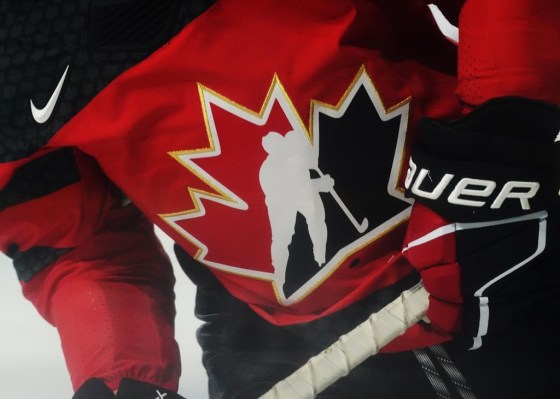
Hockey Canada says there were more than 900 documented or alleged incidents of on-ice discrimination — verbal taunts, insults and intimidation — across all levels and age groups during the 2021-22 season. (Jesse Johnston / The Canadian Press files)
Unfortunately, that is pretty much par for the course in hockey. We introduce new rules and standards for behaviour, but rarely if ever take stock of how the rules are being applied, or even if they are being applied, and whether it has resulted in a reduction in the specific behaviour the rule is trying to curb.
But that could be changing.
Last week, Hockey Canada released a detailed analysis of incidents involving verbal taunts, insults or intimidation based on discriminatory grounds in the 2021-22 season. The investigation found more than 900 such incidents in that one season, 66 here in Manitoba. That includes 25 incidents where the person uttering the discriminatory slur was identified and penalized, and another 41 where officials did not witness the discrimination but were told about it by a player or team official.
These incidents were punished under a new Sec. 11 of the Hockey Canada rule book — introduced two years earlier to identify, punish and, ultimately, reduce these incidents.
The report showed that far and away, most of the incidents involved insults based on sexual orientation or gender identity (61 per cent) followed by race (18 per cent) and disability (11 per cent). On a per capita basis, eastern and northwestern Ontario had the highest prevalence of incidents. Manitoba was about middle of the pack.
A couple of observations. This is a rather heroic effort by Hockey Canada — still embroiled in a scandal over its role in concealing incidents of sexual assault — to identify a problem. I could not find any other sport in the country that had put so much effort into tracking ugly incidents for the purpose of eradicating the behaviour. If the first step to overcoming a problem is to admit that you have one, then this is a step in the right direction.
However, this analysis and reporting must be done on a regular basis to see if our efforts to curb this kind of behaviour is successful or not. Fortunately, Hockey Canada is committed to continuing the collection of this data and reporting again on the cumulative incidents up to the conclusion of the 2023-24 season. That report should tell us whether in-game penalties are effective at changing behaviour, or whether more intensive education is needed.
As an on-ice official, I have seen instances where I think hockey culture itself created the conditions for toxic language and behaviour to exist. I am also patently aware when I look through the glass at the often-unbridled behaviour of parents, and listen to their profane and ugly commentaries, players are only bringing to the ice what they have learned at home.
This report is not a solution. And it should not, on its own, absolve Hockey Canada for its role in cultivating all that is bad in hockey. But it’s an important first step to identifying the size of the problem.
And once we know that, then can we start to figure out the size of the solution needed.
|