|
My dear family says, “Don’t worry.
We’ll look after everything.
And there’s no hurry.”
Advertisement

No hurry they say.
Well, maybe they’re right.
I’ll make myself a cup of tea,
And then I’ll say, “Good night”.
– Margaret Alyce Viola Ellis, 2021
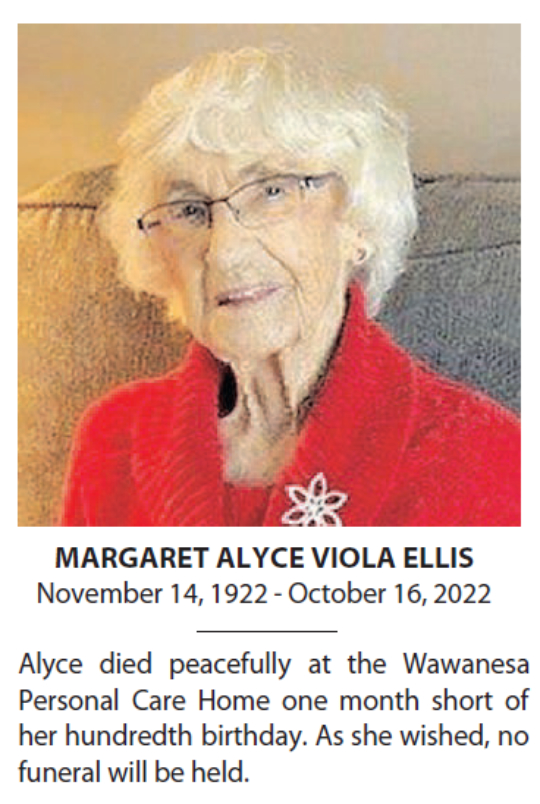
The traditional farm wife was extremely busy but Margaret Alyce Viola Ellis was busier than most.
And she was busy for a lot of years; Margaret, who was better known by the name Alyce, lived until just a month short of her 100th birthday. She died on Oct. 16.
Alyce was no stranger to working on the farm — she grew up on one. She had three brothers and three sisters and lived in a place where she rode horses, rounded up cattle, read books and sang to the trees.
Her family said she was a tomboy and a bookworm, and she “always smelled of the barn.”
She was athletic — she played softball on a women’s team — and the team was good enough to win tournaments.
For school, Alyce took Grade 10 by correspondence before boarding in nearby Wawanesa for Grade 11. After finishing Grade 11, she went to the Wheat City Business School in Brandon and graduated with a business diploma in 1940.
She worked at the Wawanesa Mutual Insurance Company in Wawanesa, Man., for three years before moving to Winnipeg, where she worked at Bingham and Bingham.
The Second World War was raging during those years, and there were many dances held for the airmen who came to Brandon to train. Because Alyce loved to dance, she volunteered to go to them.
At one of those dances, she met Ernie Ellis. They married in 1946, and they were together until he died in 2011.
The couple farmed the Ellis farm for 39 years and raised five children. One baby, Percy, died when he was only a week old.
They experienced many changes on the farm through the decades: they went from threshing outfits to combines, from horses to tractors, and, with advancements in pesticides and fertilizers, they saw their yields increase from 20 bushels of wheat per acre to 40.
Inside the farmhouse, Manitoba Hydro brought electricity to them in 1949. To celebrate, Alyce bought a toaster, while Ernie bought a radio. They also installed a bathroom with a flush toilet in 1957.
As a farm wife, Alyce was in charge of the kitchen and it was like being in charge of a diner. Every day she made hearty lunches including tea, sandwiches, roast beef, mashed potatoes and vegetables for the hired hands. She also baked either four pies or a large cake every day.
In the fall, she threw herself into making preserves for the rest of the year, including relishes, canned tomatoes, and chokecherry and grape jelly.
If that wasn’t enough, when her husband founded a business to sell pedigreed seed to area farmers and companies around the world, Alyce typed out the shipping papers and kept the accounting books.
In 1967, the area school board asked if she could teach business education classes at Wawanesa Collegiate. She did and, while teaching, finished her Grade 12 and later received her teaching certificate. She taught at the school for 11 years.
Alyce joined the Toastmistress Club in Brandon, became skilled at giving speeches, and went on to adjudicate speech contests at 4H clubs and district festivals.
She took painting classes and then became active in the Tiger Hills Festival of the Arts and a regional director for the Westman area of the Association of Manitoba Arts Festivals. She stayed active on the AMAF board until 1991, six years after she retired from the farm and moved to Winnipeg.
Alyce and Ernie continued to be busy, but it was more for leisure. They went to see plays and the symphony and took up golf, wondering why they hadn’t done so years earlier.
When Ernie became ill, he moved into a personal care home back in Wawanesa, and Alyce moved with him, into the nearby Wawanesa Valley Lodge. She stayed there after her husband’s death, moving into the care home herself back in March.
Finally then, after a lifetime of work and volunteerism, she found the time at age 98 to write the poem above.
As her family summed up nicely, Alyce was “independent, strong, beautiful, wise, hardworking, a life-long learner and a loving individual.”
She is survived by her four daughters and one son, along with several grandchildren and great-grandchildren.
Read more about Alyce.
Lives lived
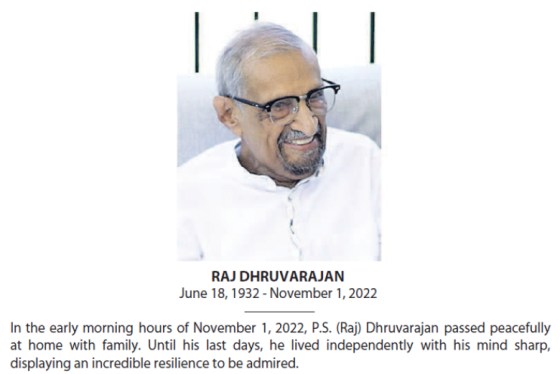
Raj Dhruvarajan taught for four decades at the University of Manitoba as an economics professor.
Raj, who died on Nov. 1 at age 90, was born in India, went to the University of Chicago on a Fulbright Scholarship, and came here to teach in 1967.
Raj also became a leader in Winnipeg’s Indian community and was president of the Hindu Society, the India Association, and the National Association of Canadians of Origins in India.
He was frequently recognized for his teaching excellence, and his work was instrumental in increasing the minimum wage for Manitobans in the 1970s.
Read more about Raj.
Robyn Procak fought pulmonary arterial hypertension for a decade.
Robyn, who died on Nov. 9, was able to get a double lung transplant in 2018, but her body began rejecting the organs last year.
She was only 37.
Robyn’s family had a special request: instead of sending flowers, sign up for organ donation.
Read more about Robyn.

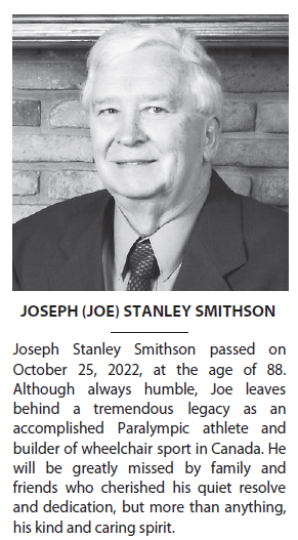
Joe Smithson was paralyzed by polio at 19, but he never let it stop him.
Joe, who died on Oct. 25 at 88, became a builder of wheelchair sports in this country.
He was on the province’s first wheelchair basketball team in 1965, served as its captain, and competed at Pan Am and Paralympic Games. He also competed at a national level in table tennis, slalom racing and swimming.
Joe volunteered with both the Canadian and Manitoba Wheelchair Sport Association and he was inducted into inaugural class of the Canadian Wheelchair Basketball Hall of Fame in 1995.
Read more about Joe.
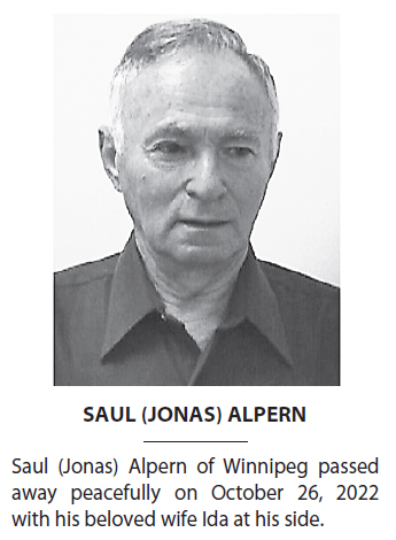
Saul Alpern witnessed the horrors of the Holocaust and lived to write about it.
Saul, who died on Oct. 26 at 92, was born in Romania and later was forced into labour camps and death marches. His younger brother survived with him, but his parents and two older siblings didn’t.
He planned to join his brother in fighting with the State of Israel and its War of Independence, but ended up staying in Canada after his brother died in the conflict.
Saul wrote a memoir, No One Awaiting Me, and published it in 2001. It was one of the first books documenting the Nazi genocide in Romania and won provincial and national awards.
Read more about Saul.
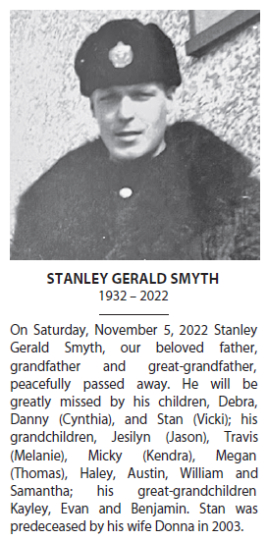
Stan Smyth was a hydro linesman for more than five years, then joined the Winnipeg Police a year after he got married.
He started on beat patrol and then rose through the ranks, becoming an award-winning marksman on the firing range and developing training to teach recruits how to shoot safely and accurately. He retired with the rank of Sergeant 1 after 37 years with the force.
He lived to see his son, Danny, become Winnipeg’s chief of police.
Read more about Stan.
A Life’s Story
This week we have two longer stories on the lives of notable Manitobans.
I first met Sathya Dhara Kovac a few days before her death on Oct. 3 using the medical assistance in dying program. She was 44.
I wrote a story about Sathya’s battle with home care and her decision to die earlier than she really wanted to because she wasn’t getting enough help through the provincial program to be able to live at home with ALS.
I tried convincing Sathya to let me write the article before her death, so the province would have a chance to address her come care situation, but she was adamant her story come out only after she was gone. You can read my article here.

Sathya Dhara Kovac (supplied)
A second written by Sathya’s friend, Janine LeGal, captures more about who she was before her diagnosis and her death.
It continues the battle for home care Sathya wanted to continue fighting for others, beyond her death.
You can read Janine’s story here.
And: Ivan Eyre was a Canadian artist best known for his paintings and sculptures. You’ve seen his sculptures outside the Winnipeg Art Gallery, at Portage and Main, and at Assiniboine Park. Inside the park’s Pavilion building, the third-floor gallery is devoted to his work and is named in his honour.
Ivan trained for his life in art by going to, and graduating from, the University of Manitoba’s fine arts program and, from 1959 to retiring in 1992, he was a professor there.
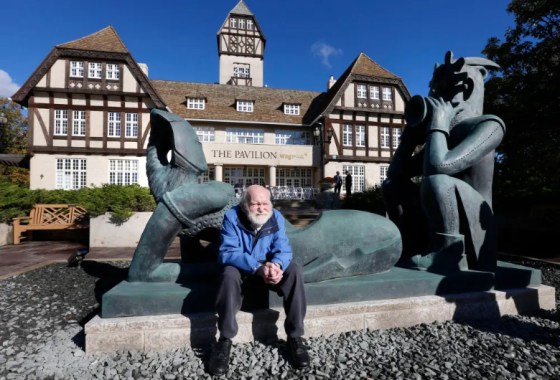
Ivan Eyre (Wayne Glowacki / Winnipeg Free Press files)
Ivan had more than 300 solo and group exhibitions around the world, including at the National Gallery of Canada and in Paris, London and Frankfurt. He was a member of the Order of Manitoba and the Order of Canada, and was awarded the Queen’s Silver Jubilee medal in 1977.
“I think he’s the greatest painter than this country has ever produced, or at least one of the greatest,” says David Loch, art dealer and lifelong friend.
Ivan died Nov. 5 at age 87. Alan Small wrote about him here.
Until next time, I hope you continue to write your own life’s story.
|