


City plan to poison squirrels must be killed

Advertisement
Earlier this month, a Riverview resident shared a cautionary tale with neighbours about her dog having nearly died from what she suspects was secondary poisoning.
In a post on an online community forum, the resident said her dog was diagnosed with acute pancreatitis after consuming rabbit droppings in the back yard. She issued a stern warning – stop poisoning wildlife.
Sadly, this is not uncommon. As pointed out on the City of Winnipeg’s website, pets, non-target wildlife, and even children are at risk of severe poisoning from outdoor rodenticide. Research cited on a U.S. National Park Service webpage that the city links to in its blurb on rodenticides indicates that rodent poisons move up the food chain. Primary poisoning occurs when an animal – whether or not they are the target – ingests poison; secondary and tertiary poisoning occur when predators or scavengers eat poisoned animals, their remains, or their waste.
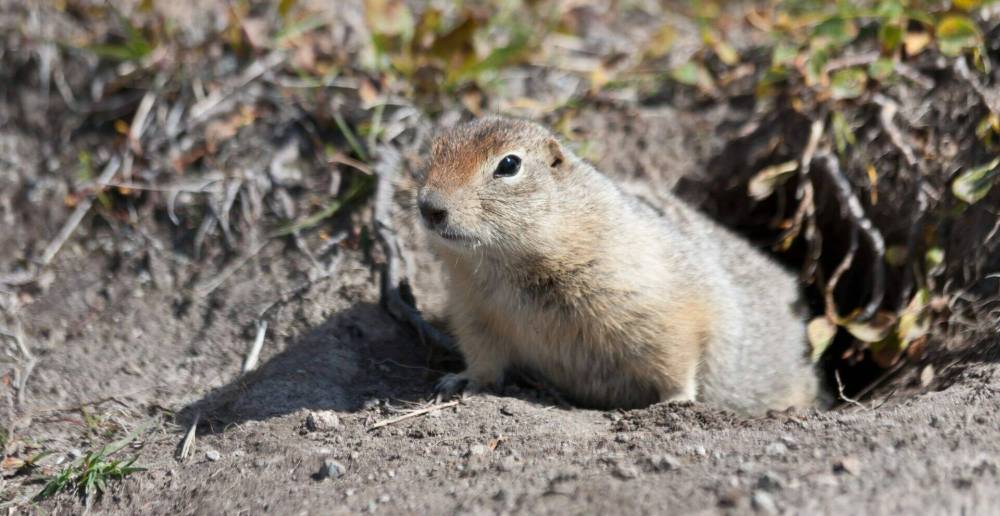
Supplied photo
The City of Winnipeg intends to use two rodenticides to kill ground squirrels on some athletic fields.
As of 2022, it is illegal in Winnipeg for ordinary residents to use rodenticides outdoors; this can only be carried out by licensed exterminators or government agencies.
However, as pointed out by the NPS page, pets and local wildlife are at risk of exposure “regardless of who distributes the poison,” making particular reference to anticoagulants – a type of rodenticide the City of Winnipeg plans to use in its upcoming pest control program.
If the city gets its way, starting March 2, ground squirrels in several athletic fields will be killed using the rodenticides Rozol and RoCon. The former – an anticoagulant – causes fatal internal hemorrhaging, while the latter causes asphyxiation. Rozol, in particular, puts non-target animals at risk of unintentional poisoning but they are both considered by experts to be inhumane to the target species as well.
Rozol has to be ingested over multiple days, which results in a slow and agonizing death, local biologist Dr. James Hare said during a recent radio interview with CBC. He described RoCon as not only “just miserable” for ground squirrels, but also ineffective.
“The problem is, the ground squirrel escape burrow systems have many entrances and when you inject the expanding foam into those burrows attempting to suffocate them, it comes out unblocked burrow entrances,” said Hare, adding that squirrels can also take refuge in blind pockets.
Last year, the province made the sound decision to reject the city’s plan to gas the squirrels. It should likewise reject this ill-conceived plan and implore the city – again – to explore the more humane options that exist to address the problem.
Tracy Groenewegen
South Osborne community correspondent
Tracy Groenewegen is a community correspondent for South Osborne. She can be reached at tracy.groenewegen@gmail.com
Our newsroom depends on a growing audience of readers to power our journalism. If you are not a paid reader, please consider becoming a subscriber.
Our newsroom depends on its audience of readers to power our journalism. Thank you for your support.
Tracy Groenewegen
South Osborne community correspondent
Tracy Groenewegen is a community correspondent for South Osborne. She can be reached at tracy.groenewegen@gmail.com
Our newsroom depends on a growing audience of readers to power our journalism. If you are not a paid reader, please consider becoming a subscriber.
Our newsroom depends on its audience of readers to power our journalism. Thank you for your support.
Advertisement Advertise With Us